
Why a black EVA liner works for machined parts, and where it stops
Three situations bring buyers to a black EVA liner rather than a moulded EPP insert: a first production run too small to pay for tooling, a part with undercuts that a two-part mould cannot release, and a cosmetic face that must not be touched by a hard material. In each case the liner is cut on a CNC router from cross-linked EVA sheet, so the pocket follows the drawing to within a millimetre without a tool being built. We quote from a 3D file or a sample part, whichever arrives first, and send a photograph of the cut liner before it ships. That is also the limit of the process: a cut pocket holds the part by contact, not by a moulded rib.
| The black colour is not decoration. Carbon-loaded EVA hides the graphite marks that machined aluminium leaves on light foam, and it does not show the oil film that comes off a freshly milled surface. Sheet runs from 30 to 90 kg/m3 in this product family, and the grade follows the part weight: a 0.5 kg sensor housing sits happily on 30 kg/m3, while a 12 kg gear blank needs 90 or the pocket walls slump after a month on a shelf. | 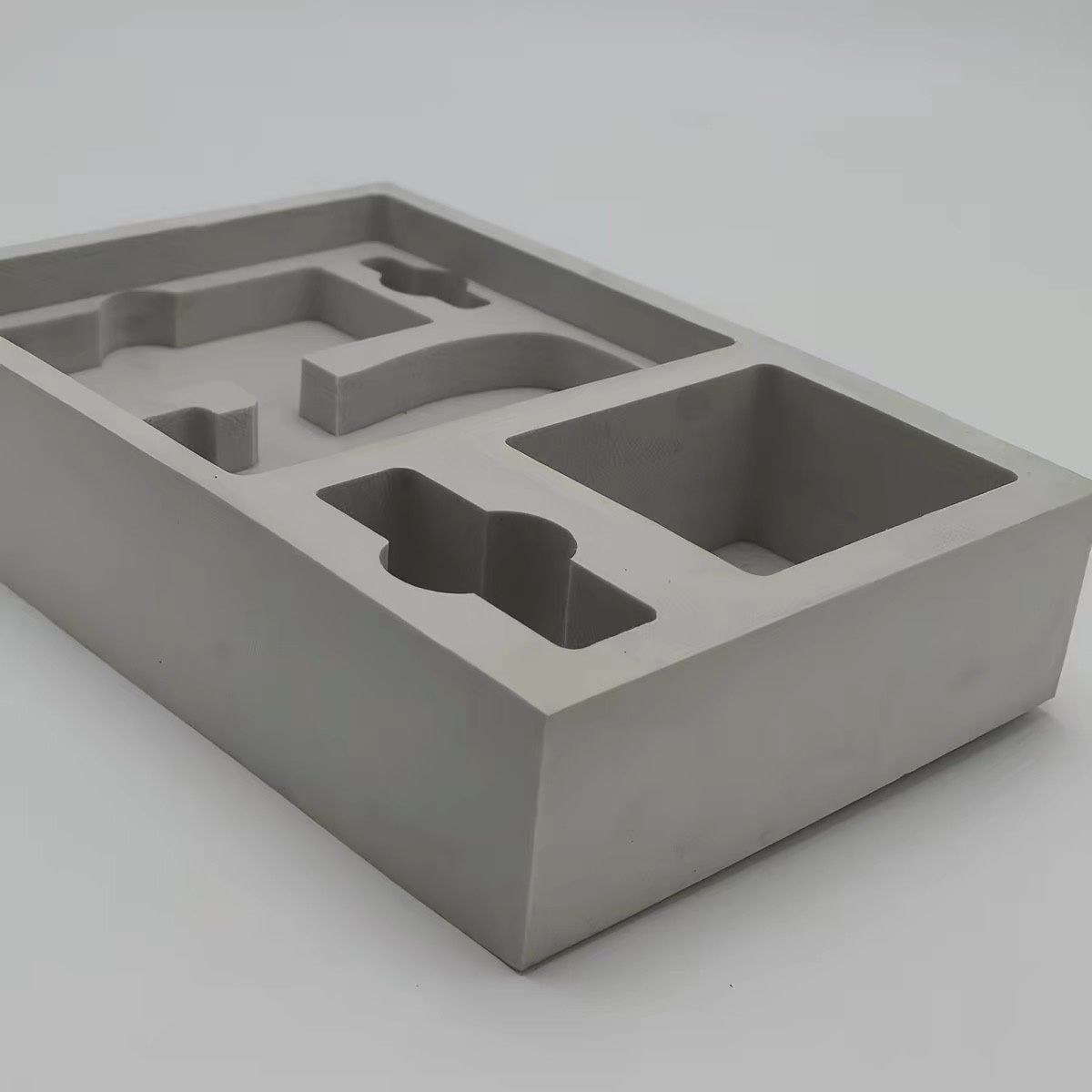 |
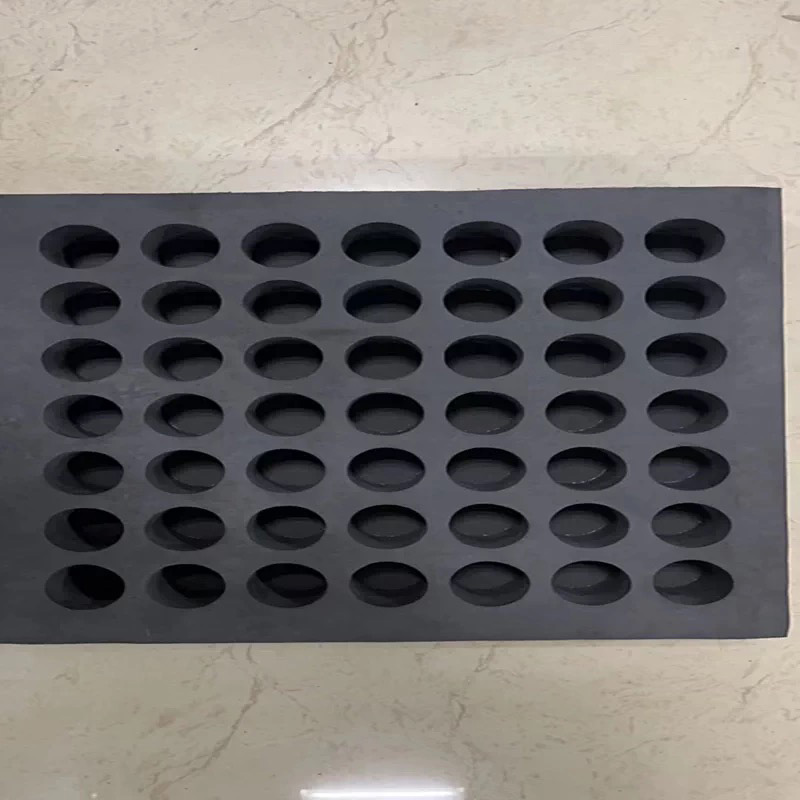 | Where EVA stops being the right answer: loads above roughly 20 kg carried for years, temperatures over 80 C near a drying oven, and any part that will be cleaned with solvent. Cross-linked EVA takes a permanent set under sustained load, so a heavy casting stored on it for a season will find a new resting position. For those jobs we quote EPP or a PP divider set instead, and say so before the sample is cut. |
 | Every liner leaves the plant with the pocket measured against the drawing, and the first-off report travels with the crate. The photograph is from the 2025 Indonesia Industrial Exhibition, where most of the conversations came back to the same trade-off between tooling cost and load. If the drawing changes, the program changes with it; there is no mould to modify and no repair to wait for. |  |


