
From a STEP file to the first batch: how a custom insert gets made
Most insert projects start the same way: a buyer sends a STEP file, sometimes only a PDF, and asks what a foam cradle would cost. Before any price is quoted we need three things from that file: the heaviest part the pocket will carry, the face that must not be touched, and how the crate will be stacked. We ask for the crate model as well, since a pocket designed for an HP box will not drop into a steel stillage without new corner clearance. A quote built without those answers is a guess with a number attached to it.
| The first sample is cut on a CNC router from EVA or PE sheet, usually inside a week. It is not the production material and it is not the production process, but it proves the pocket: where the part sits, where the fingers go in, whether a lid closes without pressing on a boss. A sample also shows whether the part needs a relief at a machined face, which is cheaper to find on a router than inside a tool. | 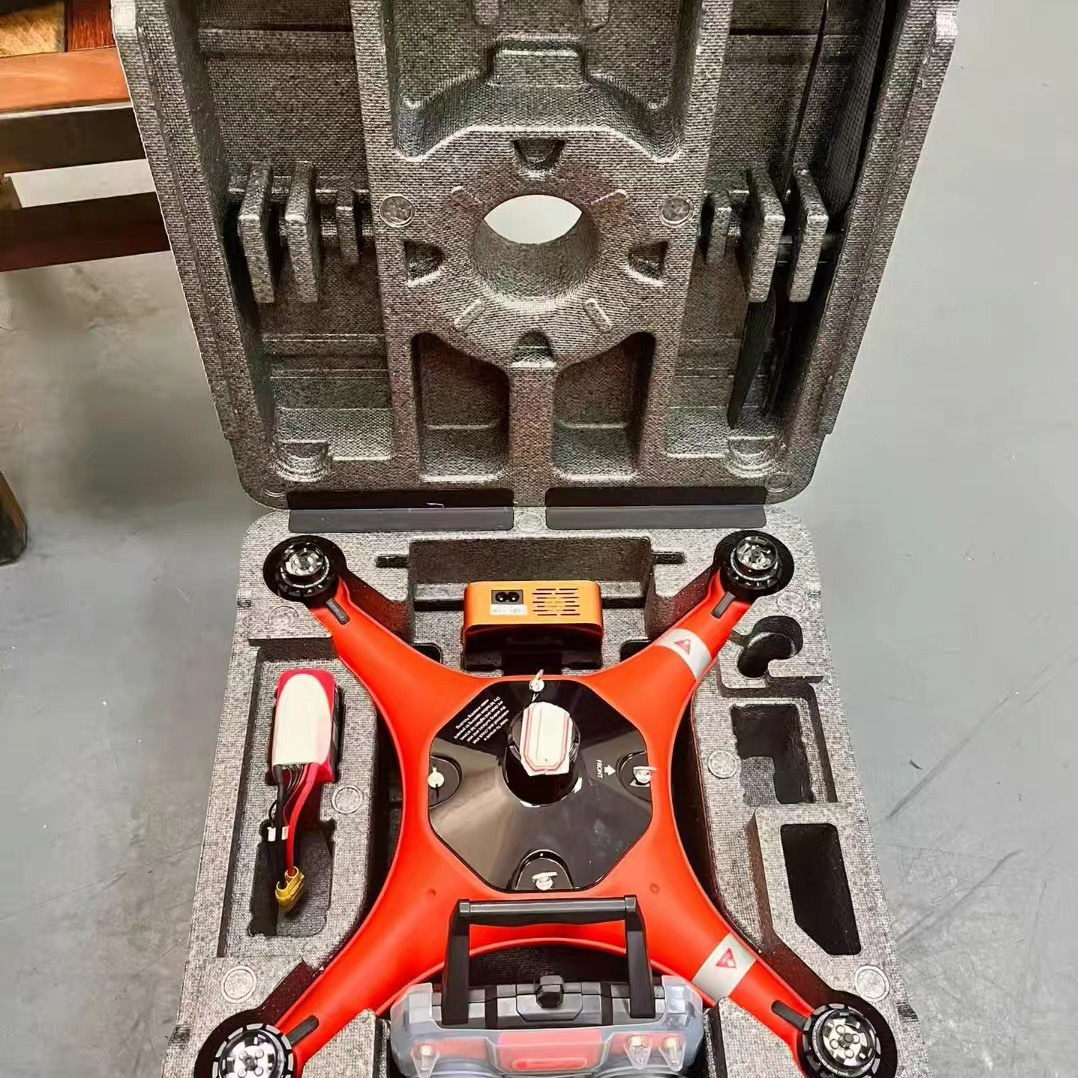 |
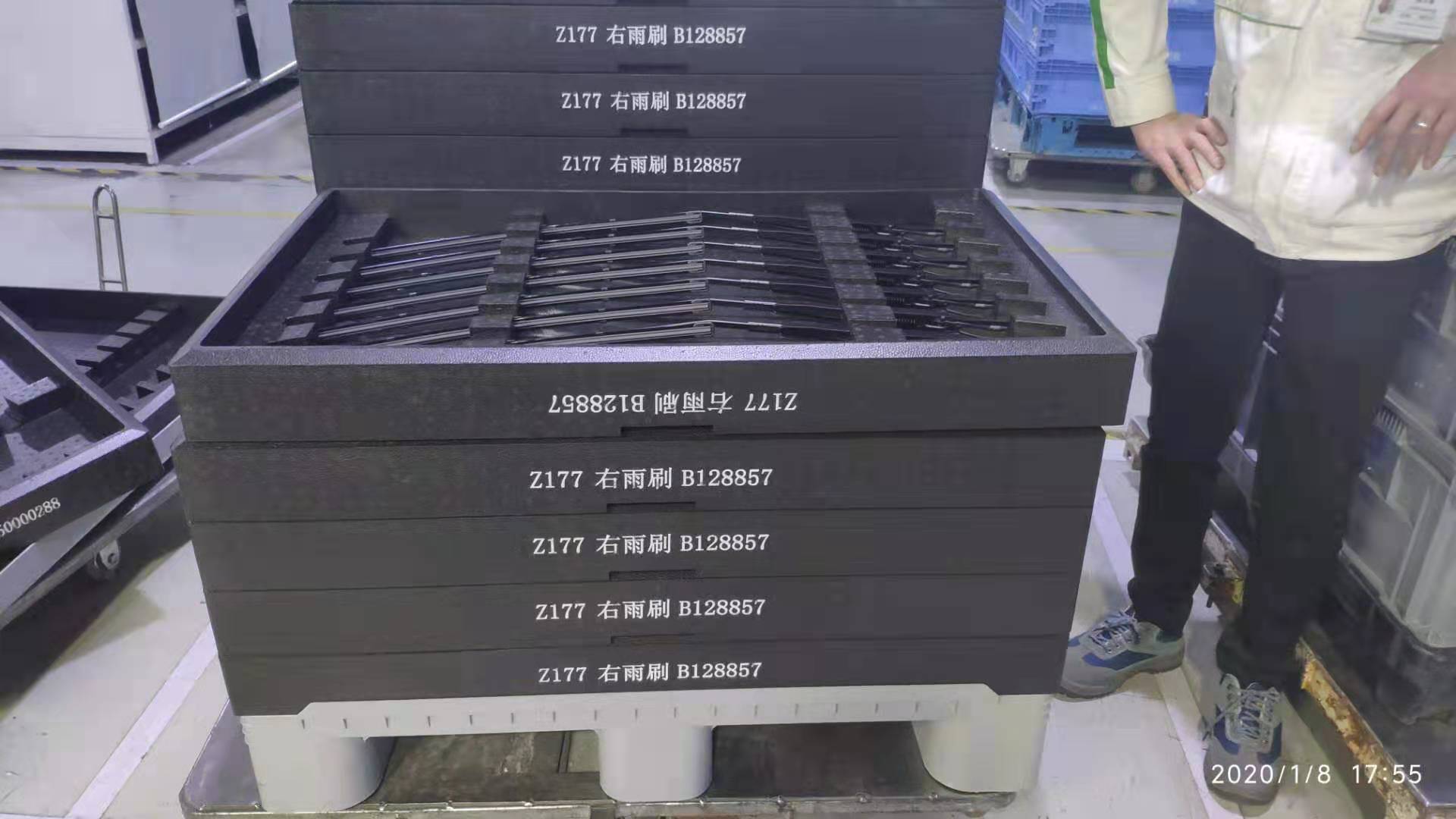 | Once the sample is signed off, the pocket is cut in aluminium and the first moulded parts are checked against the drawing: wall thickness in four places, pocket depth at the deepest point, and a load test on the corner that takes the forklift impact. Density is fixed at that point too, usually between 30 and 90 g/L. If a dimension drifts outside tolerance the tool is corrected before the batch is released, not after the customer finds it. |
 | When a project does not justify a mould, we say so. Under roughly 300 pieces a year, or where the part changes every season, a cut insert or a PP divider set does the same job for less money and no lead time. The photograph is from the 2025 Indonesia Industrial Exhibition, where half the conversations started with a drawing on a phone and ended with the same question about annual volume. |  |


