
High hardness EPP liners for parts that cannot be wrapped
Irregular geometry is where cushioning usually fails. A liner cut from sheet has to bridge gaps it cannot reach, and a part with a 40 mm boss on one side and a 6 mm flange on the other will find the soft spot within a few trips. Moulding the liner from high hardness EPP removes that weak point: the pocket follows the part contour, the ribs carry load down into the crate floor instead of into the walls, and the geometry stays where the tool put it after a year of handling. We quote these liners from the part drawing, not from a list of stock sizes.
| The grade we run for this family sits between 60 and 90 g/L, and the choice comes from the part itself. At the low end the liner still gives when a casting is set down hard from a forklift; at the high end it holds a 25 kg part without visible set after a hundred handling cycles. Skin is held at 1.5 mm, because a thinner skin scuffs through at the contact points and the pocket then grows into a loose fit. First-off samples are cut and measured before the batch runs, and the measuring report stays with the tool for repeat orders. | 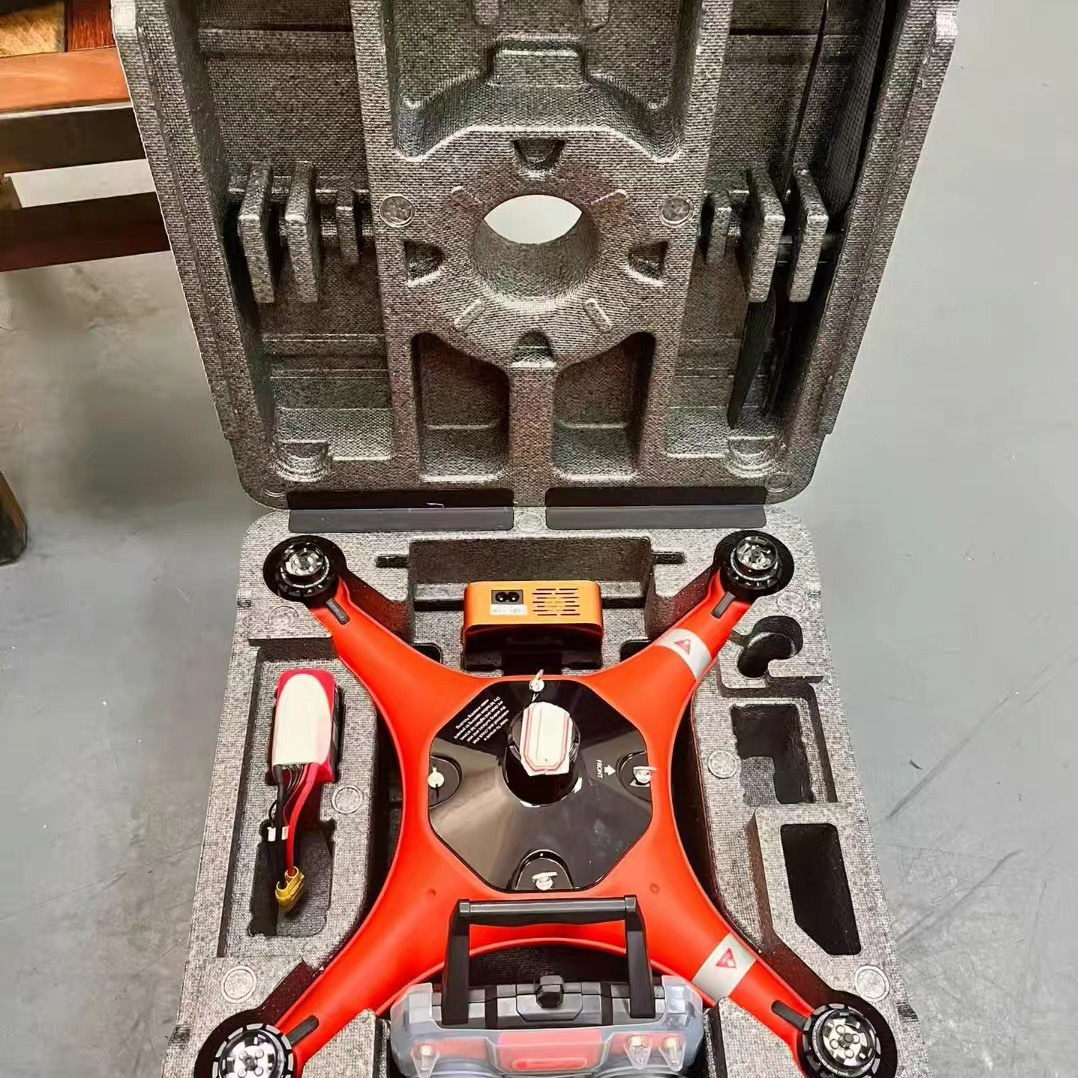 |
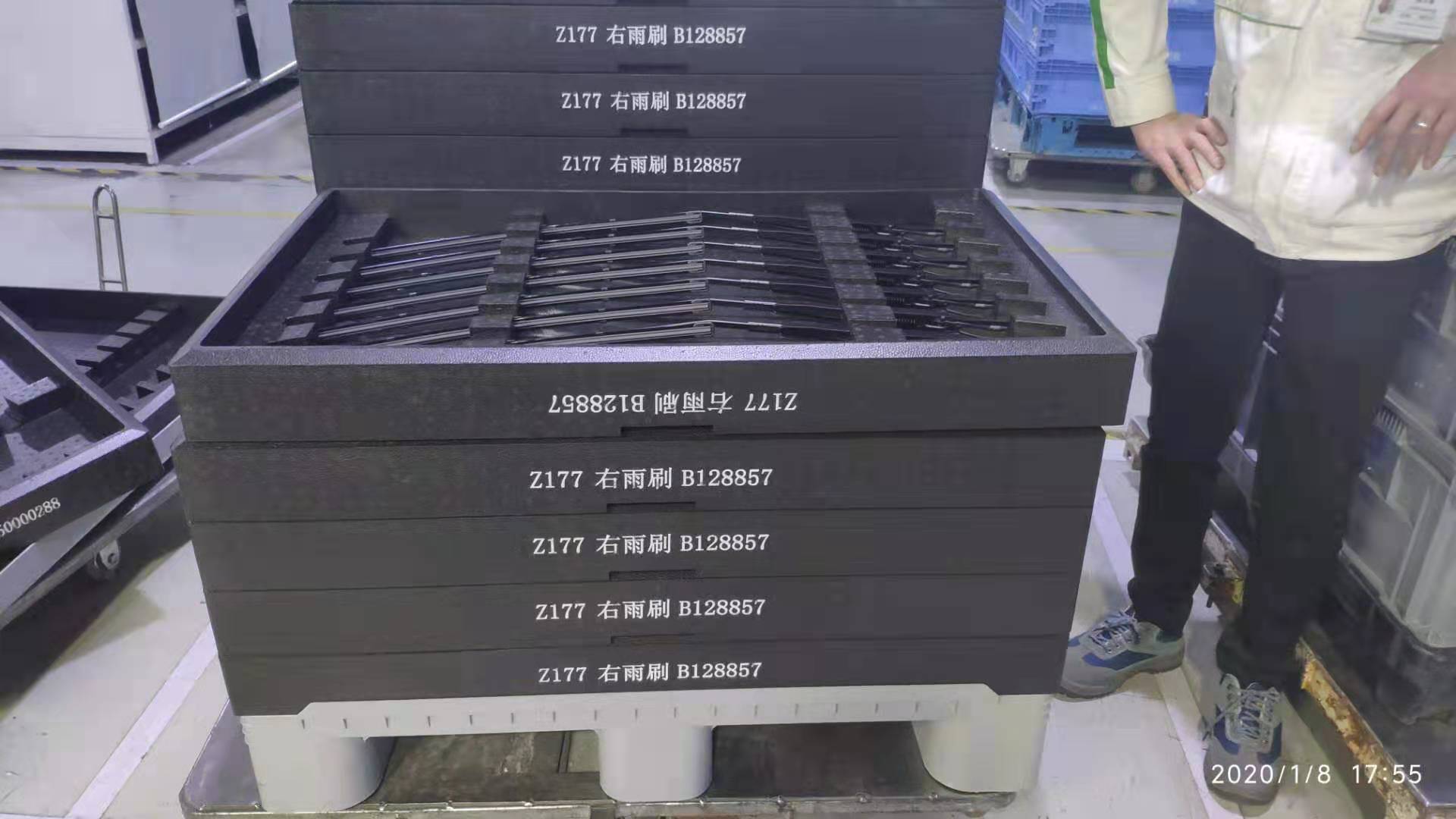 | Where a moulded liner is the wrong answer: parts under roughly 2 kg, runs below 300 pieces a year, and any machined face that cannot take a 2 mm interference. In those cases we quote a cut PE or EVA insert instead. We say it before the drawing is released rather than after the tool has been paid for, because a hard liner on a soft part is an expensive way to learn the difference. |
 | Inside a standard HP crate or on a steel stillage the liner takes the abrasion, not the part. We check the gap between liner and crate wall before the tool is cut, because a 5 mm gap at the corner becomes a 5 mm gap at the casting once crates are stacked four high. Loading is by hand in most plants, so the pocket entries are chamfered and the lifting points stay clear of foam. |  |


