


| Quantity: | |
|---|---|
Plastic
TOYOE
A bulk pallet box full of car parts creates a handling problem the moment it arrives: how do you get the parts out? Tipping a loaded box to pour parts onto a bench scratches what it was built to protect, and digging from the top mixes the layers. A collapsible PP pallet box with drop doors turns unloading into a controlled pick, with access at waist height on the sides of the box.
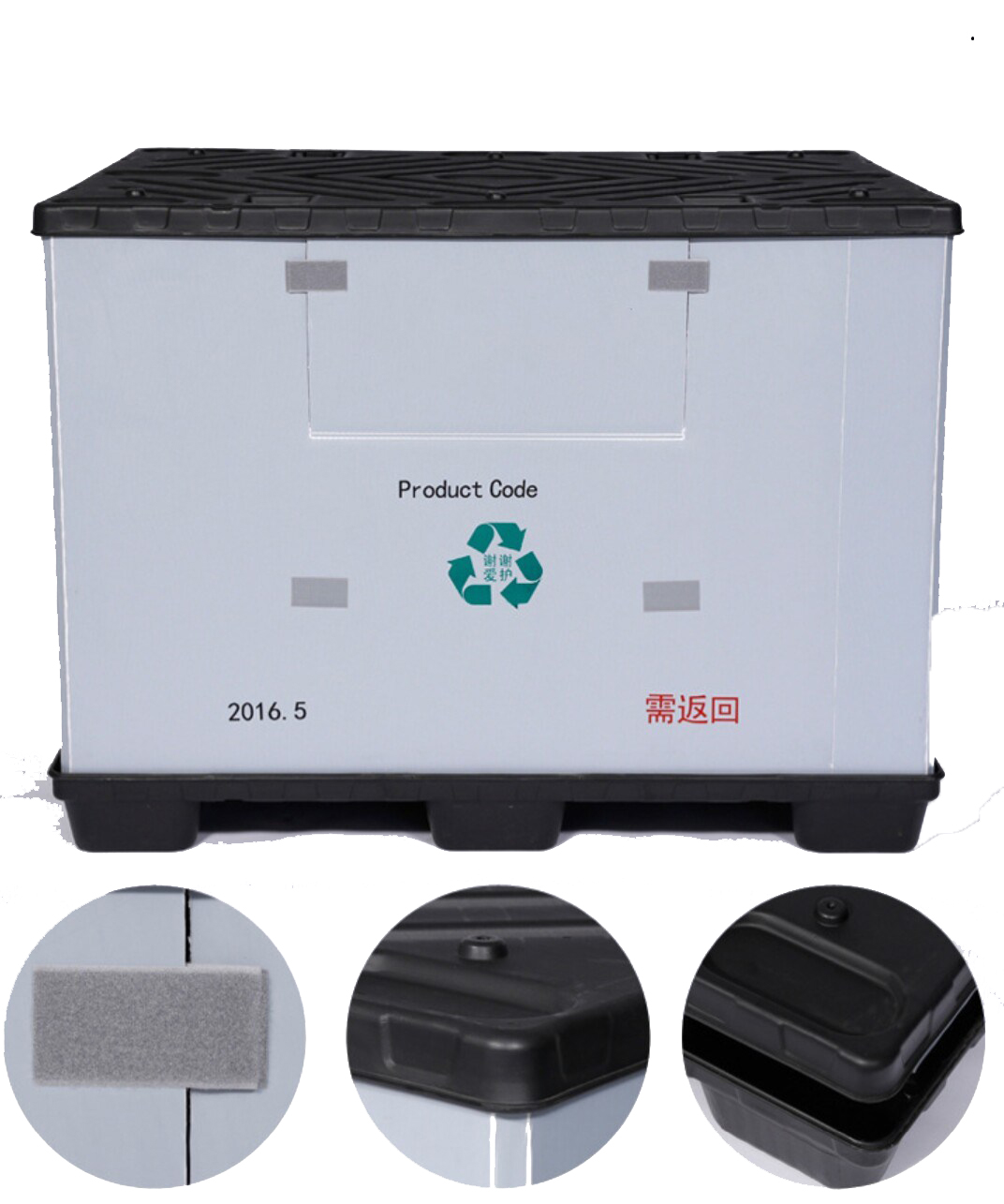
Drop doors are the working feature. Gates on one or more sides open flush to the wall, so an operator pulls small parts out by hand while heavy stock still leaves through the top. Latches hold each gate closed in transit and open in seconds at the station, so one box serves both bulk transport and line-side picking without repacking anything.
The collapsible design earns its keep on the return leg. Walls fold inward without tools to a fraction of their height, and a truck that delivered loaded boxes brings the folded fleet back in one trip. Folded boxes strap into stable bundles, turning packaging returns into a scheduled loop.
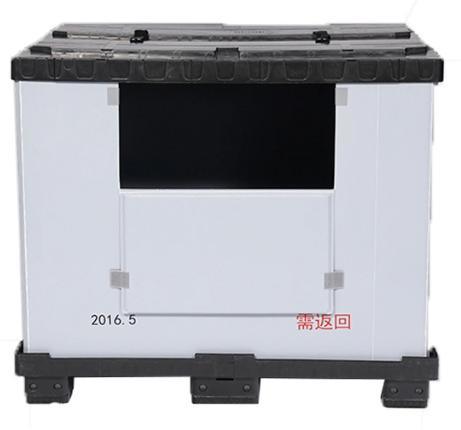
Stacking strength comes from the corners, not the walls. Corner posts carry the vertical load, so a stack reaches 2500 kg while each unit carries around 500 kg of parts, and wall panels never become the structure that holds the column up. Stacks stay square because the posts locate each box on the one below, and the load path runs down to the pallet base exactly where the forklift expects it.
The material suits the environments a parts fleet passes through. Polypropylene resists the oils and fluids that stain wood and corrode steel, tolerates outdoor yards from freezing mornings to hot afternoons, and carries no paint to chip. Walls wipe clean between cycles, and perforated or solid panels are selected per part family for drainage or dust control.
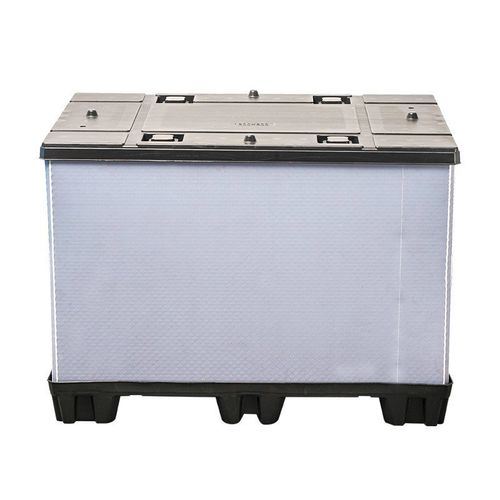
The fleet side is built for identification. Flat wall panels take printed numbers, colour bands and label holders, so flows, customers and part families sort at a glance, and a box missing from its loop is noticed before it becomes a shortfall at the line. Sizes and configurations follow the part programme rather than one standard box.
Each production batch is verified against the duty it will meet. Loaded boxes pass drop tests at the corner posts, stacks are trialled to their rated height, and gate latches are cycled to confirm they hold closed in transit and open freely for years of picks. The result is a pallet box that solves the end of the journey as well as the middle: parts arrive intact, leave without a shovel, and the empty fleet comes home folded.


