


| Quantity: | |
|---|---|
plastic
TOYOE
Every hybrid insert from TOYOE is built on one principle: let each material do the job it is best at. The HDPE base carries the load, resists abrasion at slot edges and keeps its shape through thousands of loading cycles. The EVA layer above it handles the surfaces that matter, touching coated housings and machined faces with a soft grip. Bonded together, the two layers behave as a single insert.
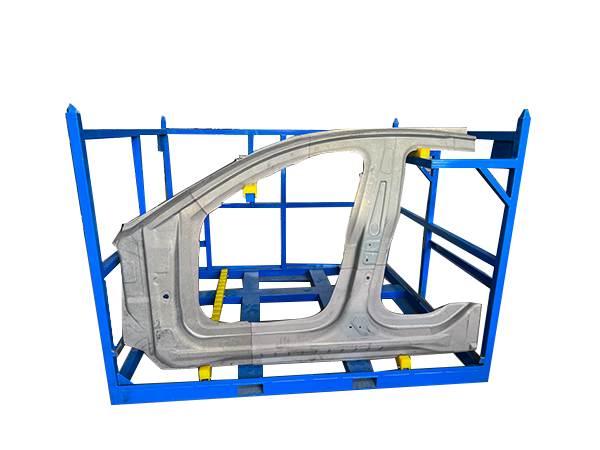
Single-material designs tend to fail in one of two ways. Foam-only inserts compress permanently once heavy components rest on them for months, so cavities loosen and parts start to shift. Plastic-only inserts protect the structure but mark the very surfaces they are meant to guard. The dual-material construction avoids both failure modes: load goes into the stiff layer, cushioning goes where parts touch, and neither function wears out the other.
The HDPE base plate is specified against real working loads. Standard ranges cover 5 to 50 kg per cavity, set by the host rack structure. Slot walls and locating ledges are cut from a thickness that survives daily scraping by metal brackets. Because HDPE is unaffected by oil, coolant and most cleaning agents, the bottom layer stays dimensionally accurate in workshops where foam alone would swell or stain.
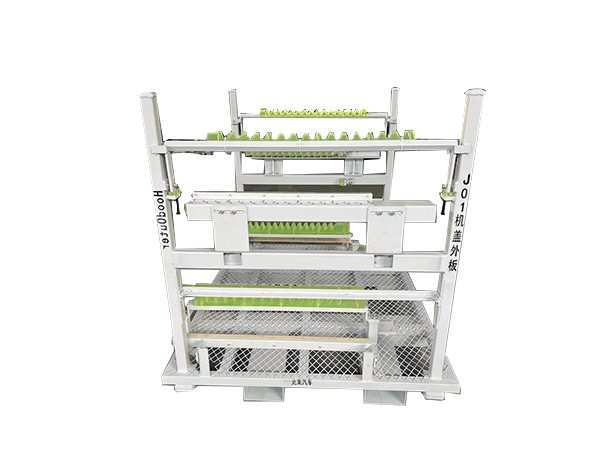
The EVA cushion layer is selected by hardness and thickness to match the part above it. Softer grades wrap polished pistons and painted covers, while firmer grades carry aluminium castings without bottoming out. Its closed-cell structure absorbs no water or cutting fluid, and it recovers after compression instead of leaving a permanent imprint inside the cavity.
Bonding is treated as an engineering step, not an afterthought. Each project starts from part drawings or sample parts: base geometry is fixed first, contact points are mapped, and the cushion is laminated with sealed edges that survive wiping, washing and seasonal humidity. Samples are measured against the target part before any batch is produced, and every cavity revision is recorded against the project file.
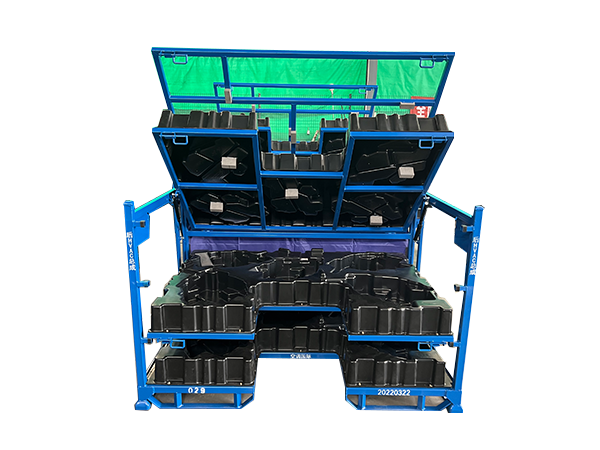
The hybrid format keeps the daily fleet simple. Standard outer bins stay unchanged while only the inserts are versioned per part family, so one bin footprint serves several product lines. Colour options in black, white, blue and grey allow visual separation between returnable flows, and flat marking panels leave room for part numbers or barcode labels applied on site.
Each batch is verified before shipment. Compression cycling confirms the base does not creep under maximum load, drop tests on the cushion layer check protection of sensitive faces, and cavity dimensions are sampled against first-article parts. The result is an insert that protects heavy automotive components cycle after cycle, with a documented material combination the receiving plant can audit at any time.


