
Three points in a parts flow where an EPP container earns its keep
An automotive container is usually specified at one point in the flow and then used at three. Inbound: a tier-two supplier loads castings or brackets and the box travels by truck twice a week. Line-side: the same box sits open on a trolley for a shift while operators pull parts out of it. Service: a smaller box goes out to a dealer and may not be opened for a year. Each of those puts a different demand on the same piece of foam, and the container that survives the first will not automatically survive the third.
| For inbound loops, density and stacking matter more than cushioning. We mould at 45 to 70 g/L for boxes that will be stacked four high in a trailer, and the feet are reinforced until a loaded box shows no set after a summer in a warehouse. Where a loop runs more than fifty trips a year, that extra material pays for itself within two seasons against one-way cardboard and the labour of repacking. | 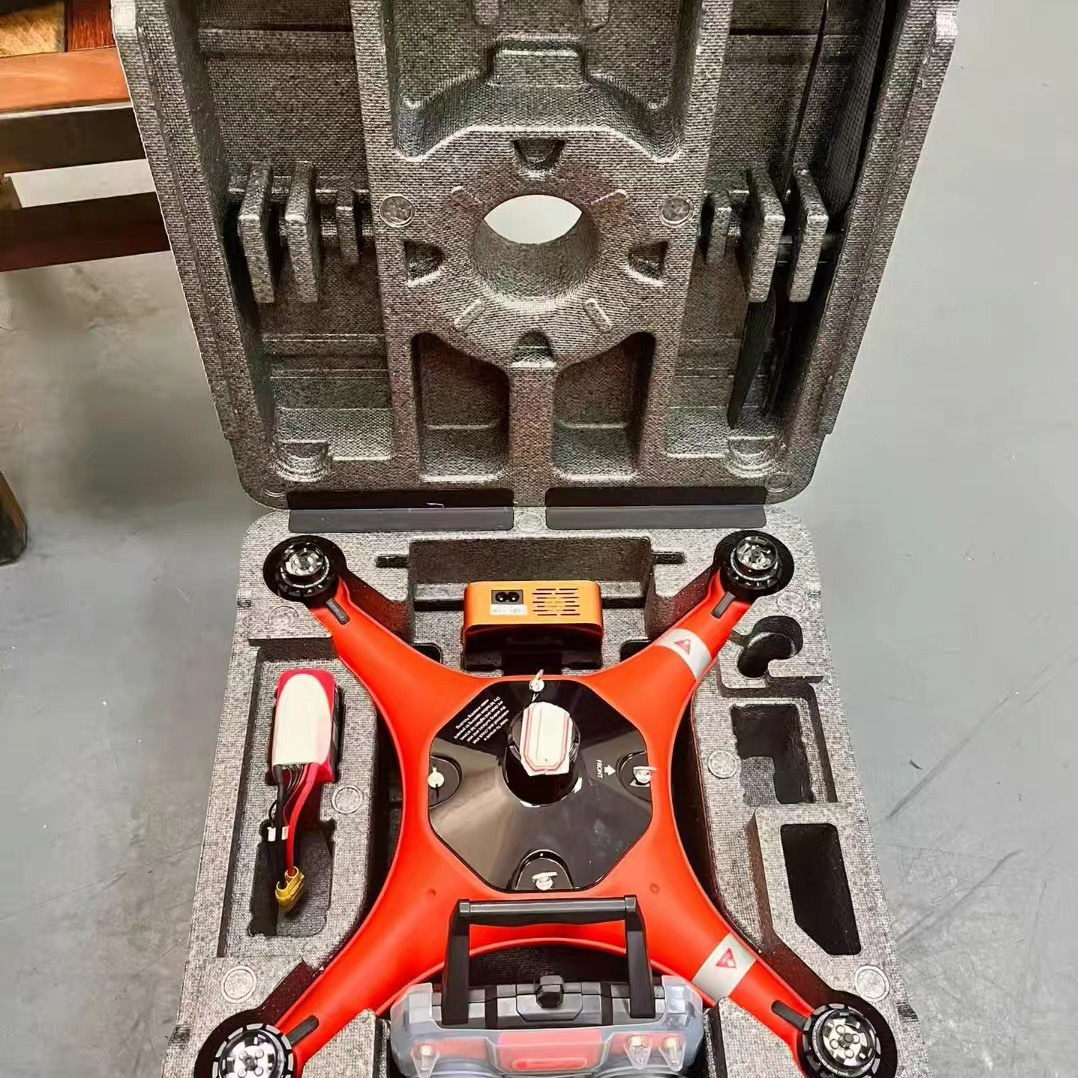 |
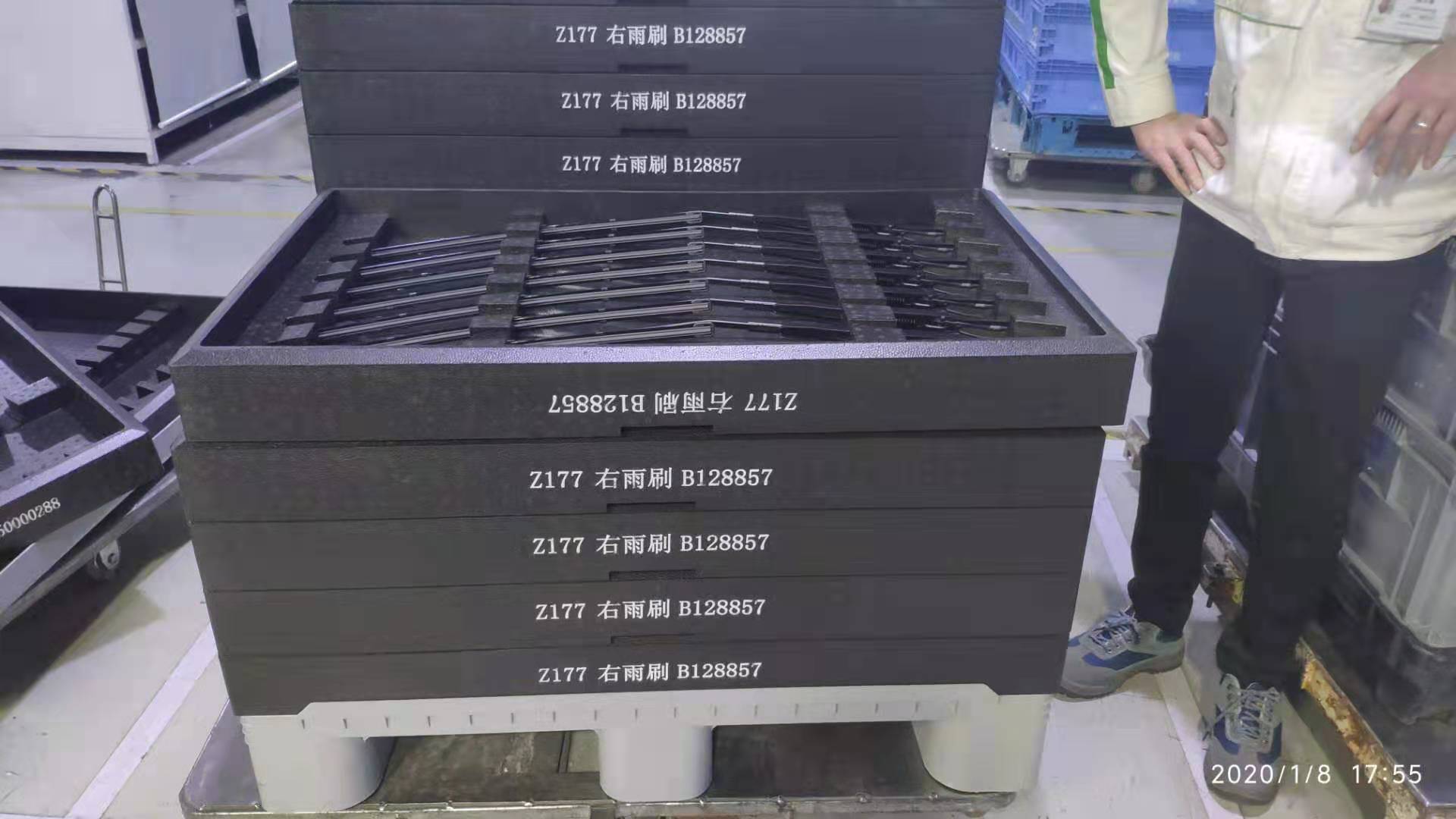 | Line-side boxes fail differently. They are dropped, kicked and loaded past the fill line, so the walls take the abuse rather than the base. A hinged lid with a single latch holds up better than a separate cover, and a shallow pocket that lets an operator lift a part with one hand is worth more on the line than a deeper pocket that protects it better in a truck. |
 | Service parts are the opposite case: the box may sit untouched for two years, so dust and moisture do the damage. A gasket groove and a desiccant pocket cost little and prevent the corrosion claim later. The photograph is from the 2025 Indonesia Industrial Exhibition, where several buyers arrived with a returnable loop already designed and left with a change to the lid rather than to the box. |  |


