


| Quantity: | |
|---|---|
Metal
TOYOE
A rack shipped to Europe competes with the pallet, not with the shelf. Every metre of a trailer, every doorway and every dock is already sized around the pallet, so a rack that ignores the pallet module pays for that ignorance in freight, in aisle width and in double handling. These racks start from the pallet: the footprint is drawn to the pallet, and everything else follows from that decision, from door width to stacking height.
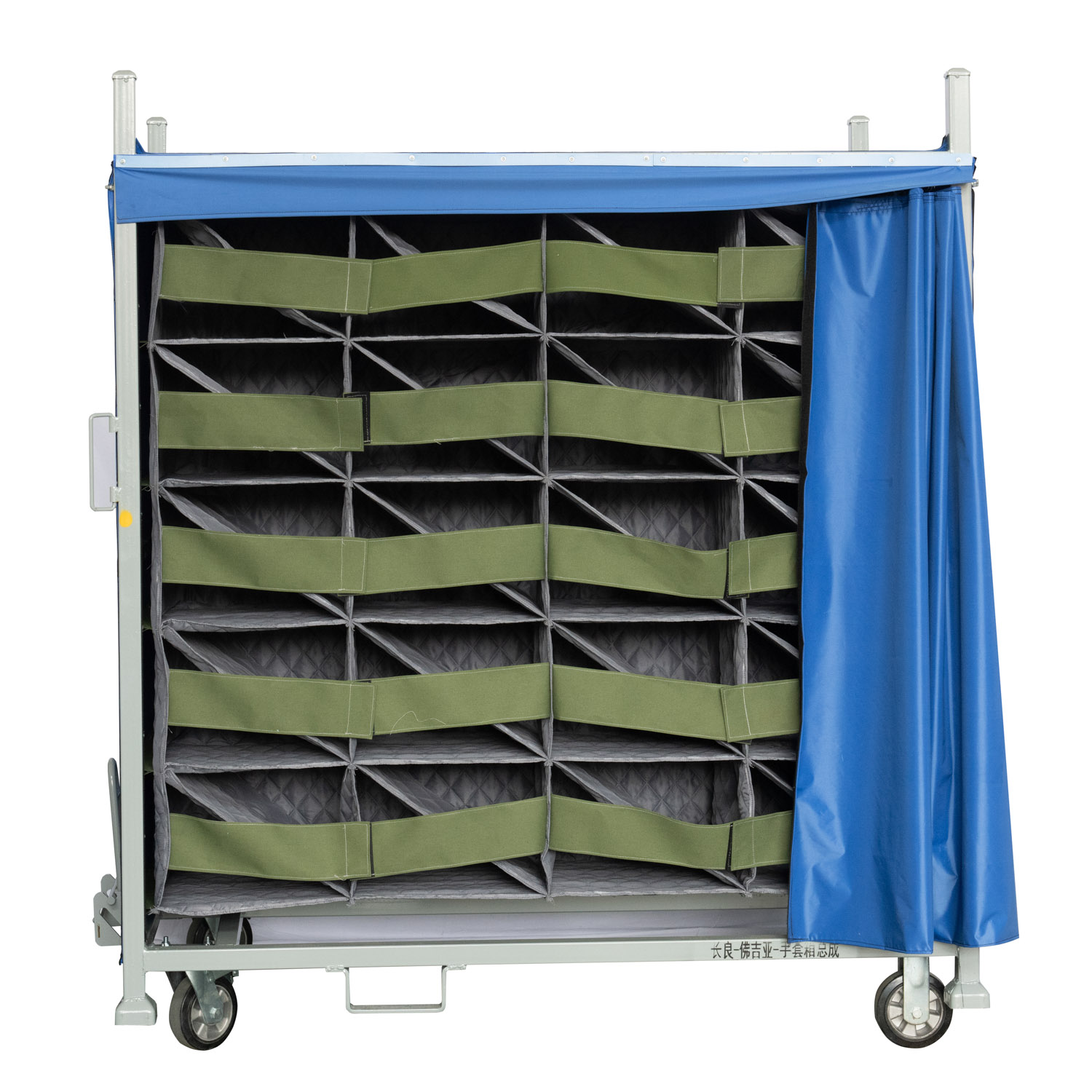
The footprint discipline is strict. Rack bases sit square on the standard pallet module, so a rack travels on existing pallet handling equipment, enters standard doorways, and fills a trailer or container in a planned pattern instead of a jigsaw puzzle. A loading plan comes with the quotation: how many racks per layer, how many layers, what remains for void space, so the buyer sees the freight cost before ordering.
Inside the steel, the lining cradles the parts. Polyurethane foam is cut per part family, so a finished component rests in shaped saddles rather than on bare steel, and the lining thickness follows the fragility of the load. Saddles that finally wear are replaced in minutes without touching the frame, and the foam wipes clean of oil film between batches, so each batch starts the same.
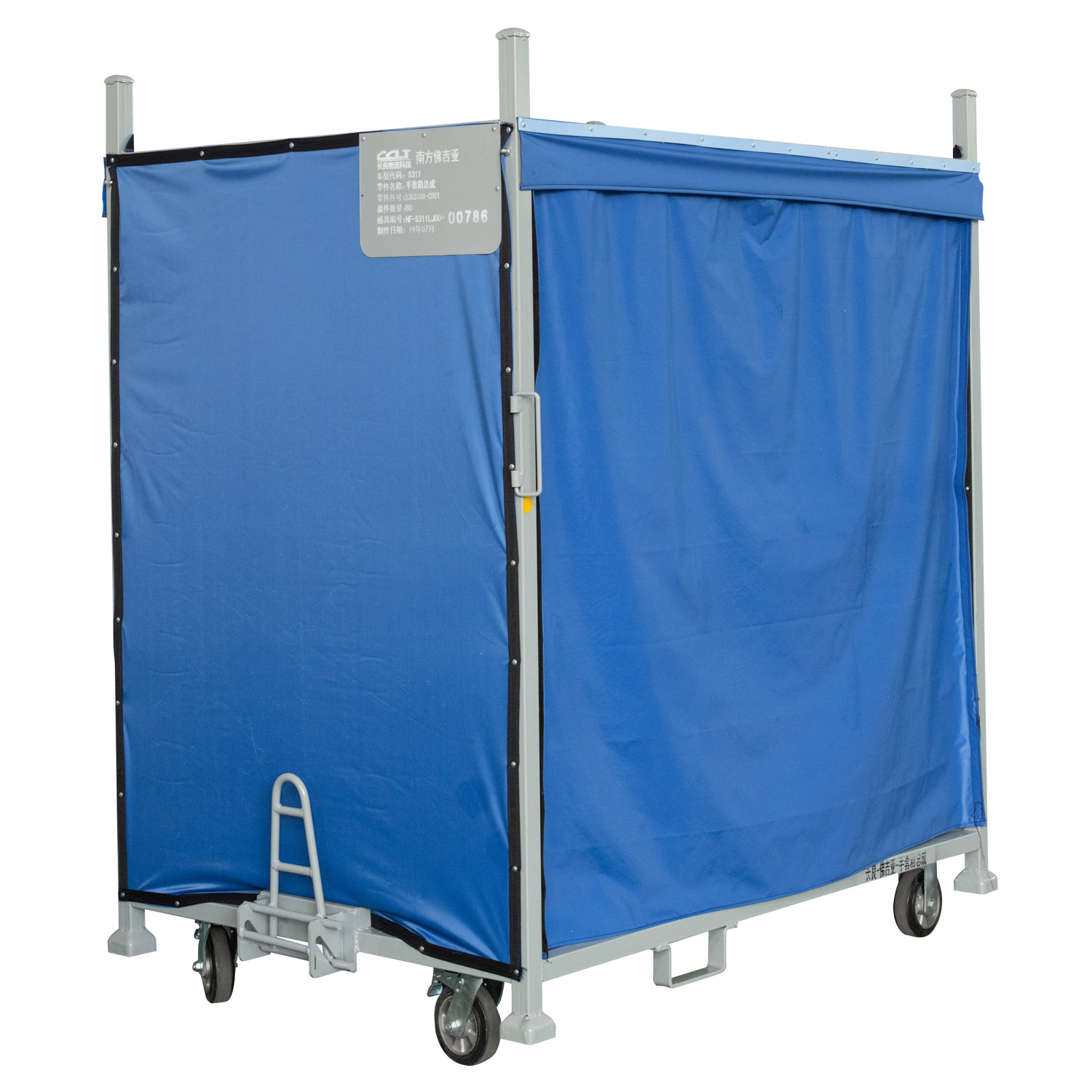
Stacking closes the logistics loop. Full racks carry their load on corner posts, not on the parts, so stacks ride stable through the plant and into the truck. When the delivery is unloaded, racks return flat or nested on the same vehicle that brought them, and a fleet planned on one footprint cycles between plants with no special handling at either end.
Compliance is treated as paperwork done early. Materials and coatings are declared by name, surfaces are finished so nothing sheds onto sensitive parts, and dimensions, loads and lining data are written into the specification sheet the buyer can file. A rack that arrives with its documents clears the first inspection without a follow up email.
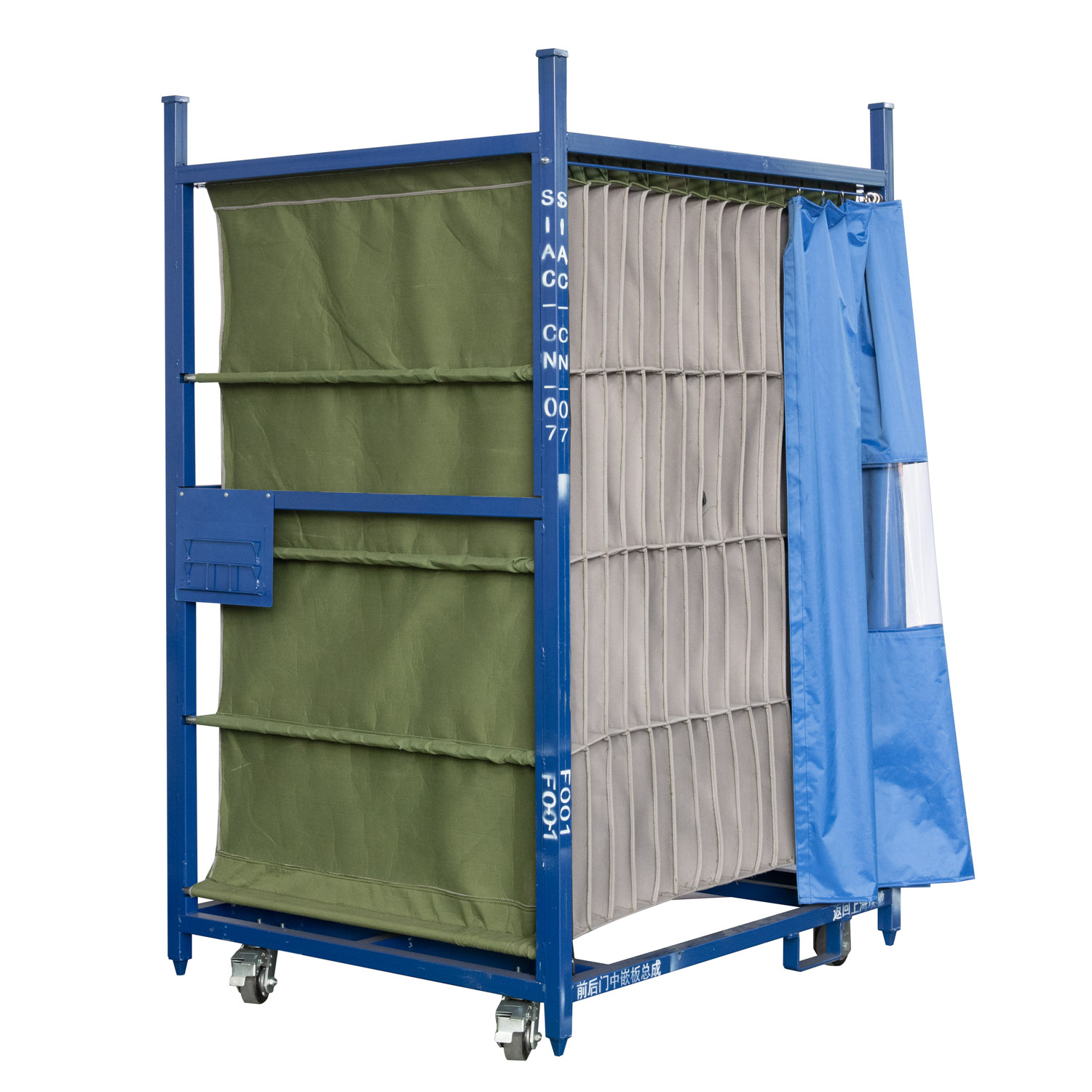
Identification travels on the rack. Colours follow customer RAL numbers, part numbers and handling marks are printed where handlers look, and each rack carries its own load and lining record so a mixed fleet still reads correctly at a glance. Replacement linings are ordered by that record, not by guesswork.
Verification follows the pallet too. Loaded racks are stack tested to the height they will ride, linings are checked for compression set after repeated loading cycles, and a trial rack is fitted to a pallet and loaded into a container to prove the plan. What ships is a rack that behaves like freight: predictable on the pallet, stable in the stack and clean at the lining.


