
How much of the part the foam should touch
The question that decides a liner is not which foam, it is how much of the part the foam is allowed to touch. A 900 g instrument with a machined reference face will drift out of calibration if the foam presses on that face; a 3 kg bracket with a painted edge arrives marked if the foam holds it by the edge alone. Both problems are settled on the drawing, before anything is cut, and the same sheet can serve both if the pockets are laid out differently.
| Sheet runs from 30 to 90 kg/m3 and the grade follows the part weight, but the surface finish decides the rest. Plain EVA is fine against a textile or a raw casting. Flocked EVA adds a soft face where a lacquered panel or a display window rests. A laminated PE film stops plasticiser migrating into rubber seals and optical parts, which matters more than density on instrument work. | 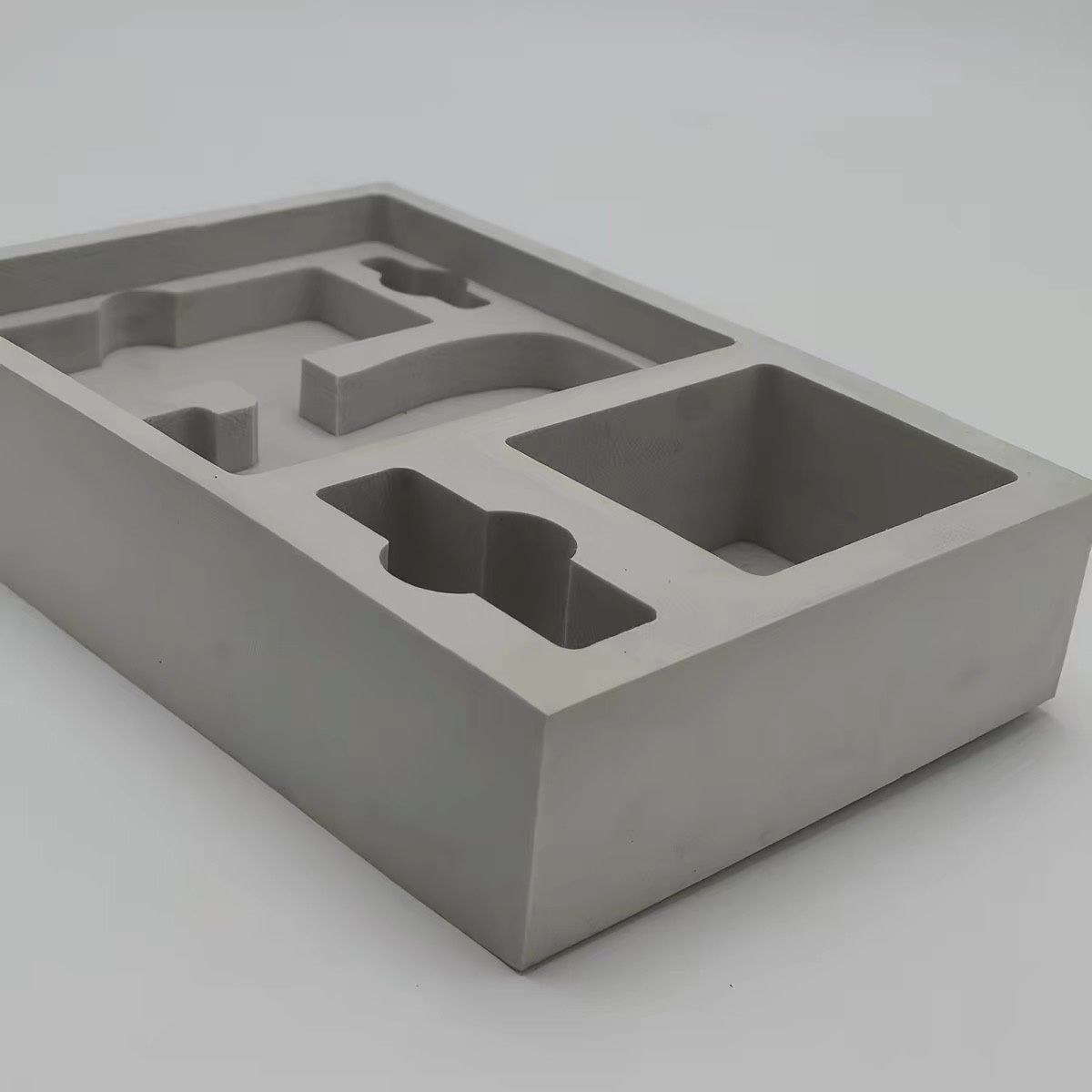 |
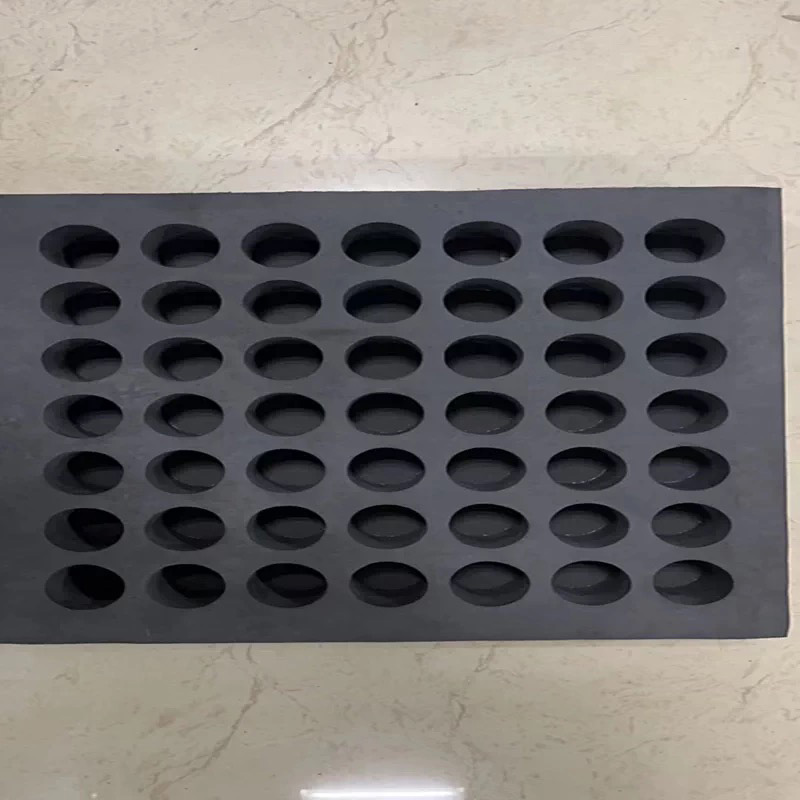 | A cut liner holds by contact, so the pocket is generous where the part is fragile and tight where it is not. We leave 1 to 2 mm clearance on a machined face and 0.5 mm on a cast boss, then check the fit on a sample before the batch runs. Where the part has to be lifted out with gloves, the finger reliefs are cut deeper than a drawing alone would suggest. |
 | Nothing here needs a mould, which is why an instrument maker with twelve variants can hold one liner program instead of twelve tools. The photograph is from the 2025 Indonesia Industrial Exhibition, where the useful conversations were about the parts that had arrived damaged rather than the many that had not. |  |


