


| Quantity: | |
|---|---|
Cushioning is usually chosen for the first hit, but the second one often does the damage. A lively foam catches a falling part, stores the energy, and throws it back up; the part lands again, sometimes on the lid, at a speed nobody designed for. High density EVA behaves differently. Its cells crush and stay crushed, so the first impact ends where it started.
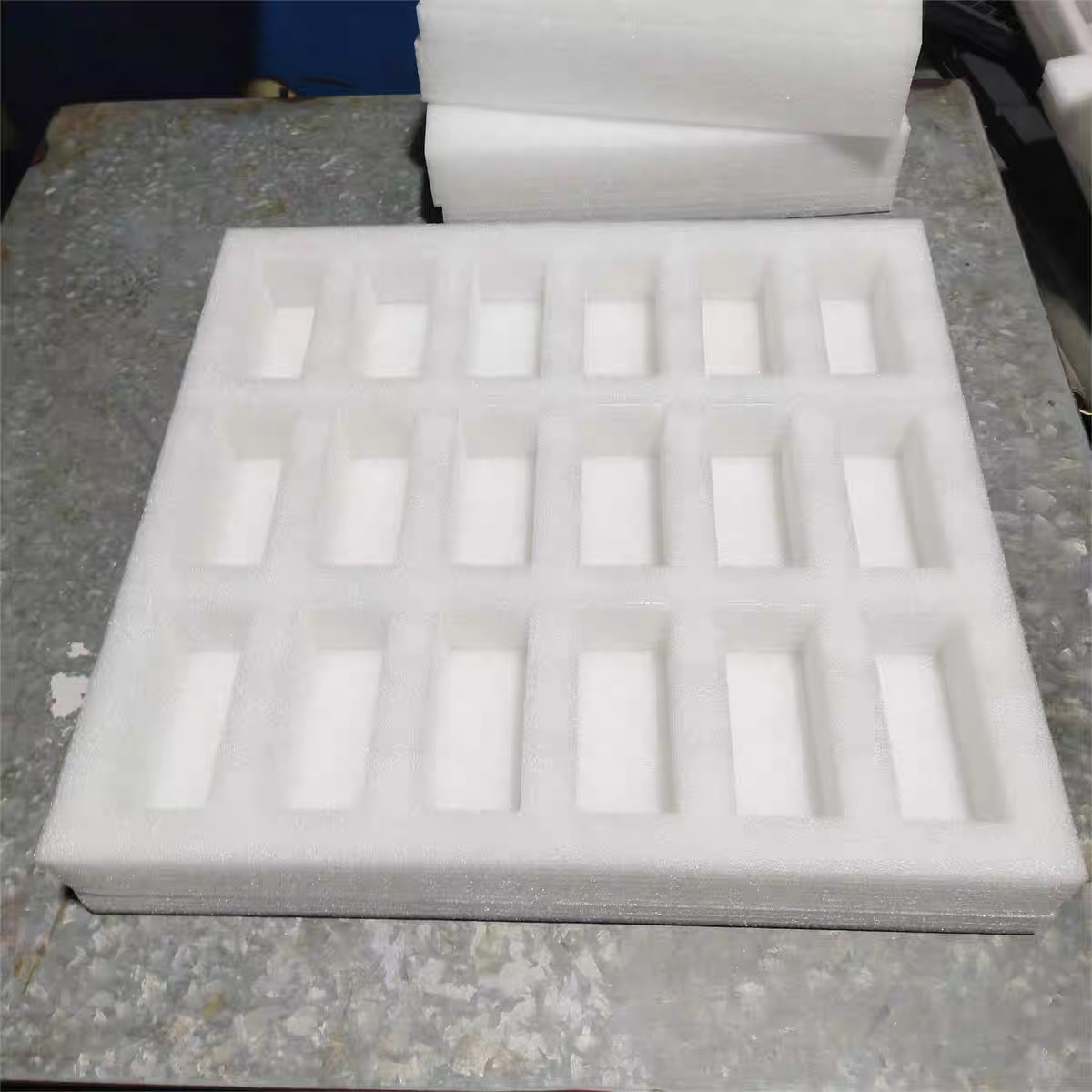
Rebound is a physics choice. A resilient foam is a spring: it returns a share of what it absorbs, and the return speed depends on that share. Low rebound grades dissipate the energy inside the crushed cells, so the recovery height shrinks. The trade off is stiffness: push density too far and the cushion stops absorbing and starts transmitting the shock into the component.
The layout therefore uses two roles. Contact areas are cut from a dense, low rebound grade that catches the part and keeps it down. Around them, a softer mid density layer provides the travel that absorbs the main drop, and moulded stop faces define the maximum movement so a rebounding component cannot leave its pocket. The drawing states which surface does which job.
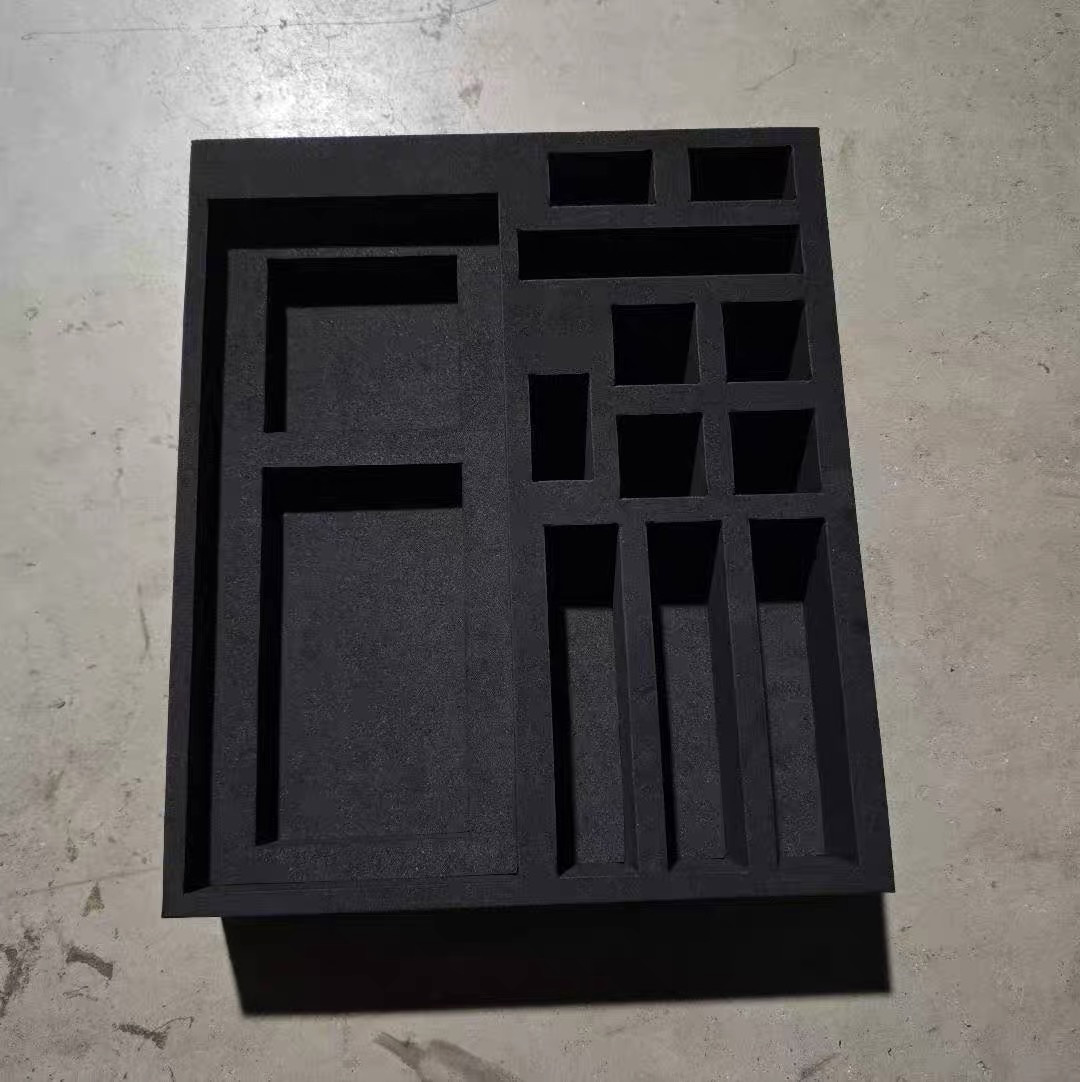
Precision parts add their own constraints. The fragility level sets the acceleration the component may see, which in turn sets the travel and density. Faces that must not be touched get clearance rather than cushion, and the lid is positioned so it never sits on the part after a drop. A small free space above the cavity is deliberate; it is where the rebound ends.
Verification records both hits. Instrumented drops measure the acceleration of the first impact and of the rebound that follows, and a camera shows where the part travels. Densities are compared on one rig, and the acceptance rule is simple: the second hit is weaker than the first, and neither reaches the fragility limit. The same pad is then dropped repeatedly to show the performance holds.
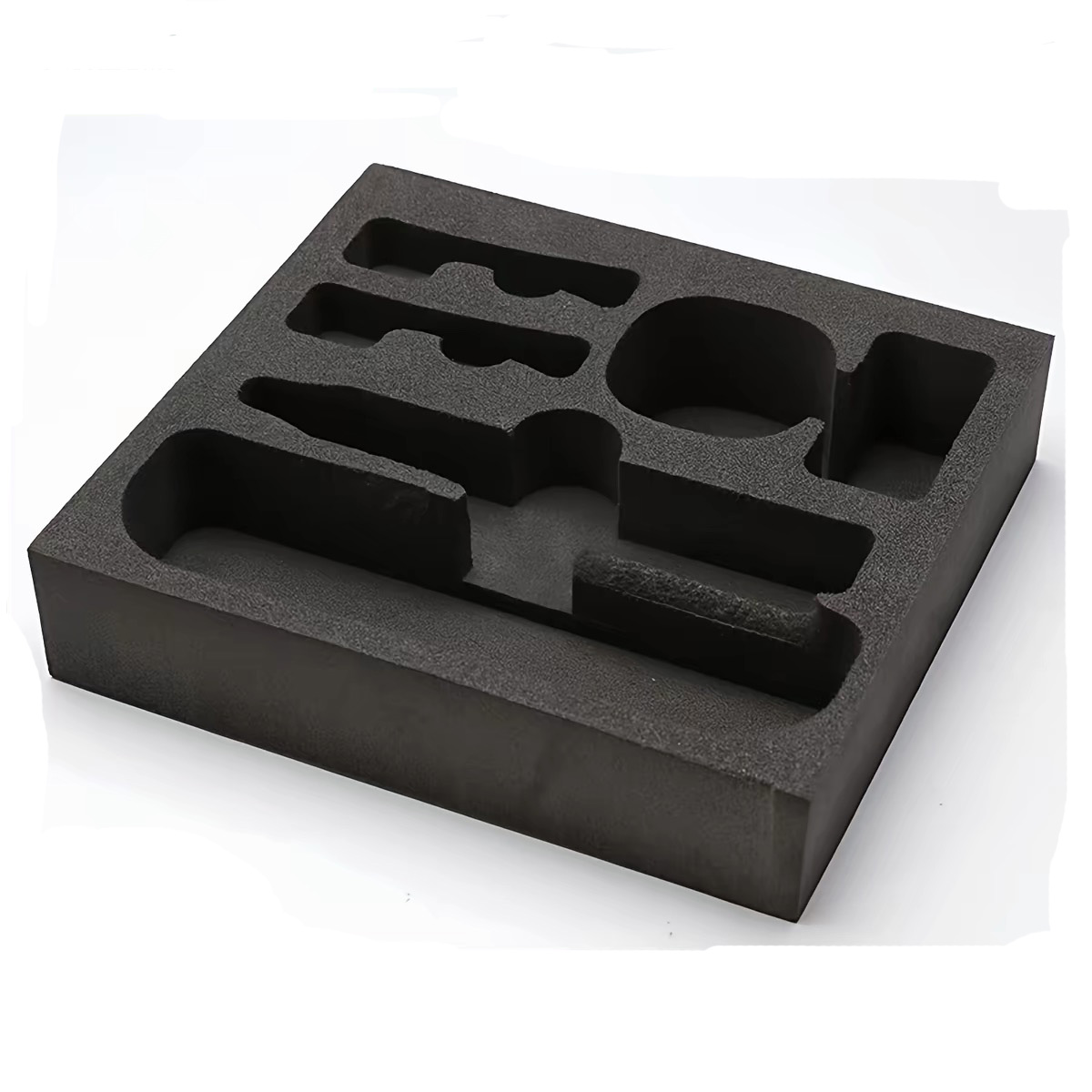
In service, low rebound foam leaves a memory. Each drop leaves a shallow dent where the cells crushed, and the dent is information: packs that return with deeper marks are seeing rougher handling than specified. Dents beyond the stated depth retire the cushion. Washing is checked too, since some grades stiffen after repeated wet cycles.
To quote a cushion that manages both hits, send the component weight and fragility level, the drop height and transport mode, surfaces that must not be touched, crate inner dimensions, stacked layers, cleaning agents, target cycles, and annual volume. We return a two grade density layout with stop faces, rebound test data showing first and second impacts, colour marked grades on the drawing, and samples for a line trial.


