
Views: 0 Author: Site Editor Publish Time: 2026-09-30 Origin: Site
Customizing logistics infrastructure solves specific operational bottlenecks. Off-the-shelf products simply fail these unique tests. However, this customization introduces new procurement variables. You face mandatory order volumes. The industry calls these Minimum Order Quantities (MOQ). You also face extended delivery schedules. We call these lead times. Planning for a custom logistics rack requires careful alignment. You must sync your operational rollout schedule. You must account for manufacturing realities. These realities include complex steel fabrication. They involve expensive tooling setups. They also involve unpredictable global freight transit.
This article clarifies the procurement process. We provide a realistic framework. Our evidence-based approach empowers supply chain managers. You will learn to calculate exact MOQ requirements. You will accurately forecast production lead times. You will select a reliable manufacturing partner safely. Our methods prevent supply chain disruption.
Custom metal fabrication demands highly specialized processes. Factories invest heavy capital before cutting any steel. These initial investments dictate your MOQ. We must unpack the reality behind these numbers.
Cost amortization drives the entire pricing structure. Suppliers build custom jigs. These jigs hold parts securely during robotic welding. Engineers design molds for unique plastic protective components. CNC machines require specialized digital programming. Suppliers spread these upfront costs. They divide them across your entire production run. Small orders cannot absorb these expensive setup fees. Low volumes result in disproportionately high per-unit costs. You essentially pay more for factory setup than raw steel.
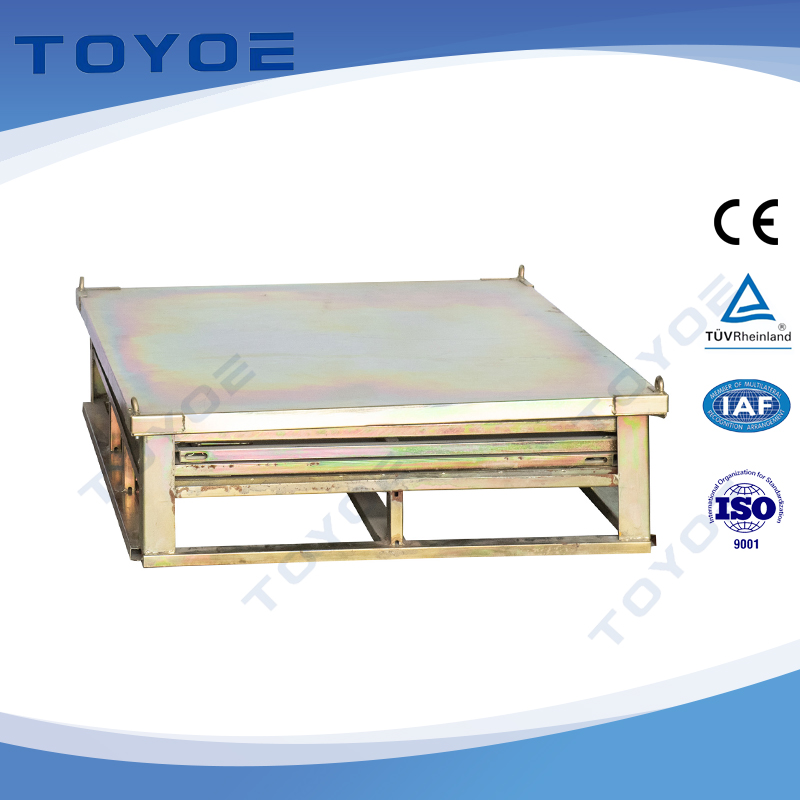
Raw material sourcing presents another major volume barrier. Steel mills rarely sell small batches. They demand minimum tonnage for specialized material grades. You might require high-tensile steel. You might need specific grades for a foldable galvanized steel pallet rack for heavy automotive components. If the mill requires a 10-ton minimum, your order must consume those 10 tons. Suppliers pass this material MOQ directly to you.
You need a clear decision matrix. Calculate your True MOQ correctly. Weigh your immediate capital expenditure against long-term benefits.
Consider the following ROI factors:
Best Practice: Always evaluate the five-year return on investment. Do not focus solely on the initial unit price.
Common Mistake: Buyers often assume MOQs are arbitrary. They try negotiating MOQs down without altering the design. This tactic usually fails.
Mapping the production timeline sets realistic stakeholder expectations. Do not promise overnight warehouse integration. Custom builds take significant time. We break down the standard process below.
This initial stage focuses on final engineering. You must finalize your custom logistics rack specifications. Engineers calculate precise load capacities. They map exact exterior and interior dimensions. You review detailed CAD drawings. You must formally approve these files before progression.
This phase provides crucial operational risk mitigation. Never skip the physical prototype. You need a physical model. You must test the fitment of your actual products. Workers load the prototype physically. They verify structural integrity under maximum stress.
Approved prototypes trigger the mass production run. Welding times vary based on design complexity. Surface treatments add further time variations. Powder coating cures very quickly. Hot-dip galvanizing requires off-site processing. This step adds logistical delays.
Shipping distances dictate this final timeline. Domestic delivery moves quickly via standard flatbed trucks. Ocean freight takes several weeks. You must include buffer times. Ports experience frequent congestion. Customs clearance often delays containers.
Standard Custom Rack Production Timeline
| Production Phase | Estimated Duration | Key Bottlenecks |
|---|---|---|
| Engineering & Design | 1 - 2 Weeks | Client CAD approval delays |
| Prototyping & Testing | 2 - 3 Weeks | Failed load tests requiring redesign |
| Mass Production | 3 - 5 Weeks | Surface treatment outsourcing |
| Transit & Customs | 2 - 6 Weeks | Ocean freight port congestion |
Engineering choices directly manipulate both MOQ thresholds and production speed. Every feature impacts your timeline. We analyze these features-to-outcomes below.
Consider custom versus hybrid approaches carefully. A completely bespoke build takes much longer. It requires entirely new tooling. It demands extensive structural testing. Conversely, a hybrid approach modifies existing structures. You can adapt a standard metal pallet rack. Engineers simply add custom dunnage. They install specialized internal dividers. This method leverages pre-engineered base structures. Hybrid approaches often reduce lead times by 30%. You also face significantly lower MOQ requirements.
Comparison Chart: Fully Custom vs. Hybrid Approaches
| Criteria | 100% Custom Build | Hybrid Modification |
|---|---|---|
| Lead Time | 10 - 14 Weeks | 6 - 8 Weeks |
| Tooling Cost | High (Custom Jigs Required) | Low (Standard Base Used) |
| Average MOQ | 100+ Units | 20 - 50 Units |
Surface treatment variables heavily influence delivery dates. Powder coating finishes very quickly. Factories typically apply it in-house. Hot-dip galvanizing provides superior rust protection. It remains essential for outdoor environments. Cold storage applications also require galvanizing. However, galvanizing requires specialized outsourcing. Suppliers send bare racks to a massive dipping facility. This external step adds days. Sometimes it adds weeks to your lead time.
Foldability and complexity introduce strict quality assurance needs. Moving parts require highly precise engineering. Hinges for collapsible returnable packaging demand exact tolerances. Fabrication time increases significantly. Workers must assemble each folding mechanism manually. They must test every hinge. Stricter quality assurance testing slows down output. More moving parts equal longer production cycles.
You can actively negotiate MOQ minimums. You can also compress your lead times. Supply chain managers use smart procurement strategies. We recommend several proven approaches.
Strategic phasing eases corporate cash flow constraints. Negotiate a larger overarching contract upfront. Agree on a large Total Order Quantity. Ask for phased manufacturing blocks. Request staggered delivery schedules. You secure the higher volume discount. You avoid overwhelming your warehouse staging space.
Use prototype-to-production agreements strategically. Suppliers charge premium rates for one-off prototypes. Suggest specific contractual terms regarding these fees. Ask the supplier to credit the prototype costs. They apply this credit toward your mass-production invoice. You recover the prototype cost entirely. This happens once you meet the agreed MOQ.
Component standardization bypasses steel mill MOQs completely. Design racks using widely available standard steel sizes. Standard square tubes eliminate custom mill runs. You customize only the intricate internal structures. This approach slashes raw material sourcing delays.
Establish safety stock agreements for recurring rack orders. Ask your supplier to hold raw materials. They can also store semi-finished goods in their facility.
Follow these steps for safety stock:
This strategy cuts subsequent lead times in half.
Vendor due diligence prevents costly operational delays. You need clear shortlisting logic. Choosing a reliable custom logistics rack supplier requires deep analysis. You must look far beyond basic unit prices.
Assess their internal engineering expertise carefully. Look for Design for Manufacturability (DFM) support. Does the supplier offer proactive design feedback? They should suggest ways to simplify manufacturing. They should optimize the rack for faster production. A good partner makes your design cheaper.
Analyze their vertical integration levels. Determine how much work happens in-house. Do they handle welding internally? Do they run their own laser cutters? Do they operate a powder coating line? High reliance on subcontractors increases lead time volatility. Subcontractor delays become your delays. In-house processing ensures much tighter quality control.
Verify strict compliance and QA standards. Request their current operational certifications. Look for ISO 9001 compliance documents. Ensure they employ AWS certified welders. Demand written documentation on load testing. Ask how they test load-bearing capacities before shipping.
Watch out for these red flags:
Successful procurement requires careful balance. You must weigh exact design specificity against harsh manufacturing realities. Understanding MOQ drivers empowers your purchasing team. Acknowledging lead time constraints prevents launch failures.
Follow these actionable next steps immediately:
Solid preparation guarantees better supplier negotiations. You will secure the right racks on schedule.
A: Yes. Standard practice involves paying a premium for a prototype. Suppliers often refund or credit this amount if the mass order proceeds.
A: It typically adds 1-2 weeks. Precise tolerance requirements demand extra fabrication time. Sourcing and assembling heavy-duty hinges also extends the schedule.
A: It varies by supplier and design complexity. Realistically, it ranges from 50 to 100 units. This volume justifies the initial tooling and setup costs.
A: Designing for knock-down (KD) or foldable capabilities maximizes container utilization. You ship more units per container. This freight efficiency easily offsets higher upfront design costs.

