
Views: 0 Author: Site Editor Publish Time: 2026-09-18 Origin: Site
Transitioning to closed-loop logistics requires significant upfront capital. You project your returns based on a critical assumption. You expect your assets to survive hundreds of cycles. However, laboratory load tests rarely mirror the chaotic reality of daily operations. Forklift impacts and automated washing chemicals rapidly degrade plastics. Improper folding and rough reverse logistics handling cause unexpected asset failures.
This guide breaks down how daily operational stressors degrade these units. We will show you how to match specifications to actual handling realities. You will also learn the criteria required to select a supplier. They must be capable of supporting long-term, high-yield asset lifecycles. Real-world durability demands strategic planning and uncompromising material standards.
Static storage in a warehouse presents a highly predictable environment. Dynamic transit introduces severe kinetic forces. Weight shifts constantly during braking and turning. This persistent movement stresses container walls. Over time, plastic polymers experience severe fatigue. Structural integrity declines much faster than in static conditions. We often see corner joints weaken first under dynamic loads. You must account for dynamic forces when planning weight limits. Laboratory static compression tests often overstate actual transit durability.
Human error drives high breakage rates in modern warehouses. Speed-driven logistics environments often prioritize turnaround times over care. Forklift tine strikes puncture container bases frequently. Pallet jack impacts shatter exposed side panels. Conveyor jams crush plastic containers under immense system pressure. Standard plastics develop micro-fractures after repeated impacts. These invisible cracks propagate silently under ongoing stress. Eventually, major structural failure occurs mid-transit. Standard returnable transport packaging must feature reinforced strike zones to survive these impacts.
Reverse logistics often inflicts the most damage on containers. Workers handle empty packaging carelessly. They stack units loosely in outbound trailers. Third-party carriers toss them without regard for structural limits. During the empty return trip, containers lack the stabilizing weight of internal goods. Vibrations violently rattle unprotected hinges and latches. Poor stacking alignment creates unequal pressure distribution across the fleet. Bottom units often buckle during transit due to uneven weight. We recommend implementing strict handling protocols even for empty returns.
Sanitation protocols require harsh chemicals. Industrial caustic washes strip away surface integrity over time. High-pressure spraying causes physical wear on polymer surfaces. Food-grade and pharmaceutical logistics require these intense cleaning cycles. Repeated exposure causes embrittlement in standard plastics. The material loses flexibility and becomes extremely brittle. Minor impacts then cause catastrophic shattering instead of flexing. You must carefully match your polymer choice to your specific wash chemicals.
Temperature fluctuations severely stress plastic materials. Moving containers directly from cold storage to hot trailers causes rapid expansion. This extreme thermal shock compromises structural rigidity. Cold environments make plastics rigid and highly fragile. High heat makes them soft and prone to dangerous warping. Warped containers fail to stack correctly on pallets. This instability threatens entire shipments during transit. You should specify wide-temperature tolerance polymers for volatile environments.
Outdoor yard storage exposes units to intense sunlight. UV radiation degrades plastic polymers at a molecular level. It breaks down the polymer chains rapidly. Untreated containers lose load capacity within just a few months. The plastic chalks, fades, and ultimately cracks. Long-term outdoor staging ruins asset longevity completely. Adding heavy UV inhibitors during the manufacturing process is absolutely essential.
| Stress Factor | Physical Impact on Polymer | Recommended Mitigation Strategy |
|---|---|---|
| Caustic Wash Chemicals | Surface embrittlement and micro-cracking | Specify high-density polyethylene (HDPE) with chemical-resistant additives. |
| Thermal Shock | Warping, softening, or extreme brittleness | Utilize blended polypropylene (PP) formulated for wide temperature ranges. |
| UV Radiation | Molecular breakdown, chalking, and load failure | Mandate commercial-grade UV inhibitors during raw material extrusion. |
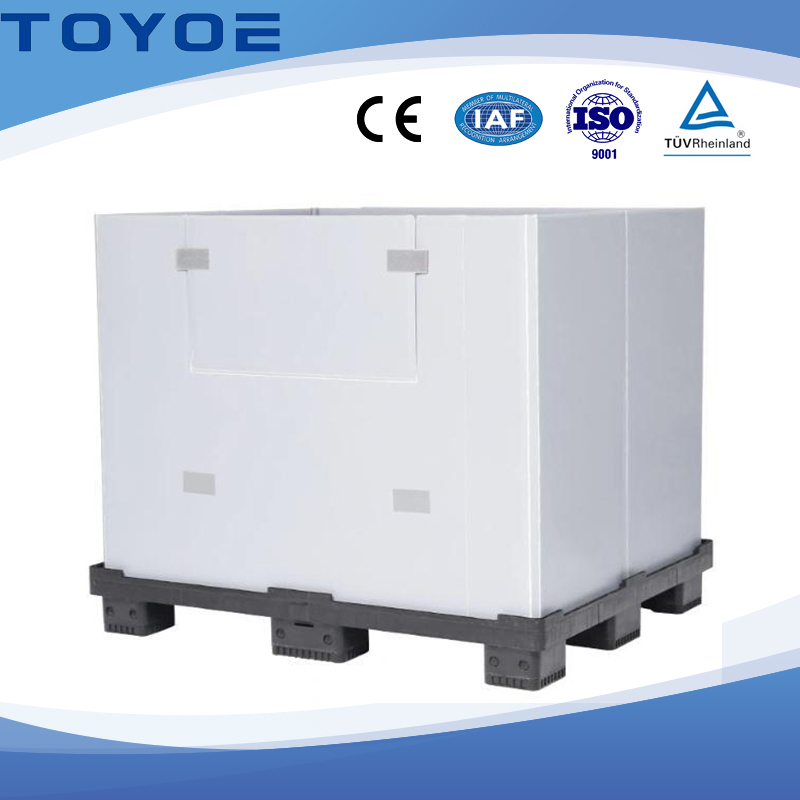
Decision-makers must mandate specific returnable transport packaging specifications. You should avoid monolithic container designs. Prioritize component modularity instead. When a forklift breaks a single skid, you replace the skid. You do not scrap the entire unit. Replaceable latches, hinges, and base runners save massive capital. Effective repair programs depend entirely on modular design logic. Modularity ensures minor damage does not cause total asset loss.
Space savings during reverse transit are highly attractive. However, moving parts introduce mechanical vulnerabilities. You must evaluate hinge durability carefully. Request comprehensive cycle-testing data for any stackable foldable plastic packaging with inner configurations. Dirt and debris often jam complex folding mechanisms. Operators force jammed hinges, breaking them instantly. Always balance your return-transit savings against potentially higher maintenance rates.
Internal goods shift dynamically during transit. This shifting acts like a hammer against outer container walls. Using proper packaging lining prevents this internal abrasion. Dunnage, molded foam, or textile dividers lock products firmly in place. The lining absorbs kinetic shock effectively. This protects the product while extending the lifespan of the outer container. Kinetic energy disperses through the soft lining rather than cracking the hard plastic shell.
Stop relying solely on theoretical "cycles to failure" metrics. Realistic attrition models must account for real-world asset loss. Theft, misplacement, and unrepairable damage deplete your fleet daily. You should factor in an industry-standard 3–5% annual shrink rate. This shrink rate drastically impacts your overall return calculations. If you ignore attrition modeling, you will inevitably run out of containers. Managers must plan for continuous, partial fleet replenishment.
Daily use tracking is absolutely mandatory. You cannot manage assets you do not actively track. Integrate RFID, BLE, or advanced barcode scanning systems. Tracking identifies exact bottlenecks in your supply chain. You will discover exactly where damage or theft most frequently occurs. Holding third-party handlers accountable requires irrefutable data. Technology provides the exact evidence needed to enforce handling standards across multiple facilities.
Never accept isolated lab compression data at face value. You must audit a potential returnable transport packaging supplier rigorously. Request real-world case studies from them. Ask for data involving similar payload weights and industries. Demand proof of survival under high daily cycle frequencies. True partners share their real-world failure rates openly. Transparent attrition data proves their operational experience.
Read the warranty fine print carefully. Many suppliers exclude normal "wear-and-tear" clauses completely. They only cover manufacturing structural defects. What happens when hinges fail after fifty cycles? Will they replace the component, or blame operator error? You need a clear, documented Service Level Agreement. Define exactly what constitutes a defective unit beforehand.
Do not commit to fleet-wide capital expenditure immediately. Demand a limited field-test rollout first. Run a pilot program in your actual supply chain. Test the containers against your specific washing chemicals. Let your warehouse operators handle them daily under normal conditions. Prototyping reveals hidden design flaws before major investments occur. Field testing confirms whether the product survives your unique operational stressors.
Daily operational use will inevitably degrade your physical assets. Long-term success depends on anticipating your specific operational stressors. You must identify mechanical, chemical, and environmental threats accurately. Then, design your container specifications around those exact realities. Ignoring real-world handling abuse leads to rapid asset failure and financial loss. We advise supply chain leaders to act proactively.
Your immediate next step is conducting a thorough handling audit. Map the exact impact points across your entire logistics loop. Identify exactly where forklifts strike and where chemicals degrade materials. Gather this practical data before initiating any supplier RFPs. Armed with reality-based data, you can build a resilient, closed-loop packaging system.
A: Lifespans vary heavily based on material and trip frequency. Heavy-duty High-Density Polyethylene (HDPE) units typically last 3 to 7 years. Constant daily cycles, rough handling, and caustic washes push lifespans toward the lower end. Utilizing modular parts significantly extends this average lifespan.
A: You must dismantle the internal dunnage before washing. Use sanitation chemicals verified compatible with your specific polymer. Ensure water drains completely from hinge mechanisms. Trapped water breeds bacteria and degrades metal hinge pins. Regular inspection of moving parts prevents sudden mechanical failures.
A: Lining serves a critical dual purpose. First, it safeguards Class-A surfaces of the product from scratching and abrasion. Second, it absorbs internal kinetic energy. This shock absorption prevents heavy goods from hammering against the outer container walls, extending structural life.
A: Your specifications must list key performance metrics. Include static and dynamic load capacities. Detail the exact footprint dimensions to ensure vehicle optimization. Specify required temperature tolerances and specific polymer types. Always mandate replaceable, modular components for high-wear areas like hinges and skids.

