
Views: 0 Author: Site Editor Publish Time: 2026-10-16 Origin: Site
High-value, restricted, or sensitive inventory requires strict chain-of-custody protocols inside any facility. Traditional centralized security cages often create frustrating pick-path bottlenecks during busy shifts. Warehouse managers frequently struggle balancing asset protection against operational speed. Forcing order pickers to travel across a massive facility to access a single locked room wastes valuable labor hours. It also heavily complicates batch-picking routines for mixed orders. Decentralizing security directly to the rack or shelving level offers a smarter, highly efficient approach. This article provides an objective framework for evaluating, selecting, and implementing a decentralized storage system. You will learn how to properly balance strict security requirements against acceptable workflow friction. We explore material durability, modern locking mechanisms, and supplier vetting strategies to carefully guide your procurement choices.
Centralized security cages consolidate risk but severely cripple picking velocity. Traditional warehouse layouts group high-value items into a single fortified zone. This forces workers to abandon optimized routing paths. Pickers must detour to the secure cage, locate a manager for access, and log their entry. These steps inflate travel times significantly. Batch-picking for mixed orders becomes inefficient when logic-based routing software cannot account for human delays at the cage door.
Micro-segmentation solves this operational headache. You can isolate highly regulated items directly within standard aisles. A reliable lockable plastic storage box allows you to store expensive electronics, pharmaceuticals, or restricted tools right next to standard merchandise. You place the security exactly where the product lives. This eliminates unnecessary transit across the warehouse floor. Pickers simply unlock the container at the designated pick face, grab the item, and continue their standard route.
The measurable outcomes of this decentralized approach are compelling. Facilities typically observe immediate drops in shrinkage rates. Inventory discrepancies resolve much faster because managers can isolate audits to specific containers rather than an entire cage. Furthermore, labor costs decrease. Companies save hundreds of hours previously lost to security-cage transit times. The initial hardware investment pays off rapidly through these recovered labor hours.
Common Mistakes: Do not secure low-value items just because they are small. Over-securing standard inventory creates unnecessary workflow friction. Reserve locked containers exclusively for high-shrinkage or regulated SKUs.
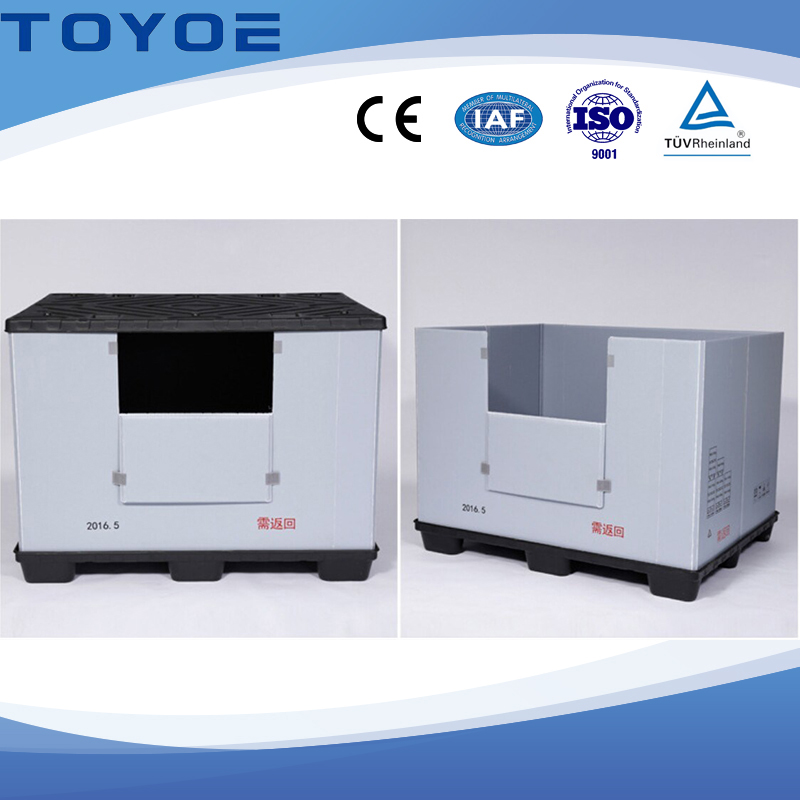
Selecting the right container demands strict attention to material science and mechanical design. Commercial-grade plastics shatter under forklift impacts or heavy pallet loads. Industrial-grade polymers are mandatory. High-Density Polyethylene (HDPE) provides superior tensile strength. It absorbs impacts without cracking. HDPE also performs exceptionally well in cold-storage environments where inferior plastics turn brittle.
Locking mechanism architectures dictate both security levels and user experience. Padlock-ready hasps offer simplicity. They allow facilities to use existing padlock inventories. Integrated combination locks eliminate physical keys but require robust code-management policies. Tamper-evident seal compatibility is crucial for single-use transit. Emerging RFID and electronic latching systems provide ultimate accountability. They log exactly who opened the container and when.
Infrastructure integration ensures your new fleet fits your current racking. Containers must match Euro-standard footprints for optimal pallet utilization. They must rest securely on existing wire decking without slipping. Shelving depth determines how many units you can store back-to-back. If you operate automated storage and retrieval systems (AS/RS), you must verify deflection limits. Evaluate a diverse lockable warehouse plastic box catalog to ensure exact dimensional compatibility.
Stackability and load capacities prevent catastrophic structural failures. Evaluate the lid design carefully. Attached hinged lids offer seamless closing but can interfere during rapid picking. Detached lids support heavier top loads. You must review both static load (stationary stacking) and dynamic load (movement during transit) thresholds. Exceeding these limits causes the bottom container to buckle under palletized weight.
Comparison of Locking Mechanisms
| Lock Type | Security Level | Ideal Application | Maintenance Need |
|---|---|---|---|
| Padlock Hasp | Medium | Static storage racks | Physical key tracking |
| Integrated Combination | High | Multi-shift picking | Routine code resets |
| Tamper-Evident Seal | Basic | Transit between facilities | Continuous seal replacement |
| RFID / Electronic | Maximum | Regulated pharmaceuticals | Battery and software updates |
Different industries face unique regulatory hurdles regarding inventory protection. Healthcare and pharmaceutical logistics require rigid chain-of-custody protocols. Facilities storing controlled substances must comply strictly with DEA or local health authority mandates. Containers must feature heavy-duty locking clasps. They must also meet sanitation standards. Smooth interior walls prevent particulate buildup and allow for rapid chemical sanitization.
Electronics and aerospace sectors face invisible threats. Static electricity destroys sensitive microchips and avionics components instantly. Standard plastic containers generate hazardous static charges during movement. Facilities must source Electrostatic Discharge (ESD) safe materials. An ESD-compliant container combines carbon-infused polymers alongside robust locking security. This dual protection safeguards against both physical theft and electronic degradation.
High-value retail and e-commerce fulfillment centers battle internal pilferage. Cosmetics, smartwatches, and designer accessories frequently disappear during sorting. E-commerce managers must protect these assets without slowing down rapid fulfillment service level agreements (SLAs). Keyless entry systems often bridge this gap. They provide fast access for authorized personnel while keeping opportunistic theft at bay.
Best Practices: Always consult your local fire marshal when deploying solid-walled containers. High-density storage can sometimes block overhead sprinkler penetration. Vented container designs often satisfy strict fire code requirements while maintaining physical security.
Deploying new security hardware introduces operational friction. The most common pitfall involves the key management challenge. Lost keys halt fulfillment instantly. Forgotten combination codes require supervisors to intervene, wasting precious minutes. You must standardize a master key hierarchy before deploying a single container. If utilizing combination locks, establish a secure, centralized database of override codes accessible only to shift managers.
Workflow friction remains a psychological and physical hurdle. Unlocking and relocking containers adds seconds to every pick transaction. You must address this transparently during staff training. Explain why the security is necessary. Frame the added seconds as a tradeoff for eliminating the long walk to the security cage. When workers understand the logic, adoption rates improve significantly.
To mitigate these adoption risks, follow a structured rollout plan. Do not secure everything at once.
Procurement requires more than just checking price tags. You must define clear success metrics before signing a purchase order. Track your baseline shrinkage rate for three months prior to deployment. Compare it against post-implementation shrinkage. Factor in any changes to your average unit-pick-time. A successful deployment reduces financial losses from theft while keeping picking speeds within acceptable margins.
Supplier vetting criteria determine the long-term viability of your hardware fleet. Look for manufacturers offering custom internal dunnage or dividers. Fragile items require internal compartmentalization to prevent transit damage inside the secured box. Scrutinize the warranty terms carefully. Hinges and lock clasps bear the most mechanical stress. Ensure the warranty covers these specific failure points rather than just the polymer shell.
Supply chain stability matters immensely for future expansions. If you double your facility size next year, your supplier must deliver identical containers. Mixing different container footprints ruins pallet stacking efficiency. Partner with an established lockable plastic storage box manufacturer capable of sustaining large volume orders over several years.
Move from pilot to procurement logically. Secure sample units first. Test them aggressively on the floor. Drop them from waist height. Run a fully loaded pallet jack against the corners. Evaluate how easily the locking mechanism clears dirt or warehouse dust. Only after passing these physical tests should you proceed with a bulk order.
Lockable containers offer a scalable, agile alternative to rigid security cages. They eliminate long transit walks and streamline batch picking. However, they only succeed if your locking protocols match your specific facility workflow. Careful material selection, strict key management, and targeted SKU deployment ensure you protect assets without crippling productivity.
Take action today by reviewing your latest inventory discrepancy report. Identify your most vulnerable aisle and contact a specialist for a comprehensive workflow assessment.
A: Compliance depends on your local fire marshal and sprinkler setup. Solid-walled boxes can block water flow. Many facilities utilize vented or perforated box designs to meet fire-flow requirements while maintaining adequate physical security for enclosed items.
A: Industrial-grade polymers like HDPE absorb moderate impacts and resist cracking better than commercial plastics. However, they cannot survive direct, high-speed forklift tines. Establish realistic expectations and use metal guardrails for high-traffic corner protection.
A: Most commercial-grade systems include an override solution. Keyed systems utilize a managerial master key. Combination models often feature a rear reset pin accessible via a specialized tool. In worst-case scenarios, maintenance teams follow a standardized drill-out and replacement protocol.
A: Yes, provided they feature reinforced nesting designs. Look for interlocking lids and recessed bases. This specific geometry aligns the weight perfectly, maintaining static and dynamic stability even when stacked multiple tiers high on a pallet.

