
Views: 0 Author: Site Editor Publish Time: 2026-08-21 Origin: Site
In automotive supply chains, compromised packaging often results in frustrating part rejections, lengthy LTL (Less-Than-Truckload) disputes, and severe line-down penalties. A single collapsed container can halt an entire assembly process instantly. Pre-shipment inspection serves as the final line of defense between basic operational efficiency and catastrophic transit damage. It guarantees valuable components remain completely secure from the warehouse dock all the way to the manufacturing floor. You simply cannot rely on visual guesswork when managing heavy auto parts.
A highly standardized inspection protocol ensures every automotive pallet box meets rigorous safety, load, and compliance requirements before it ever leaves the dock. Implementing these structural checks directly minimizes liability while aggressively protecting critical payloads. Read on to master the exact steps needed for validating your returnable packaging fleet effectively. This proactive approach transforms logistics into a highly predictable, streamlined operation.
Establishing a mandatory inspection routine requires time and dedicated labor. However, skipping this crucial step exposes your supply chain to unacceptable risks. A robust inspection framework delivers immediate operational benefits and prevents catastrophic downstream failures.
Carriers increasingly scrutinize outbound pallets. Freight companies utilize automated dimensioners and rigorous intake checks at their terminals. If they spot structural flaws, they often reject the load entirely. Rejections cause immediate shipping delays and frustrate end customers. Documented pre-shipment inspections shift liability away from the shipper in the event of transit damage. Keeping detailed records proves the packaging was pristine upon departure. This evidence protects you against unwarranted damage claims and unfair freight penalties.
Automotive components require absolute zero-tolerance for moisture, impact, or electrostatic damage. Modern powertrains contain delicate sensors. Electric vehicle (EV) electronics remain highly vulnerable to environmental factors. Sensitive interior trims scratch easily during turbulent transit. A cracked container wall compromises the internal environment. It allows moisture penetration, leading to rapid oxidation on machined metal parts. Ensuring absolute container integrity shields your most valuable assets from unpredictable transit conditions.
Returnable packaging demands significant initial capital expenditure. Catching minor structural fatigue early extends the lifespan of a returnable transport automotive pallet box. Identifying a hairline fracture before it spreads prevents complete unit failure. Repairing minor hinge issues keeps the container in active rotation. This diligent maintenance protects your initial investment and prevents sudden packaging shortages during peak production weeks.
Understanding technical specifications is vital for executing an effective inspection. You must evaluate containers against their engineered limits, not just their physical appearance.
Confirm the actual payload weight does not exceed the manufacturer’s dynamic load rating for transport. This rating remains significantly lower than the static warehouse stacking limit. Static capacity dictates how much weight the lowest box can bear while sitting stationary on a concrete floor. Dynamic capacity dictates the maximum safe weight when the box experiences vibrations, braking forces, and forklift handling.
Overloading a container dynamically invites disaster. Sudden stops in a trailer multiply the effective force exerted on the container walls. Always weigh outgoing payloads. Compare the recorded weight against the official dynamic rating before approving the shipment.
| Load Metric | Definition | Typical Limit (Heavy-Duty Box) | Inspection Focus |
|---|---|---|---|
| Static Load | Maximum weight capacity when stationary on a level surface. | Up to 4,000 kg | Check base runners for compression damage. |
| Dynamic Load | Maximum weight capacity during forklift movement or transit. | Up to 1,000 kg | Evaluate side walls for bowing or stress fractures. |
| Racking Load | Maximum weight capacity when suspended on pallet racks. | Up to 800 kg | Inspect center support beams for deflection. |
Audit the physical footprint before loading. Ensure interlock systems and base runners remain completely undeformed. Proper alignment guarantees stable double-stacking in standard 53-foot trailers. When base runners warp, they fail to nest securely into the lid of the box below. This instability leads to leaning stacks. Leaning stacks frequently collapse during sharp highway turns. A quick visual check of the nesting geometry prevents these dangerous tip-overs.
Industrial containers endure harsh environments. For HDPE (High-Density Polyethylene) or PP (Polypropylene) containers, you must evaluate long-term material health. Prolonged UV exposure turns flexible plastics brittle. Cold-weather embrittlement makes containers highly susceptible to shattering upon impact. Chemical solvent damage compromises the overall impact resistance.
Best Practice: Look for "chalking" or severe color fading on the exterior walls. These signs indicate advanced UV degradation. Retire brittle containers before they break during transit.
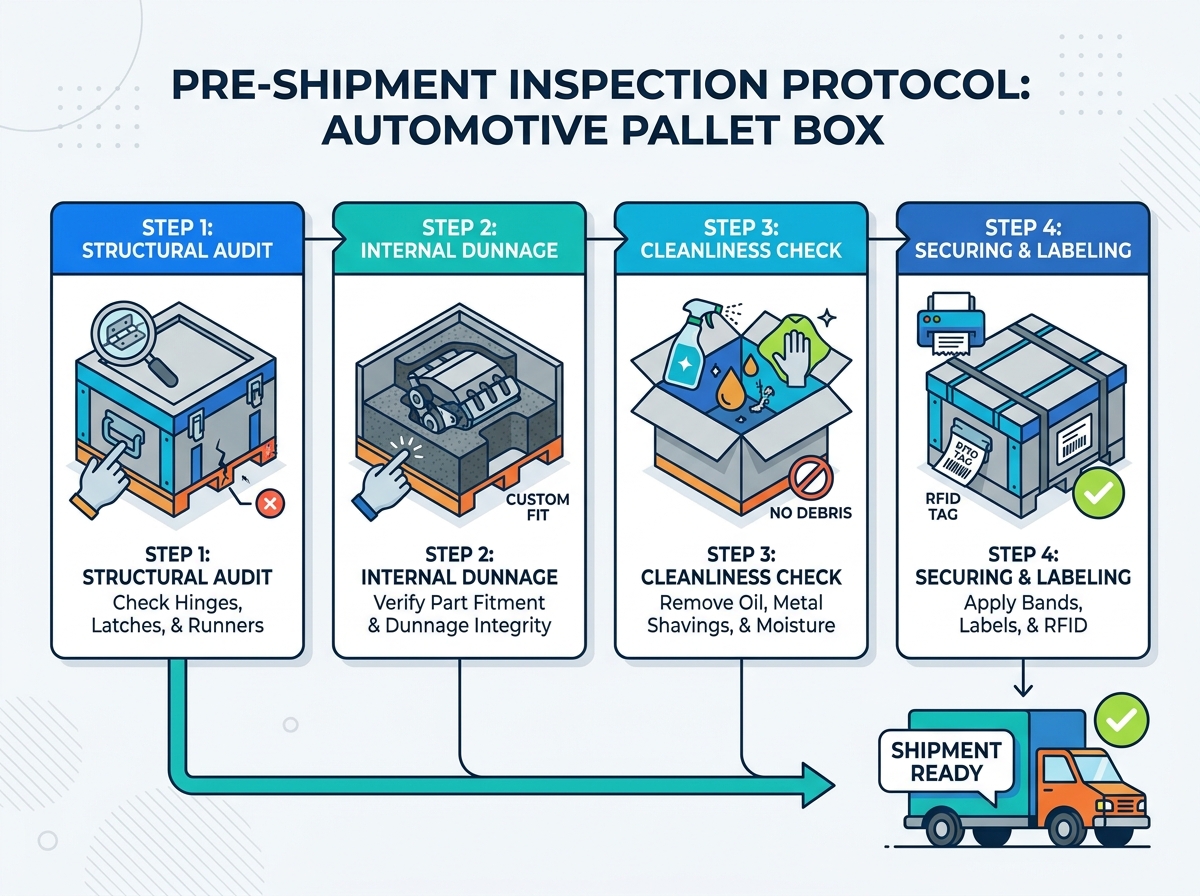
Implementing a structured checklist guarantees consistency across different warehouse shifts. Train your operators to follow this precise sequence for every outbound unit.
Physical integrity forms the foundation of transport safety. Operators must use their hands, not just their eyes.
Common Mistake: Ignoring minor cracks near the forklift tine entries. These small cracks quickly propagate under dynamic loads, leading to total base failure.
The exterior shell only provides primary defense. The internal organization determines component survival.
When heavy parts shift inside the container, they generate internal kinetic energy. This energy can punch through the exterior plastic walls during transit. Secure fitment eliminates dangerous internal movement.
Clean packaging prevents costly cross-contamination on the assembly line.
Residual oil can degrade rubber gaskets shipped in subsequent cycles. Metal shavings easily scratch delicate painted parts. Implementing a strict cleanliness audit safeguards the integrity of successive payloads.
Final preparation ensures the container navigates the logistics network accurately.
Overtightened plastic banding can crush container edges. Apply just enough tension to secure the lid without compromising structural geometry. Accurate labeling prevents misrouting, ensuring production lines receive their materials on time.
Identifying a defective unit only solves half the problem. You must manage the failure correctly to prevent operational bottlenecks and drive continuous improvement.
Instantly red-tag and isolate boxes failing structural criteria. Move them to a designated quarantine zone away from active loading docks. Never deploy a "borderline" box for heavy auto parts. The risk of transit collapse far outweighs the temporary convenience of using a compromised container. Clearly label the specific defect on the red tag to inform the maintenance team.
Log time-stamped photos of failures to build a reliable data trail. Capture macro shots of broken hinges, bowed walls, or missing latches. Upload these images into your warehouse management software immediately. This data trail proves invaluable for internal Quality Assurance (QA) reviews. It also provides undeniable evidence during carrier dispute resolutions if damage occurred during a previous inbound leg.
Track specific defect trends meticulously. Monitor the frequency of hinge failures, wall bowing, or premature runner detachments. Analyze this data quarterly. If components fail well before their expected lifecycle, use this data to renegotiate warranties. Consistent structural failures indicate poor manufacturing quality. Leverage your documented evidence to justify qualifying a new, higher-tier manufacturing partner. Demand better materials and superior engineering designs moving forward.
| Defect Type | Severity Level | Immediate Action Required |
|---|---|---|
| Broken Base Runner | Critical | Red-tag immediately. Remove from fleet. |
| Missing Drop-Door Latch | High | Quarantine. Route to maintenance for part replacement. |
| Torn Internal Foam Dunnage | Medium | Replace dunnage insert before loading parts. |
| Peeling Barcode Label | Low | Scrape off and apply a new routing label securely. |
Pre-shipment inspections transform a highly reactive supply chain into a strictly proactive one. By validating container limits and enforcing a rigid 4-step checklist, you safeguard sensitive parts effectively. This discipline drastically reduces administrative friction with carriers and eliminates costly transit disputes.
Integrate this comprehensive checklist directly into your existing WMS (Warehouse Management System). Train your dock workers to follow it without exception. Schedule a quarterly audit of your entire returnable fleet to baseline its overall health. Taking these decisive actions today guarantees smoother logistics operations tomorrow.
A: A standard inspection typically takes 60-90 seconds for a trained operator using a standardized checklist. Utilizing digital WMS tablets speeds up data entry. Familiarity with the specific container models allows inspectors to quickly target known weak points like hinges and base runners.
A: The structural AQL is strictly zero for critical load-bearing defects. Any crack in the base or side walls mandates immediate rejection. Minor cosmetic defects, such as surface scratches or slight color fading, carry a higher tolerance provided they do not compromise material strength.
A: Repairing load-bearing components via plastic welding presents severe safety risks. Repaired zones rarely match the original dynamic load ratings. We strongly recommend recycling the damaged unit and purchasing a replacement to maintain strict OEM safety standards and prevent transit collapse.

