


| Quantity: | |
|---|---|
plastic/metal
TOYOE
An engine is one of the hardest loads a packaging fleet carries: dense, heavy, with machined faces and cast housings that will not forgive a hard landing. Fixed steel frames protect it, but every empty frame travelling back to the supplier eats freight. A folding rack keeps the protection and gives back the space, locking rigid when loaded and folding flat once the engine is lifted out.
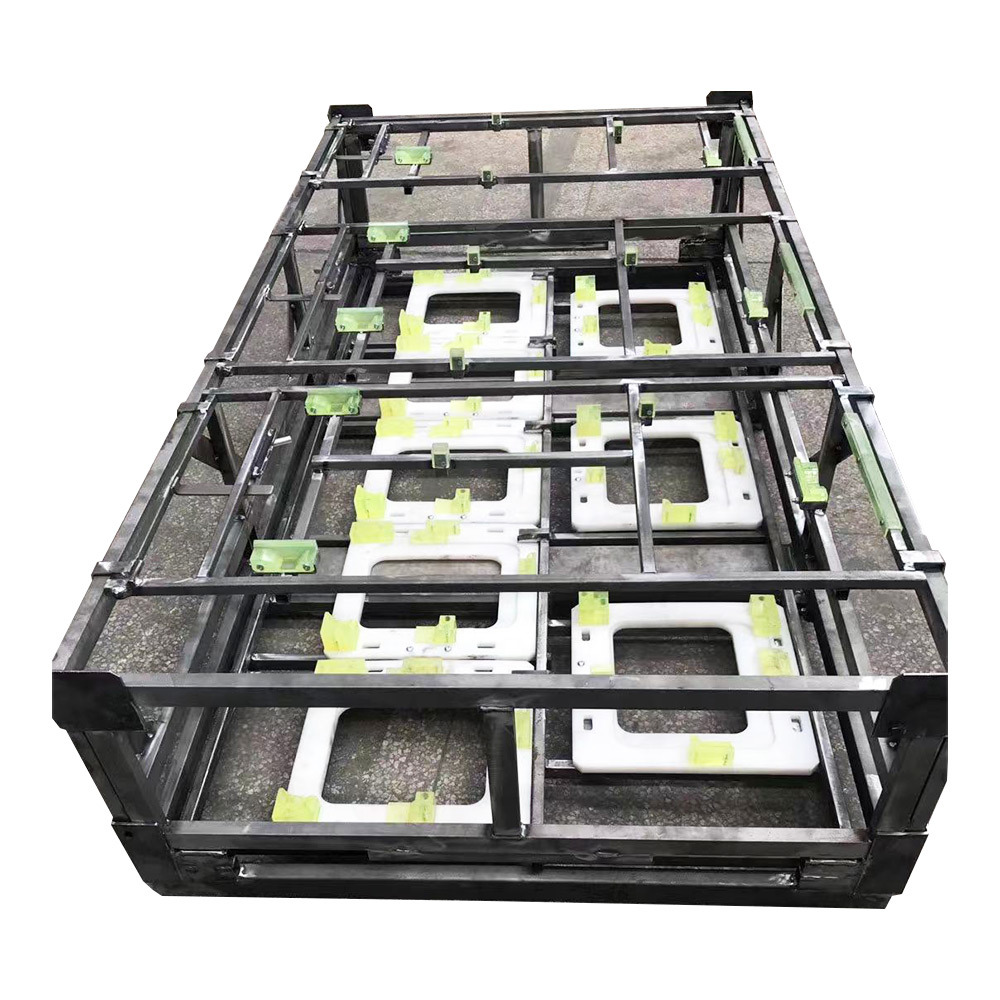
Locked, the rack is rated for loads up to 1.5 tons. Frame members are sized for engine mass plus the shock loads of handling and braking, and the polyurethane lining sits exactly where the weight lands. Padded contact faces carry the oil pan, mounting bosses and machined flanges, so the engine rests on cushioned saddles instead of bare steel that marks or chips cast surfaces.
The folding mechanism is built for thousands of cycles, not a few conversions. Hinge pins run in bearings sized for outdoor dust, and each hinge locks into a defined detent the operator can feel and see before the rack moves. Folding takes minutes with no tools, and a rack that has not fully locked refuses to sit square, which makes the unsafe state visible at a glance rather than hidden in the frame.
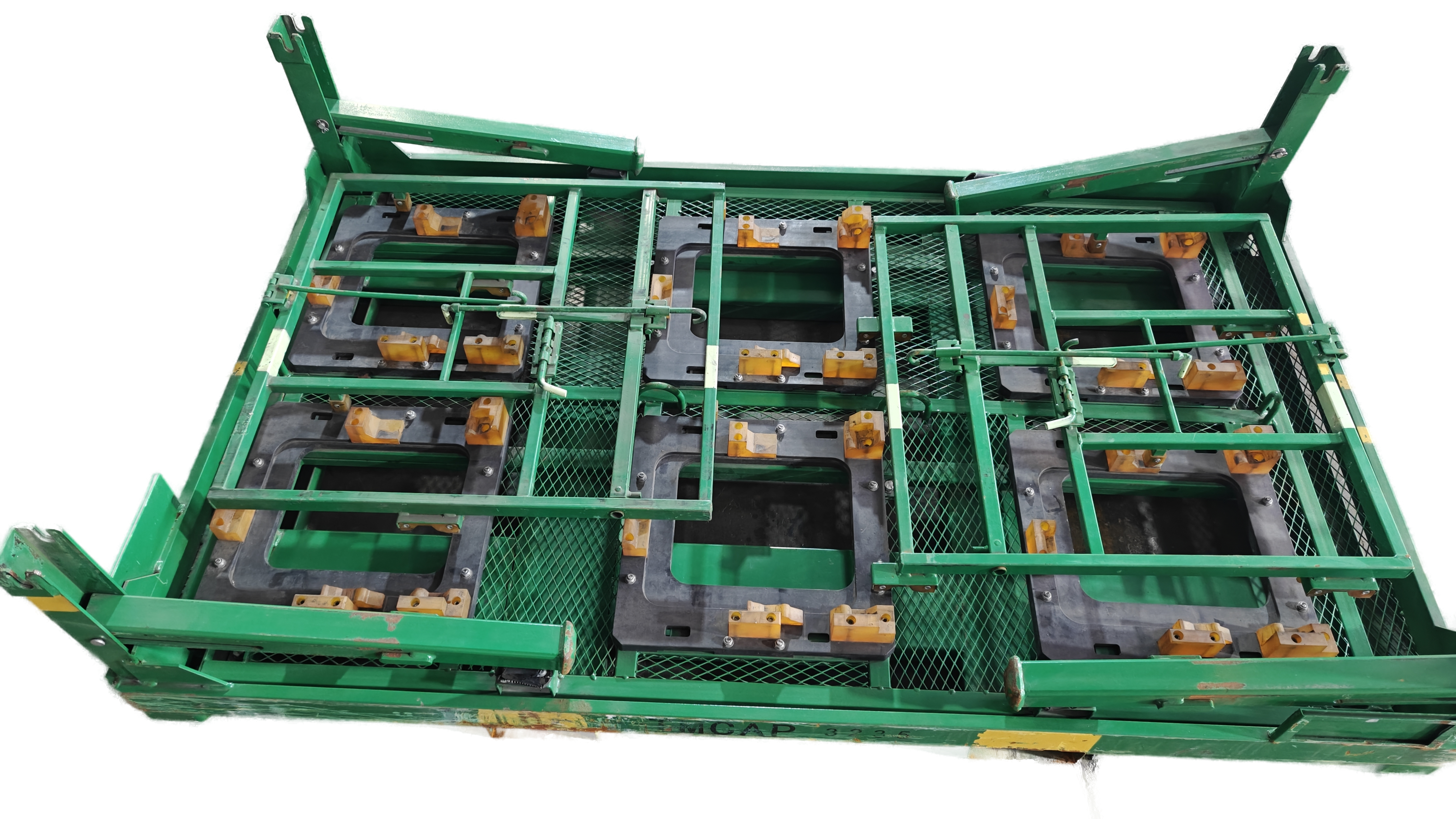
The return leg is where the design pays. Folded frames nest together and stack in a fraction of the space of fixed racks, so a truck that hauled engines out brings the packaging fleet back in one trip instead of several. Fleets track folded units the way they track containers, and the space recovered on every return cycle compounds into lower reverse freight.
Each rack is configured around the engine it serves. Locating blocks and lining geometry follow the engine footprint, so the unit seats without hunting for position, and the family can be versioned per engine model as programmes grow. Frame colour follows a Pantone number, which lets one plant run several engine flows and sort returnable racks by sight at the loading dock.
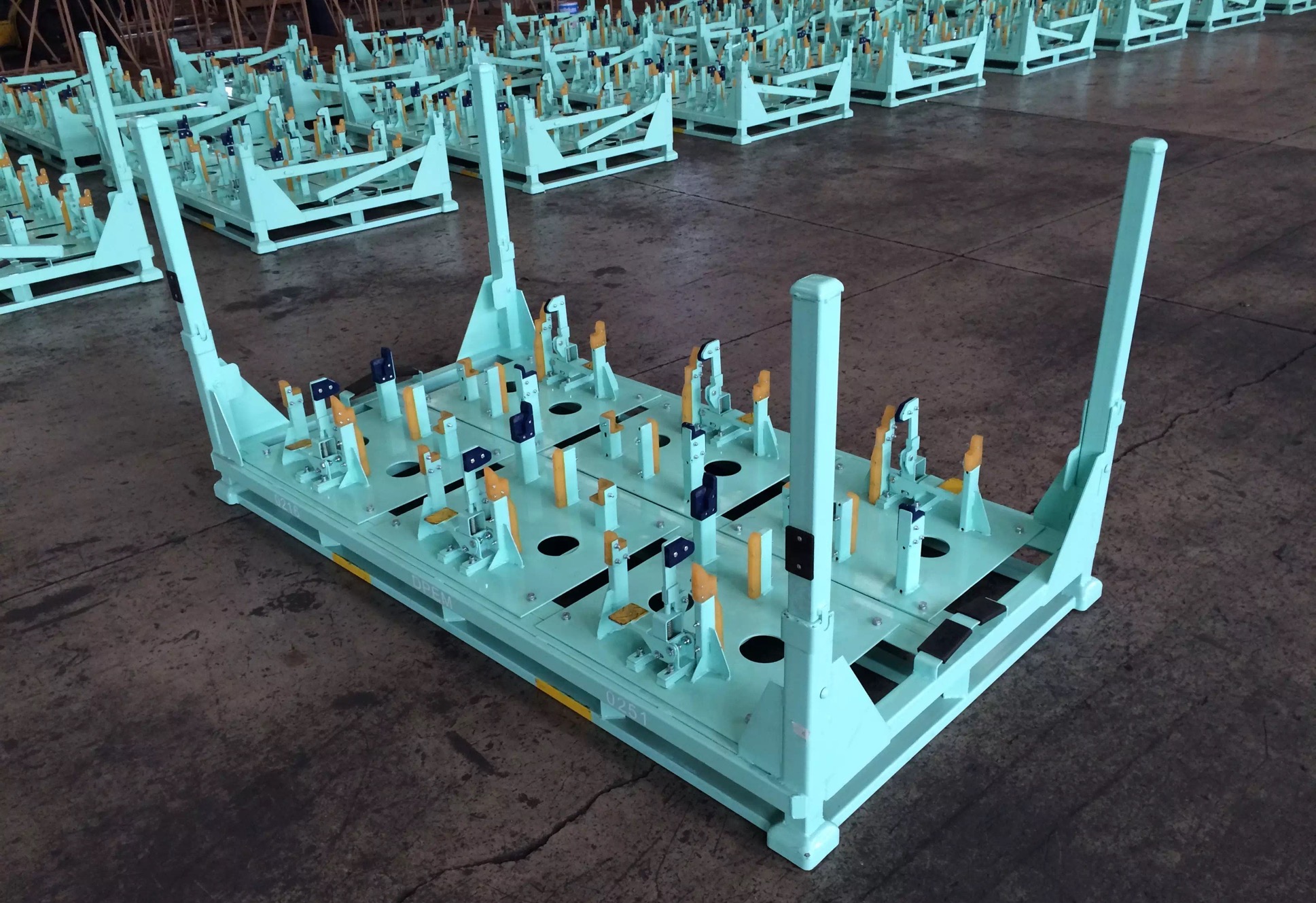
The polyurethane lining is specified for the workshop, not the catalogue. Density and hardness are chosen against engine mass, the surface shrugs off oil and grease wipes, and worn liners are unbolted and replaced without touching the frame. Because the lining carries the load rather than the paint, the rack keeps its protection through years of loading cycles instead of only its first.
Before delivery, each configuration is verified. Static load testing confirms the rated tonnage, folding cycles confirm hinge and lock endurance, and lining contact points are checked against the engine it will carry. The result is a rack that behaves like fixed steelwork when it matters and like flat freight when it does not, protecting engines in both directions of the journey.


