


| Quantity: | |
|---|---|
Metal
TOYOE
An assembly line loses time in the last twenty metres, between the parts supermarket and the station. Pallets are too big for that leg and hand carrying is too slow, so the gap is usually closed by a rolling cart. Used as a feeding unit, it carries one station's kitted parts from the supermarket to the line, parks in a marked footprint beside the operator, and returns empty on the same loop.
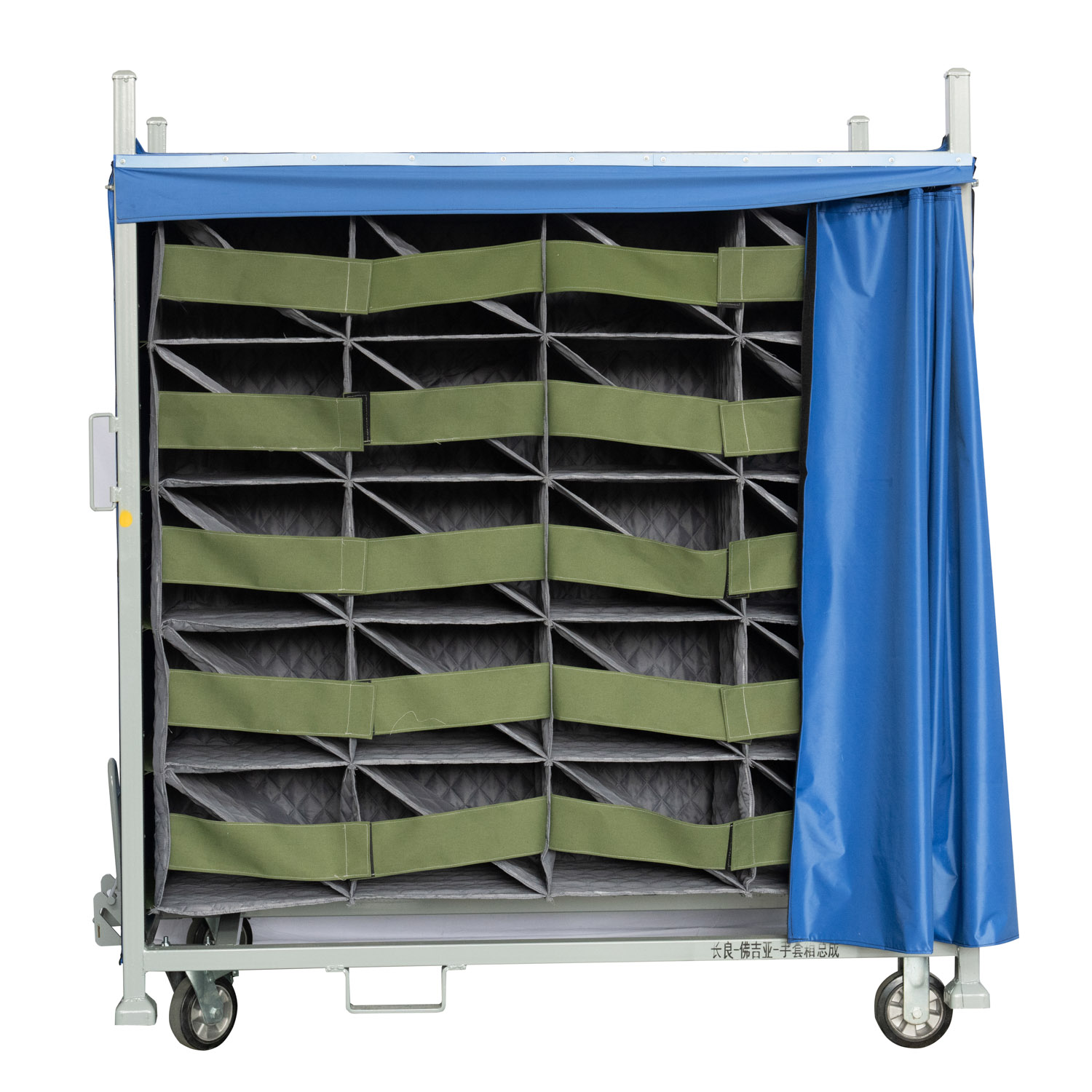
The cart is configured around the station it feeds. Shelf trays and bin positions follow the parts list of the product built there, so an operator reaches the same compartment every cycle without searching. When the kit changes, the shelf layout is reconfigured rather than replaced, and the cart keeps serving a new bill of materials with the same frame and wheels.
Load rating follows real line duty. Each steel shelf carries up to 100 kg, which covers a full station kit, and the frame stays rigid under a moving load because the corners are welded rather than hooked together. Casters are selected per route: quiet wheels for work halls where noise is controlled, brakes on the station end so the cart stands still while parts are picked, and a fixed direction set for long straight runs.
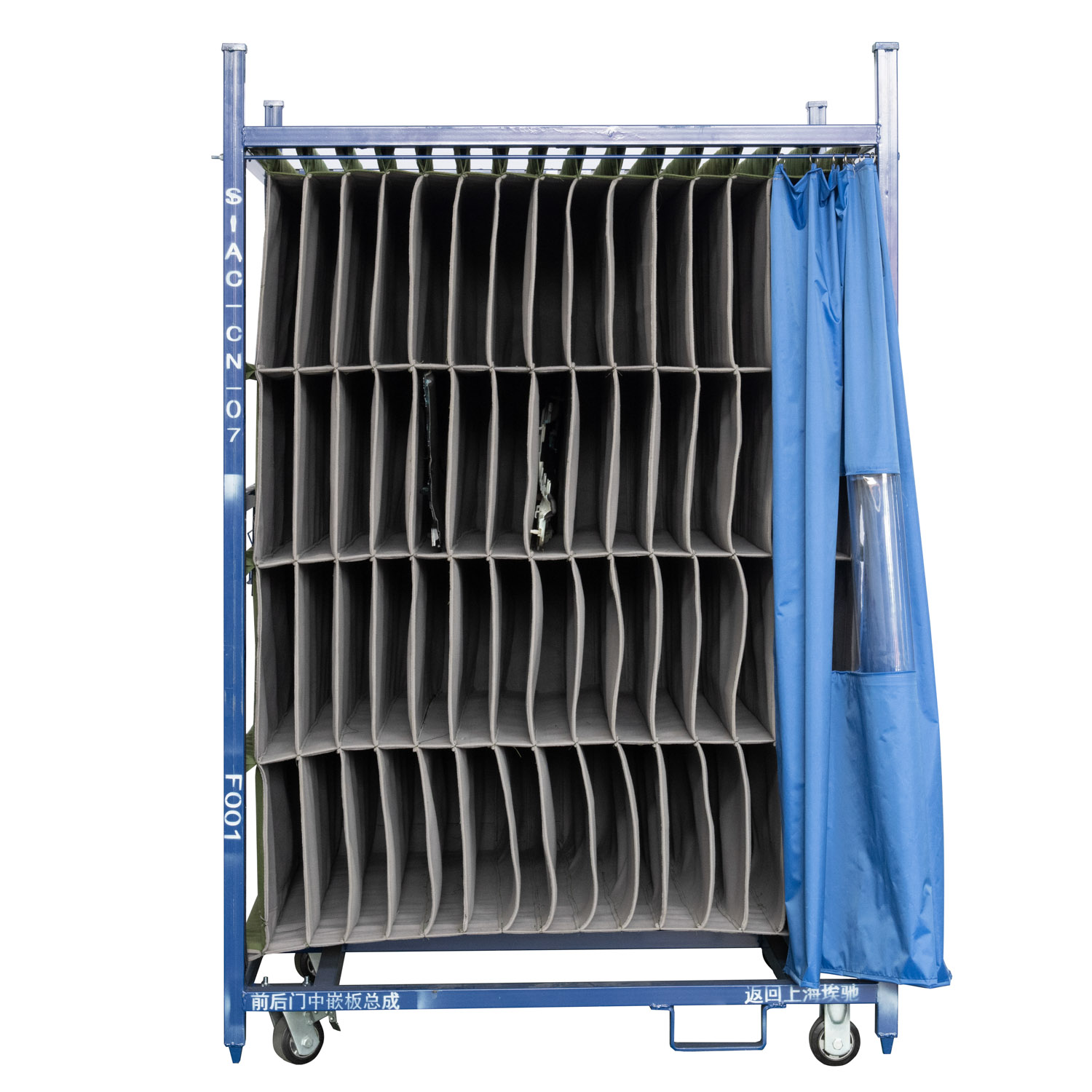
Reconfiguration is deliberately fast. Quick-release joints let a shelf be moved, removed or reinstalled in seconds without tools, so a line changeover does not turn into a workshop job. A cart can be rebuilt for a different product between shifts, and one fleet serves several lines by swapping layouts instead of buying dedicated trolleys per station.
The modular system scales in two directions. Carts link horizontally to cover a longer station or a shared parts run, and they stack vertically where the supermarket needs density more than mobility. That combination lets one component set serve both the transport and storage legs, so fewer equipment types move through the plant.
Ergonomics is part of the specification, not an extra. Push handles sit at a natural height, wheel effort lets a loaded cart start and stop without strain, and shelf positions sit within the reach zone of the workers who load and pick. A cart that respects these limits gets used correctly; one that does not gets pushed into aisles and left wherever it stops.
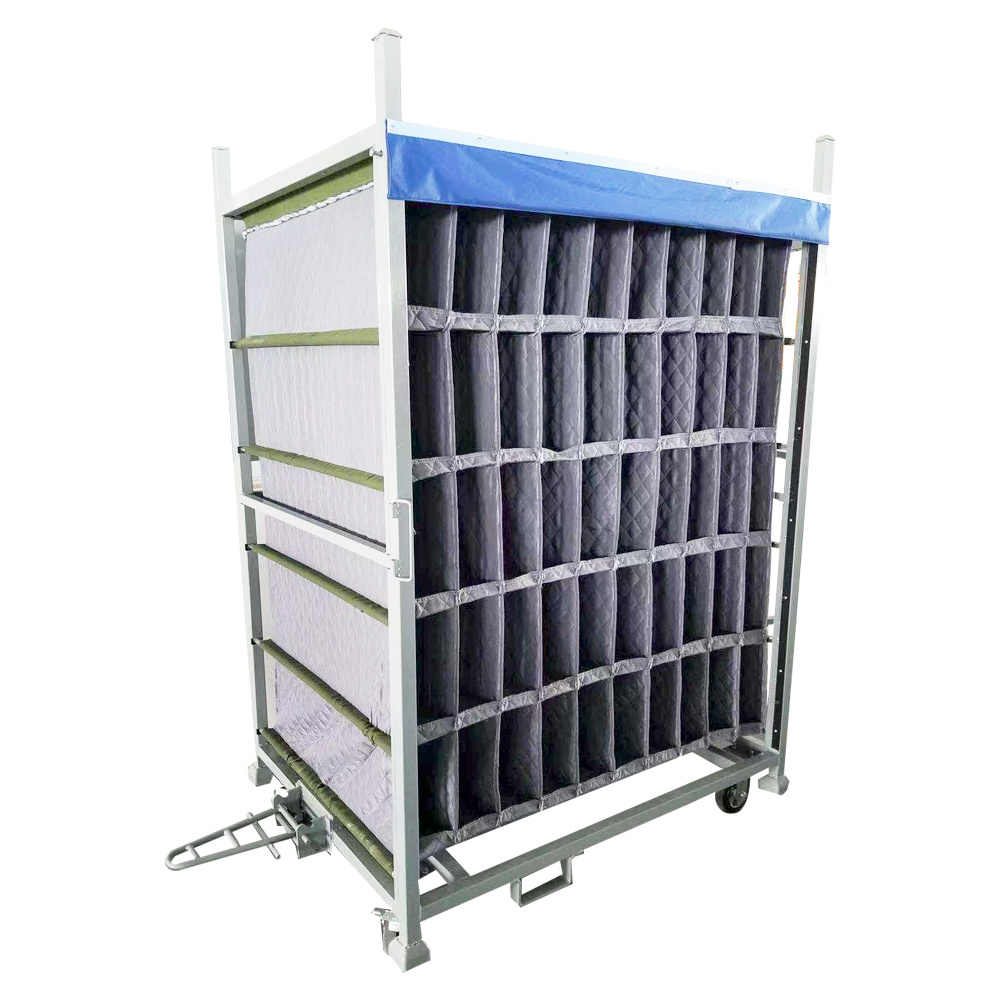
Each batch is checked before it joins the fleet. Caster endurance and brake holding are tested under load, shelf deflection is measured at the rated figure, and welds are inspected on every frame. Carts carry their station number or colour code so the loop is visible at a glance, and a feeding unit that always returns to the same footprint is what keeps a line-side schedule on time.


