


| Quantity: | |
|---|---|
plastic/metal
TOYOE
Small parts storage fails quietly. Bins multiply until the rack holds more empty volume than full, colours drift, and nobody can say which bin belongs to which supplier. A simple container still needs two talents at once: it must stack solid when it is full of parts, and it must nest shallow when it is empty, or the logistics of the bins themselves starts to cost more than the parts they carry.
The geometry solves both states in one body. Tapered walls let an empty bin slide into the one below and stop at a nesting stop, leaving a hand gap so separation is a lift not a pry. When bins are full, the lid rim and corner posts take the column load instead of the contents, so four or five loaded bins stand in a stable stack and the parts below carry nothing but themselves.
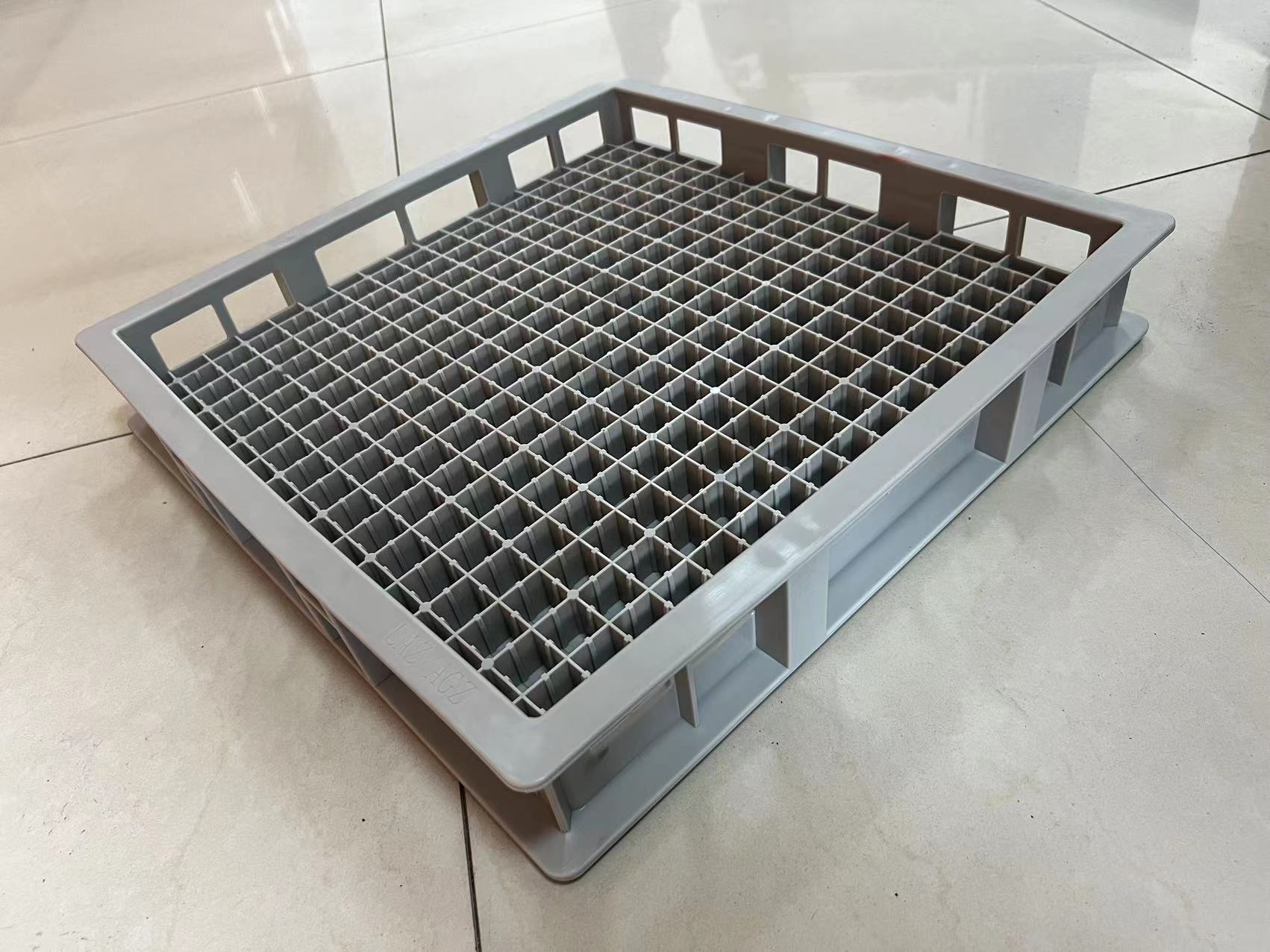
Picking is designed in, not improvised. A wide mouth or open front shows the contents at a glance, a label window sits where the eye lands, and the same base size is offered in several heights, so a shelf mixes bin heights without mixing footprints. One SKU per bin keeps counts honest, and an optional divider turns one bin into two when a family splits.
The material suits the job. HDPE does not rust, splinter or shed, wipes clean of oil and dust, and survives the knocks of a busy picking face without cracking at the corners. Stacked bins slide quietly on plastic rather than ringing on metal, and a bin that meets a wash bay comes out ready for service the same hour.
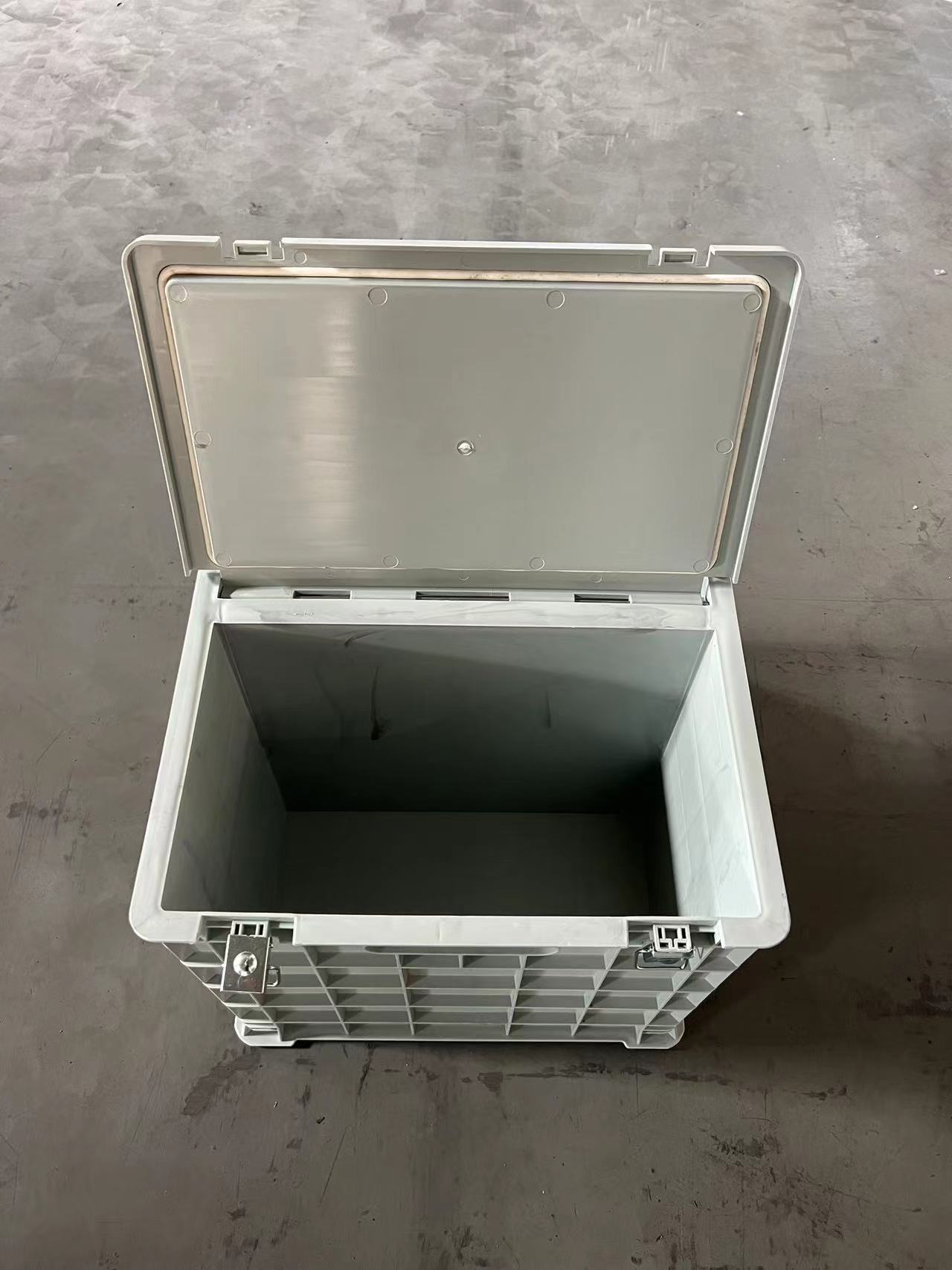
Numbers make the logistics case. A nesting ratio means a returning truck that carried full bins home carries many times more empties, and the empty volume in the plant shrinks to a fraction of the rack it once occupied. Because every bin shares one footprint family, shelves, carts and return loops are designed once and reused as bin counts grow.
Identification rides on the bin itself. Colour separates suppliers or product families, printed part numbers and barcode labels sit on the front face where scanners expect them, and a damaged label area can be reprinted without retiring the bin. A fleet that looks uniform is also a fleet that audits quickly, because every mismatch shows up at a glance.
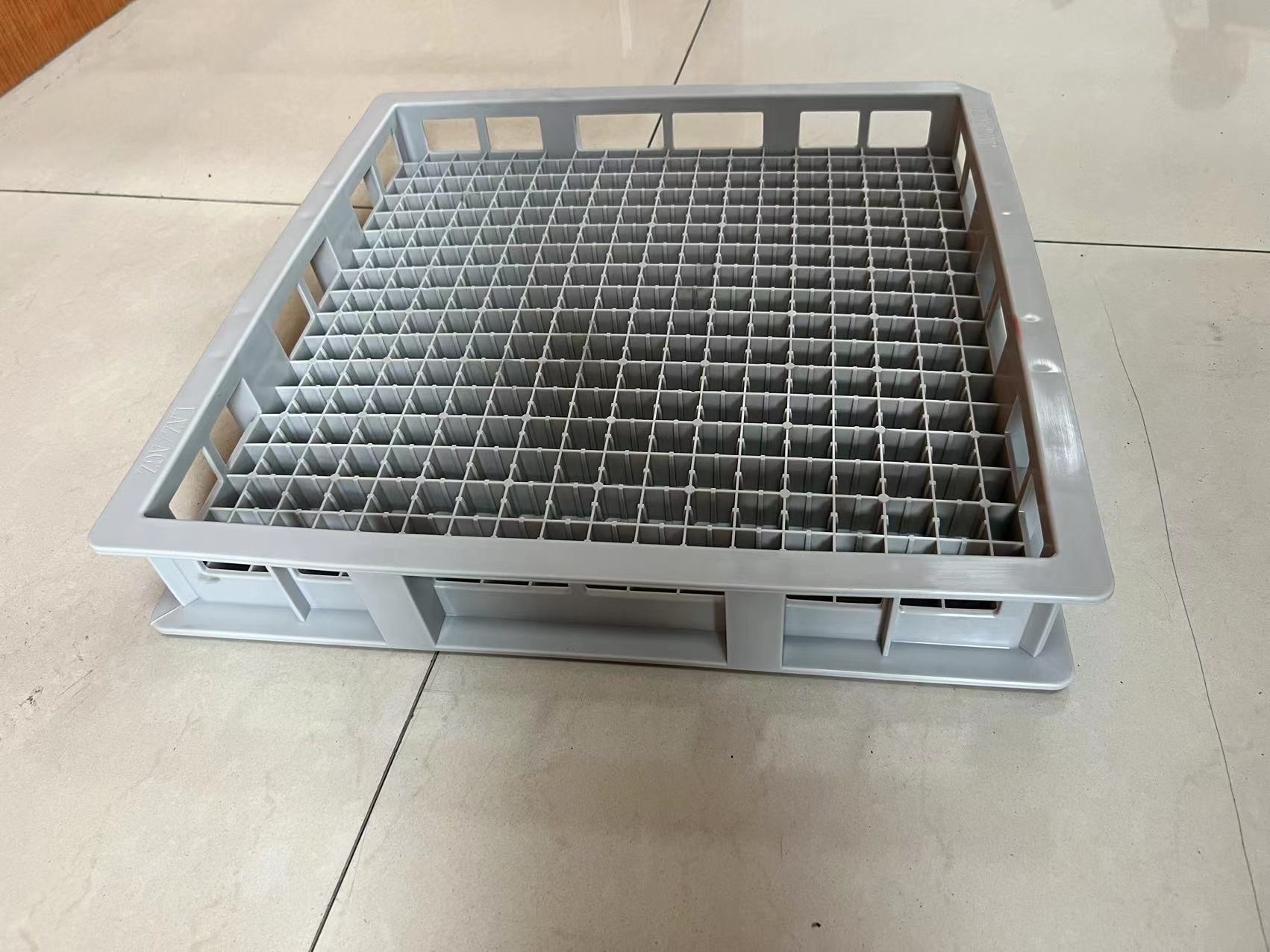
Verification closes the file. Loaded bins are stacked to their rated column height and left to confirm stability, nested stacks are pulled apart through thousands of cycles to prove the taper does not bind, and a filled bin is dropped from carrying height to check the corners. What ships is a container specified in both of its states: solid when full, shallow when empty.


