


| Quantity: | |
|---|---|
plastic
TOYOE
Heavy parts punish packaging in two ways at once. A gearbox, cylinder block or axle assembly presses tonnes into whatever carries it, and the same part often arrives with machined or painted faces that bare steel would ruin. A polyurethane lined rack separates the two jobs: the steel frame takes the load, and the lining takes the contact, each chosen for what it actually faces.
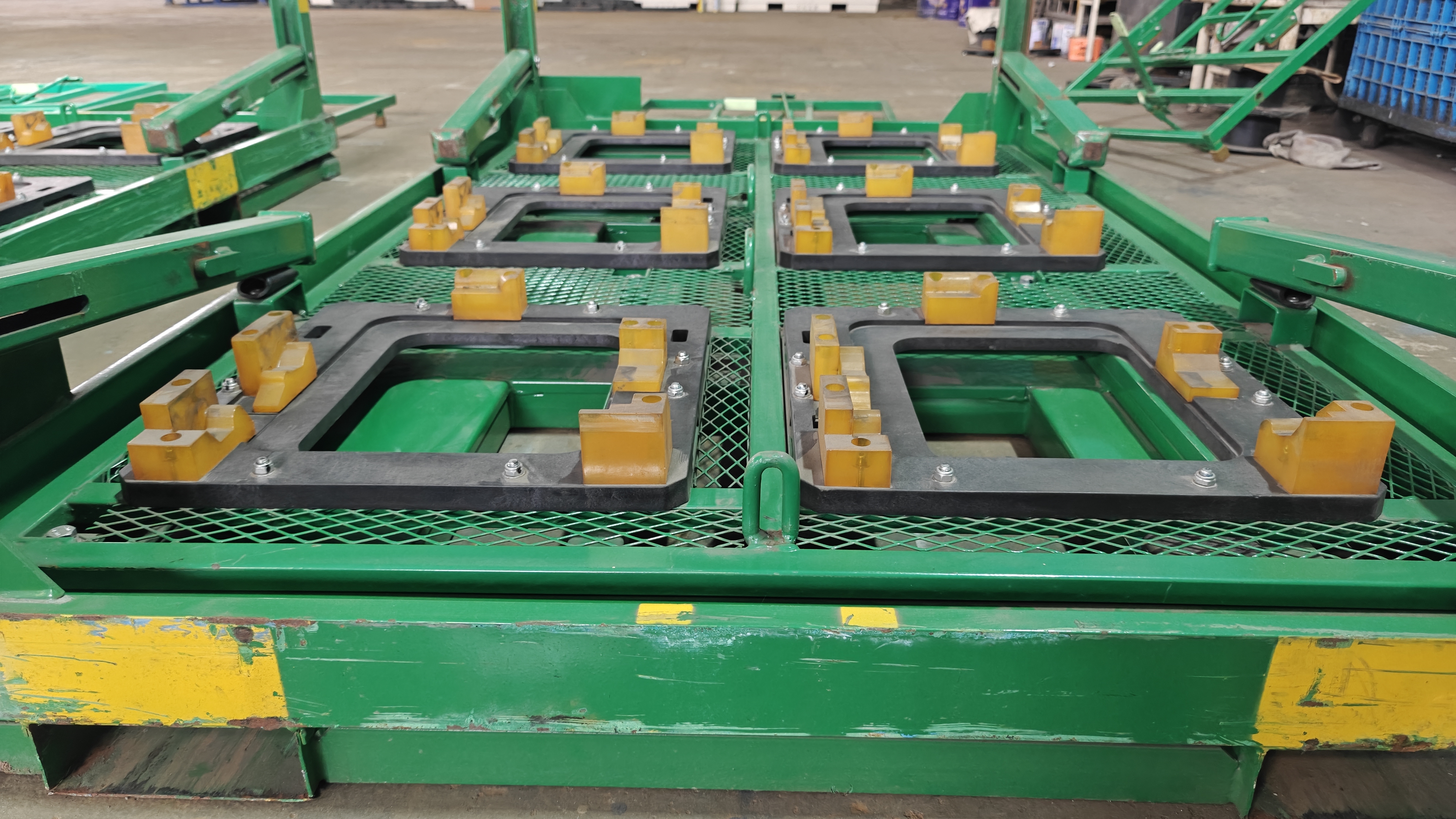
The lining is specified by durometer, not by habit. Soft polyurethane faces suit finished machined surfaces and painted housings, where any hard edge would leave a witness mark; firmer grades carry rough castings that need grip more than cushion. Thickness follows the mass it must spread, so a lining under a full load works as a distribution layer rather than a thin pad.
The frame carries the numbers. Galvanized or powder-coated steel members support between 400 and 2000 kg per rack, on a standard 1200 by 930 by 1400 mm footprint that stacks square and fits the trucks and racking most plants already run. Load is directed through the frame into the base, and contact points never take structural duty, which is what keeps a lining from compressing into a false shelf under the part.
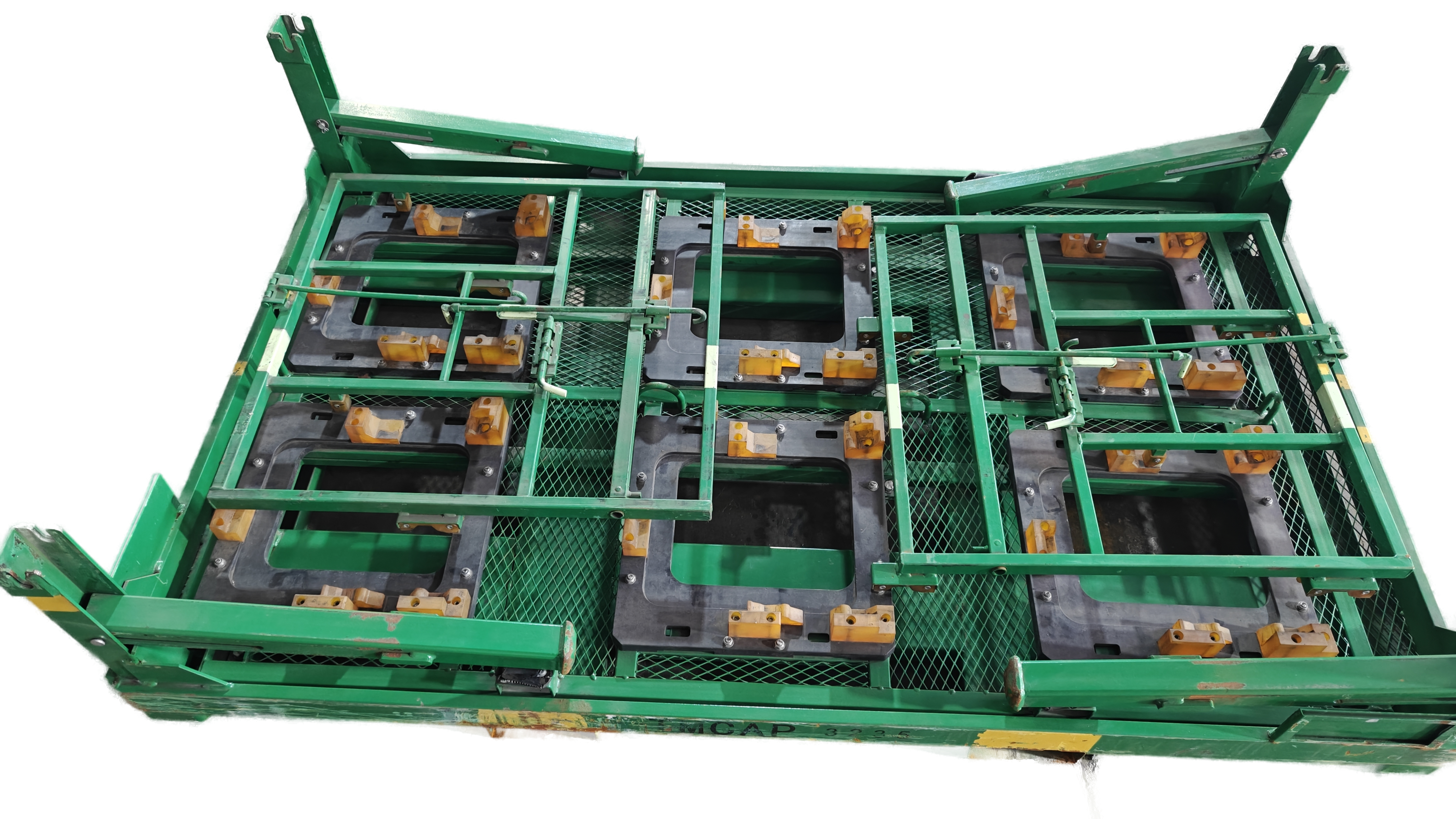
Lining wear is planned, not tolerated. Contact faces wear out first in any fleet, so the polyurethane sections are bolted in and replaced individually while the frame continues in service. A rack never stands idle waiting for refurbishment, and protection never quietly degrades, because a worn pad is removed at the first sign of flattening instead of padded over.
Polyurethane earns its place by what it ignores: oil mist, grease wipes and most cleaning agents leave it unchanged, the surface does not absorb fluids that would swell foams, and damp conditions do not rot it the way timber blocks decay. The lining wipes clean between parts, so a rack moving from machining to washing to despatch carries no residue forward.
The standard footprint works as hard as the frame. One rack size across a fleet means stacks, truck beds and storage bays all line up without custom planning, and colour variants beyond the standard green frame can be assigned to flows where visual sorting helps. The geometry stays constant; only the lining and the load ratings change per part family.
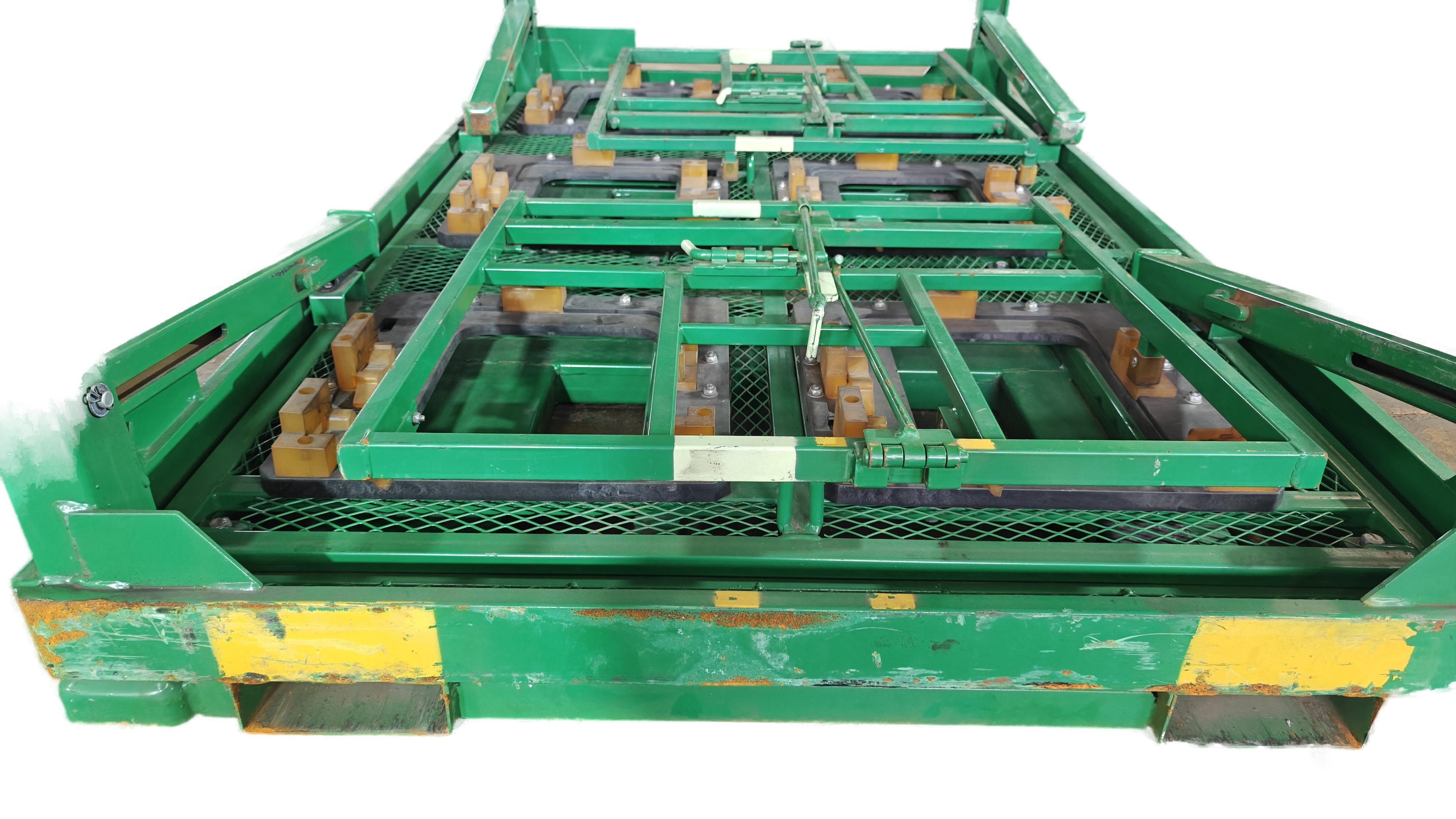
Each rack is verified before delivery. Frame assemblies are load tested at their rated tonnage, linings are checked for hardness and fit against the part they will carry, and galvanized or coated finishes are inspected at welds where corrosion starts first. The result is a rack whose protection is measurable at every interface: steel where the tonnes land, polyurethane where the surface matters, and nothing left to chance in between.


