


| Quantity: | |
|---|---|
plastic
TOYOE
A pallet box for heavy industrial loads fails at its joints long before it fails at its walls. Welded plastic boxes split along seams, metal boxes crack at rivet lines, and every joint is a place for stress and trapped dirt. Rotational moulding removes the problem at the source: the box is formed in one piece, with no seams, no weld lines and no fasteners between base, walls and rim.
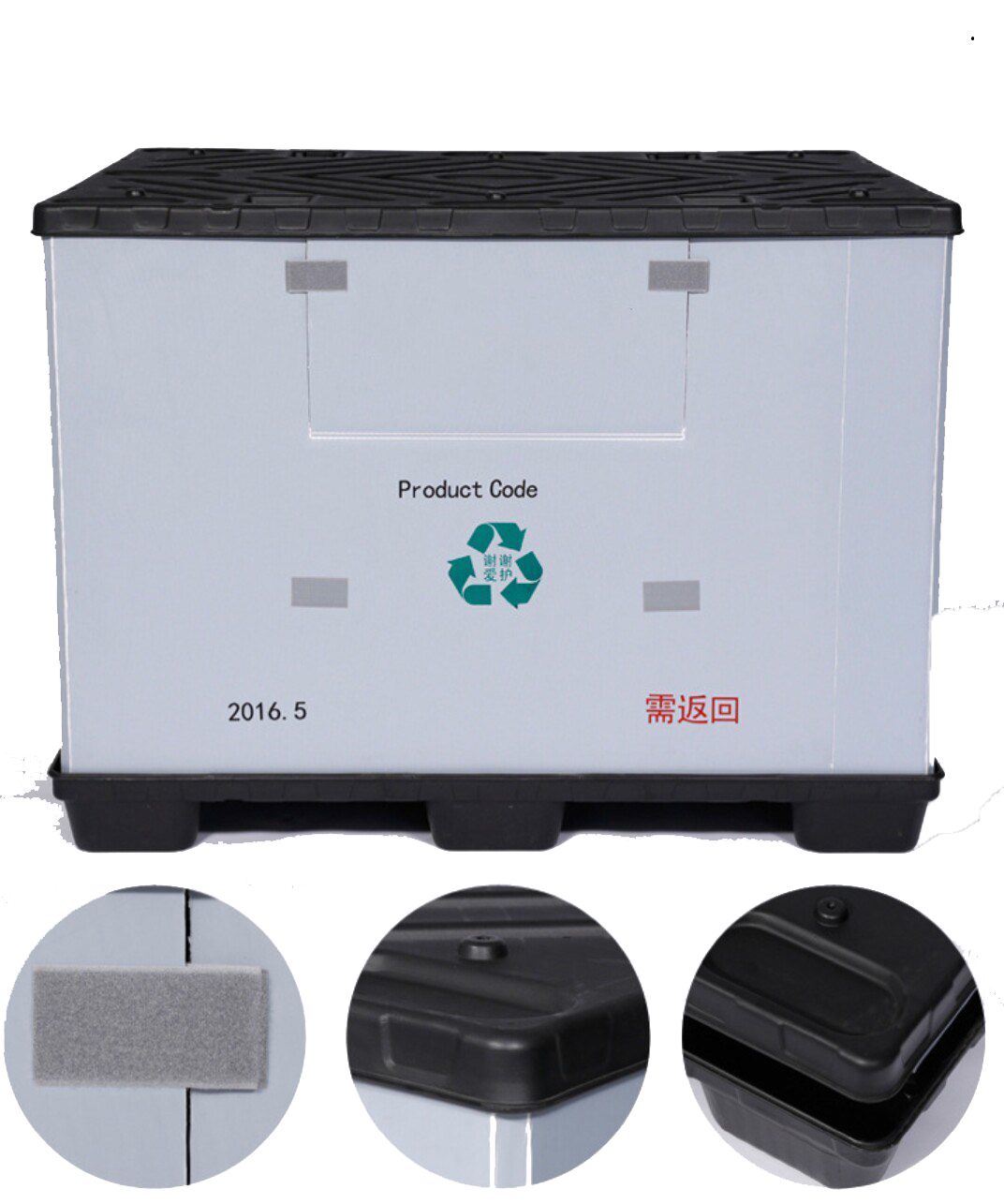
The process lays material where the load lands. During moulding, HDPE distributes across the tool as the box rotates, so wall thickness concentrates at corners, at the base where stacked weight presses, and around the fork pockets that take the sharpest contact. Instead of a uniform skin that is thin exactly where stress peaks, the finished box is thick where duty is heavy and light where it is not.
Impact behaviour follows from the same construction. A fork tine strike that dents the wall deforms the surface without starting a crack at a seam, because there is no seam to start from. The material yields and recovers, loads that would tear a fabricated box off at the base leave the moulded box in service, and there is no paint or coating to chip and expose bare metal to rust.
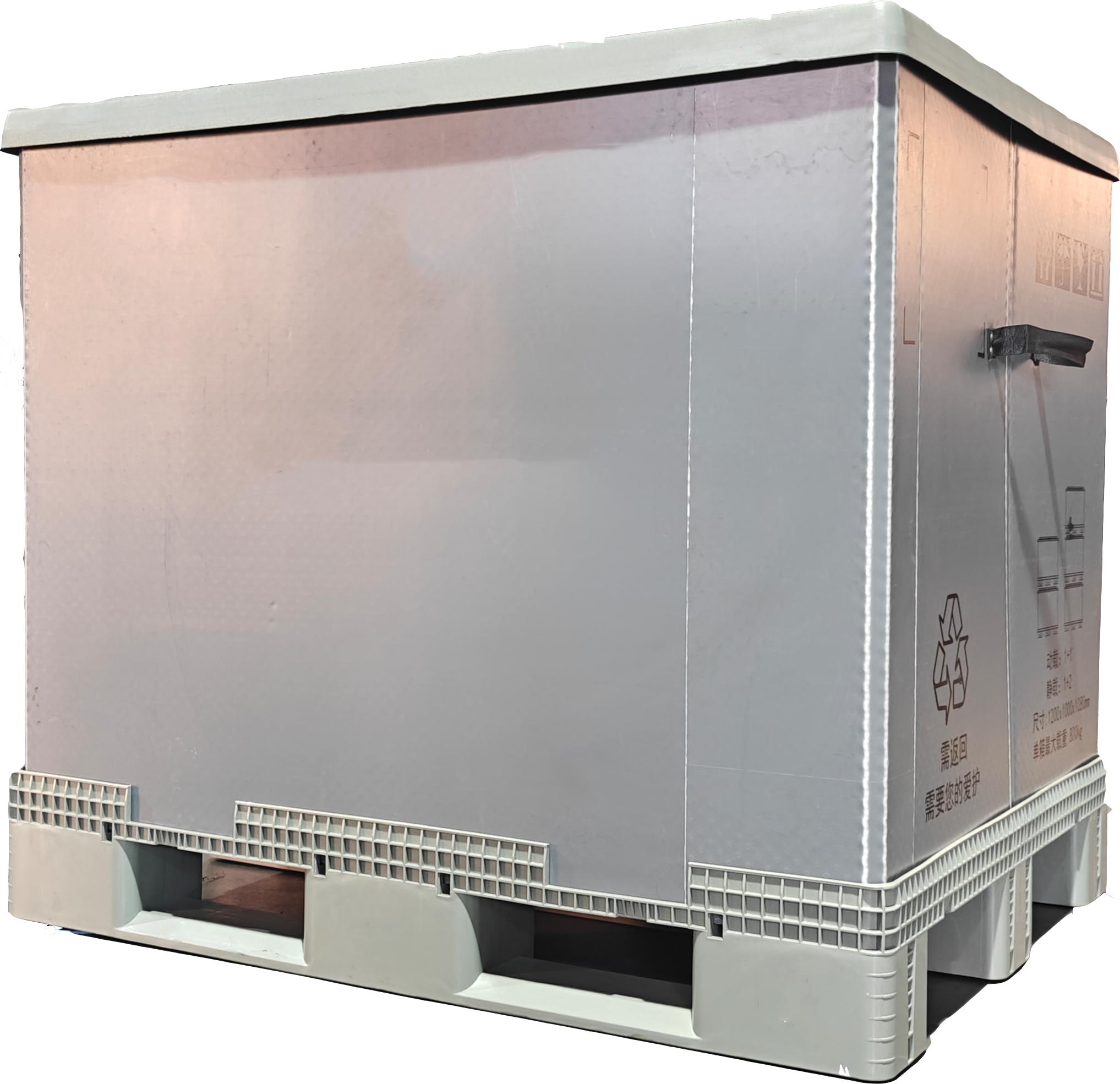
Chemical and weather duty is where HDPE earns its place. Oils, alkalis and wash-down chemicals that attack coated steel leave the moulded surface unchanged, so the box moves between greasy castings and washed components without degrading. It tolerates outdoor yards across hot summers and freezing winters, holding its dimensions through temperature swings that warp lighter containers.
Cleaning is designed in rather than added on. The moulded interior is smooth, with radiused corners that give dirt nothing to hold on to, and a drain plug at the lowest point lets water and residue out completely after washing. A box that empties and dries between uses can switch contents without carrying the last load's problems into the next one.
The box integrates with the handling system around it. A moulded pallet base gives four-way fork entry, stacking lugs locate one box on another so loaded columns stay square, and flat fields on the walls take labels and part numbers that survive wet handling. Lids close the top for dust-sensitive contents while keeping the stackable footprint unchanged.
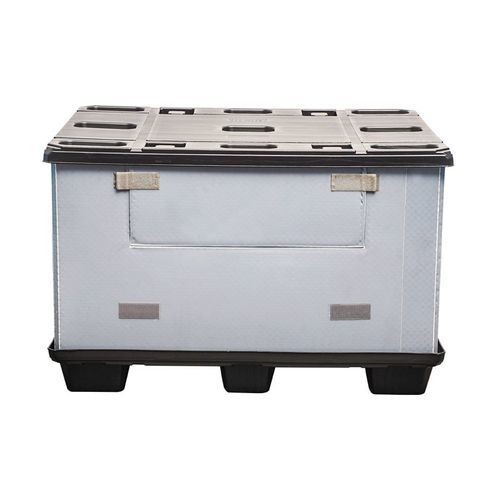
Each production batch is verified against the loads it will see. Wall thickness is sampled at corners and base, drop testing confirms impact behaviour at the fork pockets, and stacking trials confirm the rated column height under full load. The result is a pallet box whose strength comes from how it was made rather than from added reinforcement, and that stays in a fleet for years of daily heavy cycles.


