


| Quantity: | |
|---|---|
Plastic
TOYOE
Buying a returnable container is not a single purchase; it is the first of many trips. The question is not how strong the box is on delivery day, but how many loops it completes before it leaves service, and which part forces retirement. A container built as three parts, base, sleeve and lid, answers that question differently from a one piece box.
Each part wears at its own rate. The base meets forks, floor edges and wash bays, so it is moulded in high density polyethylene with reinforced entries. The sleeve takes stack compression and the scuffs of loading, so it is made from polypropylene that folds without cracking along the crease. The lid carries the column above it and the hands that lift it. One part always fails before the others, and knowing which one shows how a fleet is actually treated.
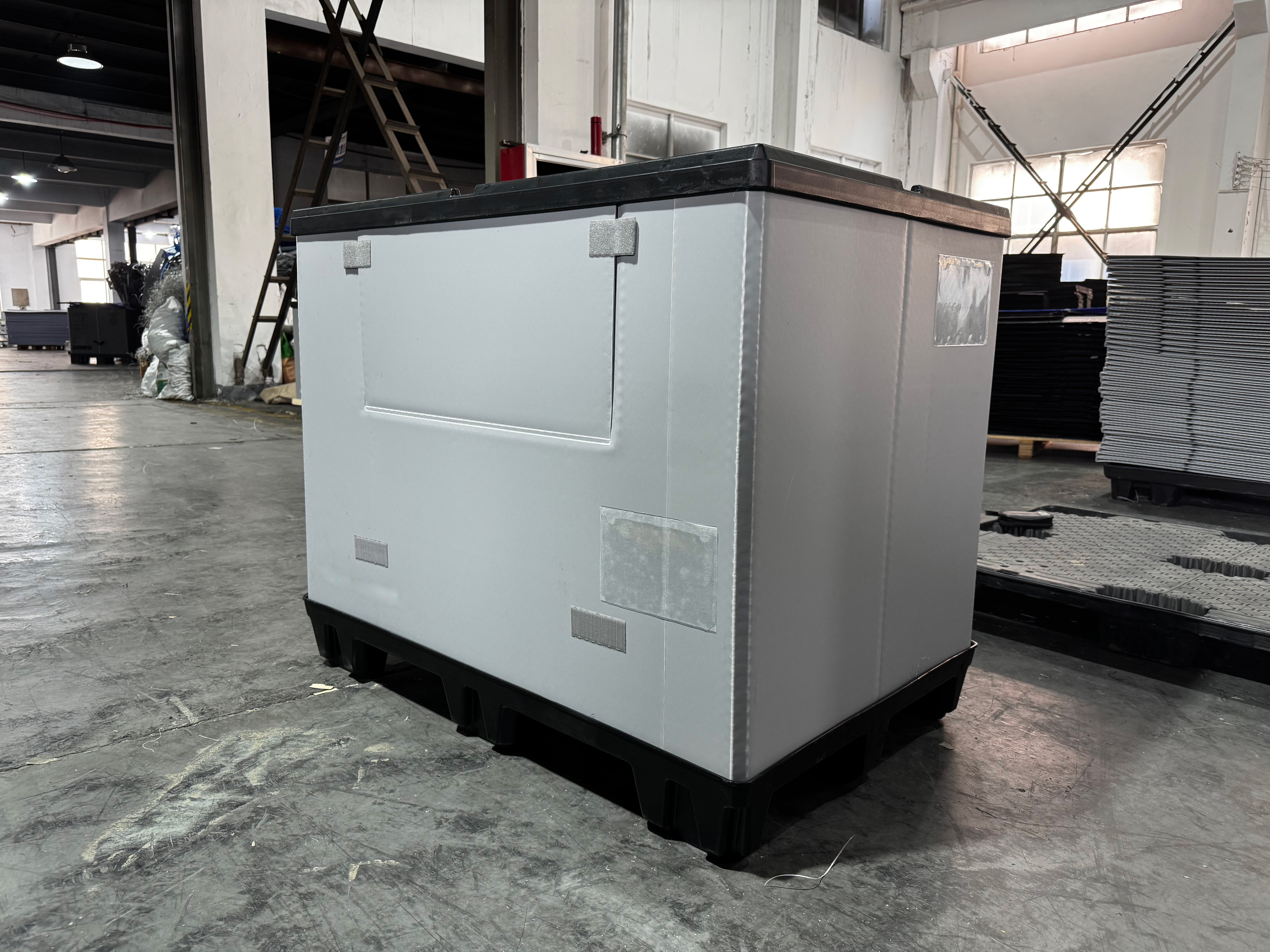
Because the parts are separate, a failure does not retire the container. A split sleeve is replaced and the base keeps working, a cracked lid is swapped in a minute, and the stack returns to service the same day. The alternative is scrapping a sound base because a sleeve tore, which is how returnable programmes lose their business case.
The empty leg is where the money hides. Sleeves fold flat, bases stack into one another and lids nest, so a truck that delivered forty full containers returns with several times that number in parts. Cost per trip falls with every point of that ratio, and so does the floor space needed for empties.
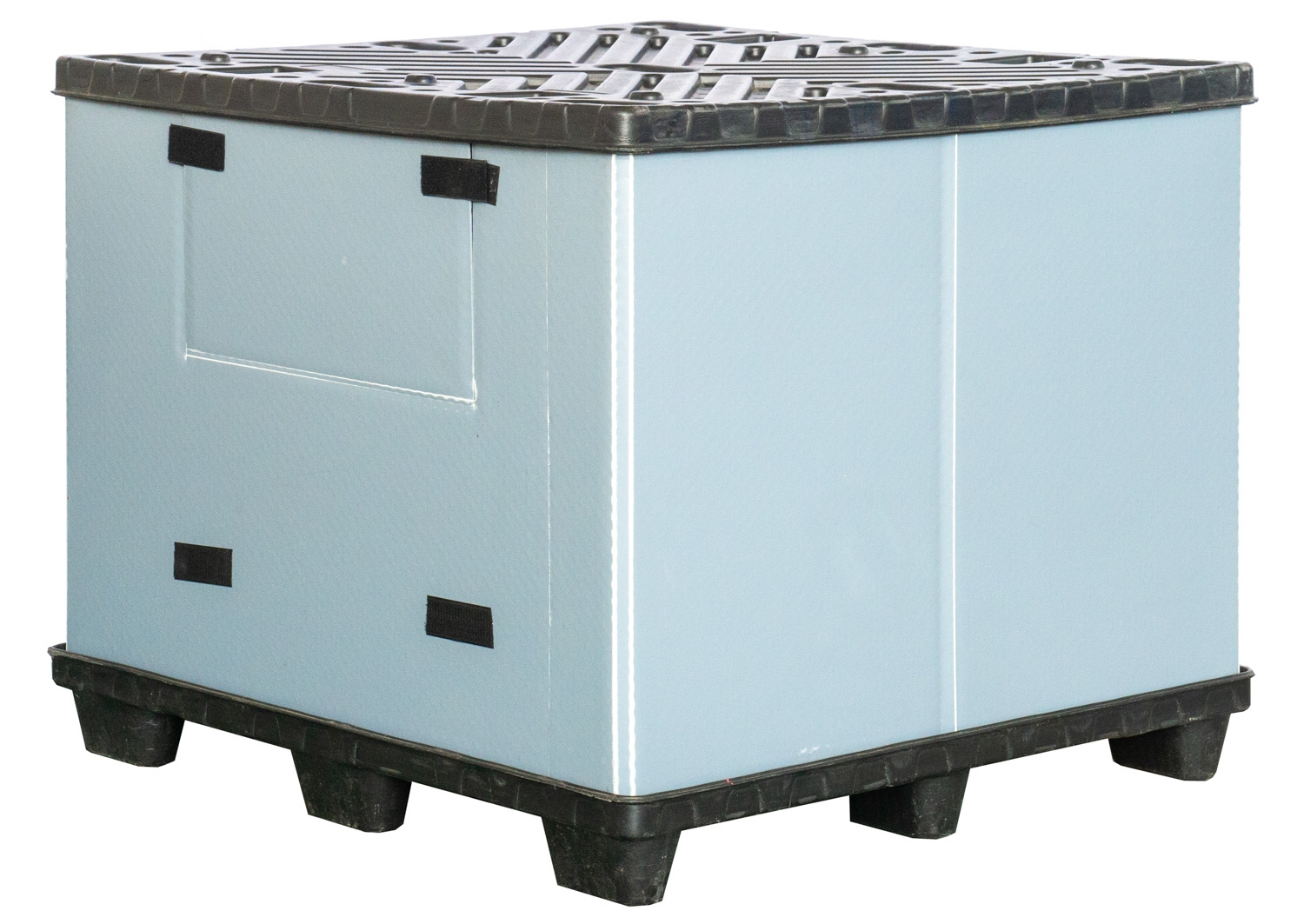
Loop counting keeps the fleet honest. Each container carries a number and a trip count, inspection happens at fixed intervals rather than after a failure, and retirement follows a written threshold. Printed marks identify the part family, so a mixed fleet still reads correctly at the dock, and a container at its limit is pulled before it reaches a customer.
Grey earns its place in a workshop. It hides handling marks that white shows immediately, it does not compete with bright colours on coated parts during a visual check, and it reads as a neutral background behind an open lid. Colour stays a free choice for customer fleets, but grey is the practical default inside.
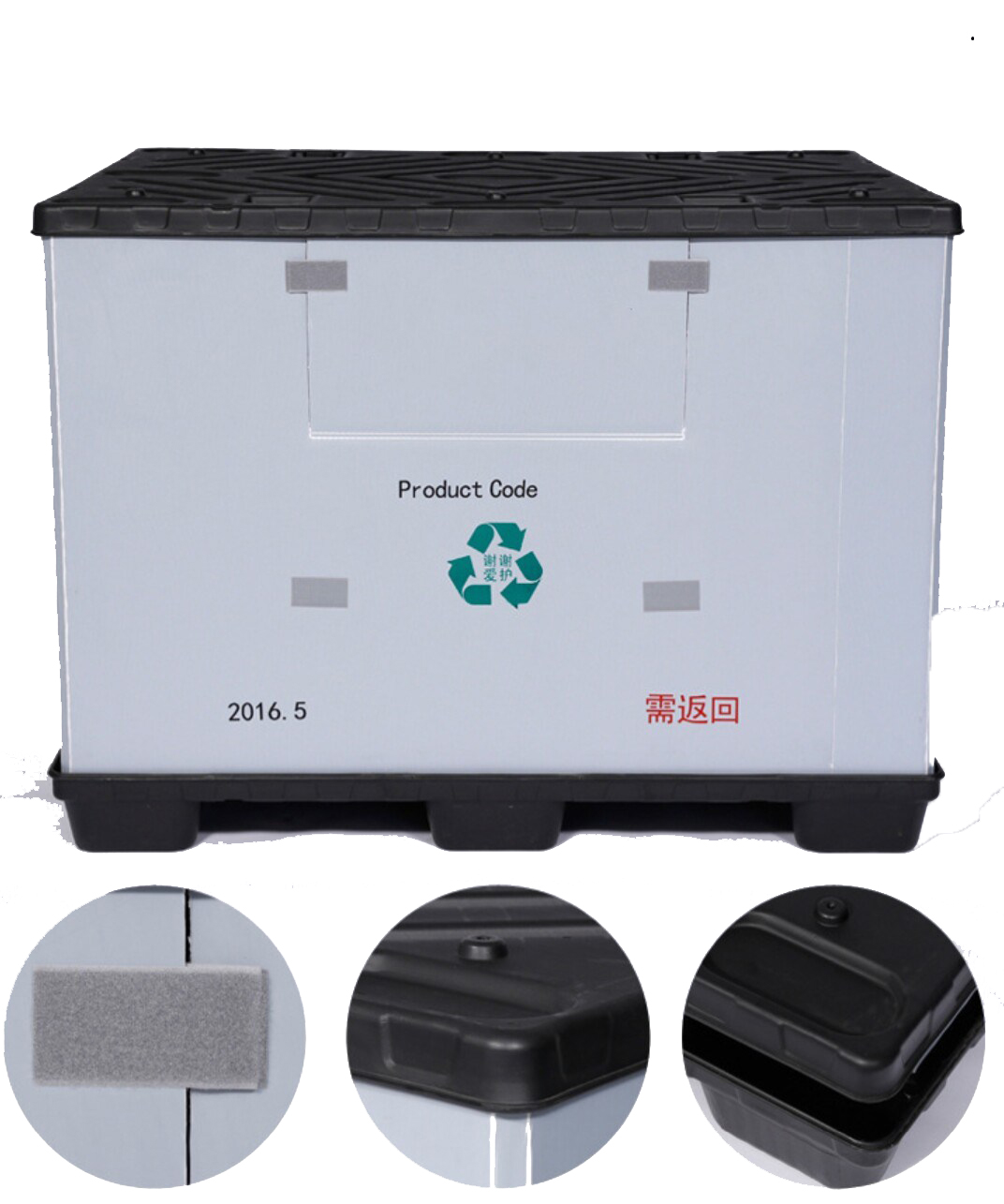
Inside, the container is fitted to the parts. Dividers, foam or PP inserts hold each component away from its neighbour, an inner cover keeps dust off between operations, and stacking loads travel down reinforced corners instead of through the contents. Verification follows the same logic: loaded columns stand to check for creep, sleeves are folded through repeated cycles, filled containers are dropped and fork entries are cycled. Each part carries its own warranty term, because each part has its own wear path.


