


| Quantity: | |
|---|---|
A liner that only works in the showroom is no liner. Heavy irregular parts travel through cold stores, humid docks, oily shops, and hot trucks, and the cushioning must behave identically in all of them. These closed cell EPP liners are chosen for environments as much as contours: the pocket that fits a casting in the morning still fits it after a cold room, a washdown, and a heated trailer.
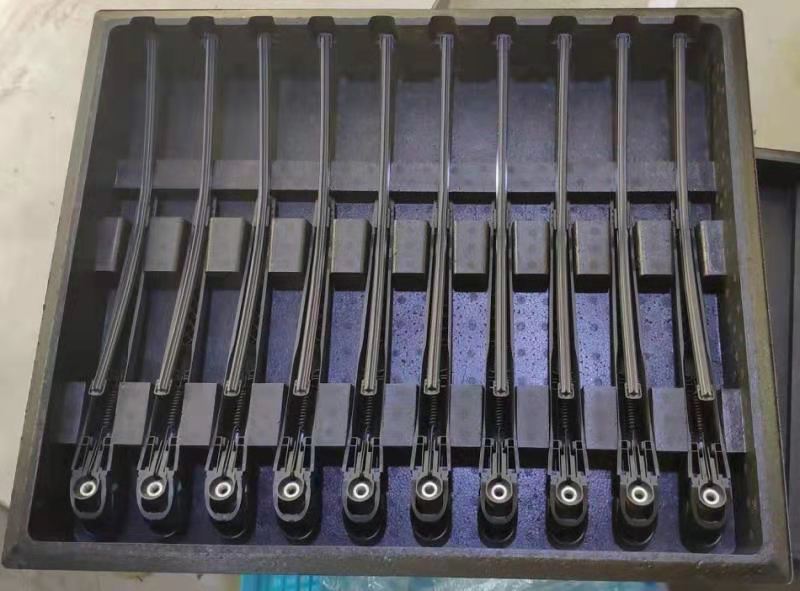
The closed cell structure explains it. Every cell in expanded polypropylene is sealed, so liquid has no path in: water absorption stays below three tenths of one percent, essentially nil. A liner soaked by rain during an outdoor transfer holds no water, adds no weight, and never wicks moisture against a machined face. The same property makes cleaning simple: a dirty liner washes with detergent and dries in minutes without taking any of it in.
Temperature is where many foams quietly fail. Service runs from minus forty degrees Celsius to plus one hundred thirty, so stiffness at a cold store dock matches stiffness on a sunny ramp. Cheap foams soften in heat until pockets close around parts, then turn brittle in cold until corners shed; this matrix holds its mechanical character across the range, letting one liner serve a full year of seasons.

Recovery matters equally. Compression recovery stays at ninety five percent or better, and tensile strength runs from four hundred fifty kilopascals upward by density, so pockets opened by many loading cycles close back instead of growing loose. A part that sat tight on delivery day sits just as tight after a year of forklift work, because ribs beneath the pocket, not the pocket wall alone, carry load down to the crate floor.
That structure is moulded, not cut. The pocket follows the part contour, the wall skin is held near one and a half millimetres so contact points do not scuff through, and density is selected per part, with heavier castings toward the stiffer end. Where geometry or volumes do not justify a moulded liner, we say so early and quote a cut insert instead.
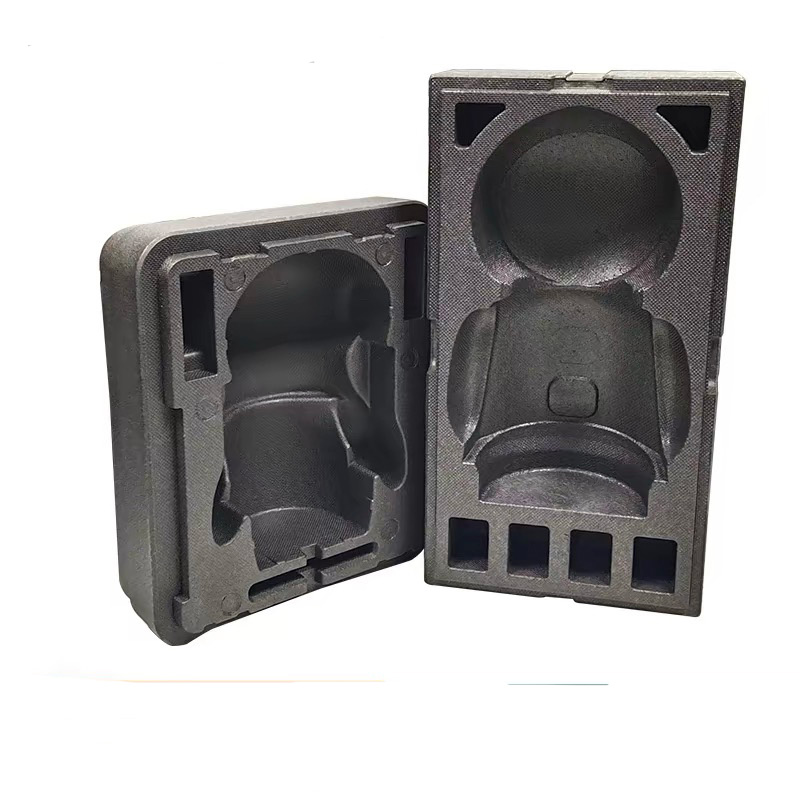
Safety options extend the range. Flame retardant grades meeting UL ninety four standards are available where rules require them, and the material shrugs off oils and coolants carried by automotive parts, so contact does not swell or stain the surface. Every liner stays one hundred percent recyclable at fleet end, keeping disposal simple when a program changes.
To match a liner to a hostile environment as well as a hostile part, send the drawing, part weight, and conditions it will see: cold store hours, outdoor transfers, washdown frequency. We will return a density and wall proposal with measured first off samples before any batch is released.


