
Views: 0 Author: Site Editor Publish Time: 2026-09-22 Origin: Site
Standard off-the-shelf storage solutions appeal to warehouse managers because they offer rapid deployment and lower initial expenses. However, these generic options frequently introduce severe handling inefficiencies when operations deal with specialized or fragile components. You might view customization merely as an unnecessary luxury rather than a strategic necessity. Instead, you should frame it as a highly calculated investment designed specifically to eliminate your unique operational bottlenecks. Ignoring these constraints often leads to increased product damage, poor space utilization, and heightened safety risks. This comprehensive guide provides a realistic framework to upgrade your material handling strategy. We will explore exactly when custom engineering yields a positive return on investment. You will also learn how to mitigate implementation risks effectively while maintaining high productivity levels.
Generic cages pose high risks for irregularly shaped parts. Unbalanced centers of gravity shift during transit and cause instability. Delicate surfaces require specialized dunnage to prevent scratches. When you force unique components into standard racks, product damage spikes immediately. You must accommodate specific geometries to maintain stringent quality control.
Best Practice: Always audit your current damage logs. Identify which parts suffer the most transit damage before ordering new storage units.
Automated storage and retrieval systems (AS/RS) demand exact tolerances. Robotic welding cells require perfect part presentation every single time. Standard units warp easily and rarely meet the precise dimensional requirements of modern robotics. Misaligned cages jam automated systems frequently. This jamming causes expensive production downtime. Custom units maintain structural integrity seamlessly under robotic handling.
Standard mesh or thin sheet metal fails under immense pressure. Heavy industrial parts buckle generic frames easily. In these high-stress scenarios, heavy duty steel material racks industrial environments demand become essential for safe stacking. They withstand high-impact loading. They also ensure safe transport across rough warehouse floors without compromising the load.
Common Mistake: Never exceed the manufacturer’s stated weight limit on standard mesh cages. Overloading causes catastrophic base failure.
Customization acts as a powerful solution for maximizing trailer cube utilization. Standard dimensions often leave empty space in shipping containers. You lose money shipping empty air. Custom engineering adapts the footprint directly to your unique warehouse racking depths. It maximizes vertical storage density and significantly cuts logistical waste.
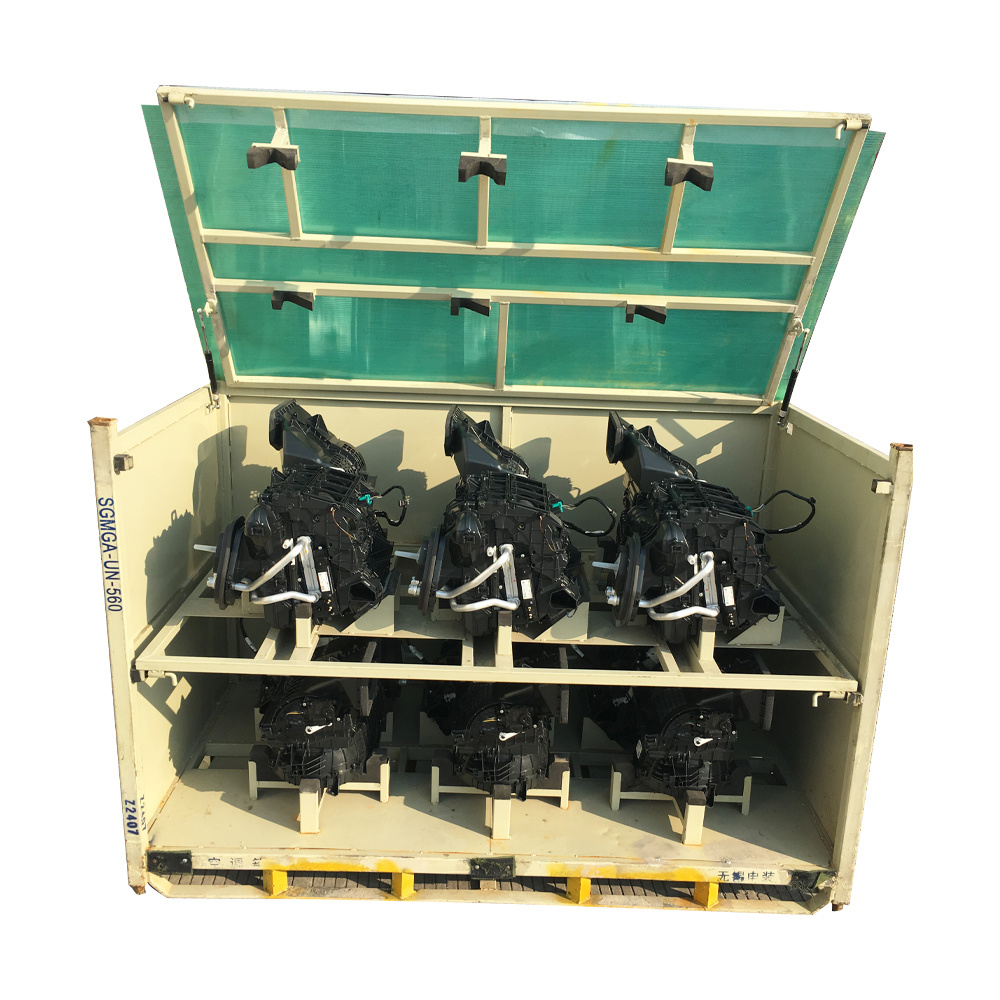
Choosing the correct metal class determines the entire lifespan of your storage solution. Standard mild steel works well for light indoor use. High-tensile steel is mandatory for extreme payloads. Environmental exposure dictates this choice heavily. Corrosive environments destroy standard alloys quickly. You must match the material grade precisely to your daily operating conditions.
You must compare surface treatments carefully. They provide varying levels of long-term corrosion resistance. Indoor facilities benefit greatly from powder coating. Outdoor or chemical environments require heavy-duty galvanizing. Wet paint offers quick touch-ups but degrades faster under heavy abrasion.
Surface Treatment Comparison Guide
| Treatment Type | Best Environment | Durability Level | Primary Advantage |
|---|---|---|---|
| Powder Coating | Indoor / Climate Controlled | Medium to High | Excellent aesthetic finish and color coding capability. |
| Hot-Dip Galvanizing | Outdoor / High Moisture | Very High | Superior rust prevention in harsh weather. |
| Wet Paint | Indoor / Low Impact | Low to Medium | Cost-effective and easy to reapply on-site. |
Operator strain leads directly to workplace injuries. Evaluate the strict need for custom drop-gates. Consider removable sides for easier access to heavy parts. Specific fork-pocket placements reduce forklift handling risks significantly. Well-designed ergonomics increase overall productivity. They also keep your workforce safe from repetitive strain injuries.
You must establish strict engineering calculations. Finite Element Analysis (FEA) determines maximum dynamic load capacities accurately. It also verifies static stacking limits. Guessing these numbers invites warehouse disasters. Always demand engineered proof of safe working loads.
Detail the precise specification of internal dividers. Polyurethane inserts absorb transit shocks effectively. Carpet linings prevent surface scratches on high-value goods. Tailored dunnage separates delicate items efficiently.
Outline specific requirements for crane lifting eyes if you use overhead hoists. Design specialized base structures for pallet jacks. Include stackable cupped feet for vertical stability. These handling points dictate how smoothly goods move through your facility.
Emphasize the absolute need to finalize comprehensive steel stillage specifications before mass production begins. You need approved CAD drawings. You also need formal compliance certifications. Missing documentation delays rollouts significantly and creates compliance liabilities.
Custom designs require transparent initial investments. You pay for specialized engineering time. Jigs and fixtures add to the initial bill. However, these upfront costs enable massive efficiency gains later. Treat the design phase as a foundational asset rather than an operational expense.
Set realistic expectations regarding timelines. Design phases take several weeks. Prototyping adds extra time before final manufacturing cycles begin. Purchasing stock items is faster initially. Custom solutions require patience but deliver superior performance over many years.
Provide a strict framework for measuring ROI. Look closely at reduced part reject rates. Calculate the financial savings from increased transport density. Factor in the longer asset lifecycles of reinforced units. Custom units pay for themselves rapidly by eliminating daily friction points and reducing scrap rates.
We stress the absolute necessity of ordering a physical prototype. You must stress-test a custom steel stillage in the actual production environment. Do this before committing to a full-scale rollout. Field testing reveals hidden design flaws immediately.
Direct manufacturers offer better risk mitigation than pure distributors. Internal CAD teams adjust designs rapidly based on your feedback. Resellers often lack deep technical knowledge. They simply push pre-existing catalogs. Partnering directly with a manufacturer ensures your unique requirements get translated into metal correctly.
Look for vendors who provide certified load testing. They must adhere strictly to regional safety standards. Untested units expose your company to massive liability. Ask for past testing reports during the vetting process.
Verifiable mill certificates are crucial. They ensure the promised steel quality is actually delivered. A trustworthy steel stillage supplier never hides their material origins. Substandard steel compromises the entire structure and puts your operators at risk.
Ensure the vendor handles initial pilot runs smoothly. They must also manage long-term volume scaling without any quality degradation. Consistent manufacturing tolerances are non-negotiable for large fleets. Evaluate their welding robotics and factory footprint before signing large contracts.
The decision to customize hinges heavily on long-term operational efficiency. This efficiency consistently outweighs short-term procurement convenience. Generic solutions often drain resources through product damage and wasted space. Rigorous specification drafting remains a non-negotiable step for success. Physical prototype testing is equally mandatory to prevent widespread rollout failures. Taking the time to engineer the right solution transforms your supply chain logistics.
Next Steps:
A: Custom units generally require a 20% to 50% higher initial investment. This varies based on design complexity, custom tooling, and order volume. However, the lifecycle ROI easily offsets this premium through eliminated product damage, optimized trailer space, and reduced labor handling times.
A: The timeline usually spans 6 to 12 weeks. Initial consultation and CAD approval take 1 to 2 weeks. Prototyping and physical testing add another 2 to 3 weeks. Once approved, final manufacturing and delivery consume the remaining 3 to 7 weeks.
A: Retrofitting is possible but highly discouraged. Post-manufacturing modifications weaken the original structural integrity. Welding new attachments alters the load-bearing dynamics and invalidates safety certifications. It is far safer and more cost-effective to engineer a custom unit from scratch.
A: MOQs offset design and tooling costs, so they are common. However, they are not always strictly required. Some specialized suppliers offer low-volume runs at a premium price. You can order a single prototype first before committing to a larger production run.

