
Views: 0 Author: Site Editor Publish Time: 2026-09-03 Origin: Site
Selecting the right material for bulk storage containers goes far beyond a generic purchasing decision. It dictates operational safety, strict regulatory compliance, and daily warehouse efficiency. Specifying standard recycled plastic for cold storage environments, for example, often leads to brittle fracturing under heavy loads. This preventable failure causes unacceptable product loss, compromises worker safety, and creates immediate logistical bottlenecks.
Supply chain managers and procurement leaders require an evidence-based framework to evaluate material types, manufacturing methods, and vendor capabilities. We built this guide to provide exactly that clarity. You will learn how to accurately align resin properties with your specific facility conditions. We also explore the critical structural differences between various molding processes.
By the end of this guide, you will understand how to evaluate technical data from manufacturers. You will know exactly which questions to ask and which performance metrics matter most. This ensures you specify the most resilient container for your unique operational demands.
Let us explore why material selection holds such immense weight in modern logistics. You must shift your operational focus toward physical replacement frequency, repairability, and expected usable lifespan. Premium polymer materials typically offer a robust working life of five to ten years depending on abuse levels. Conversely, choosing an inadequate plastic grade accelerates wear and tear, forcing premature disposal.
What actually happens when materials fail under pressure? You must consider the physical realities of warehouse environments. Imagine a high-bay storage rack collapsing because an inferior polymer experienced severe creep under a heavy static load. Polymer creep occurs when plastic slowly deforms under continuous stress over time.
Consider the hygiene risks if surface micro-cracking occurs. These microscopic fissures harbor dangerous bacteria in food processing plants. Standard washing procedures cannot properly sanitize deep micro-cracks. These physical material failures disrupt daily operations. They also pose severe safety hazards to forklift operators and warehouse personnel.
Material choice directly impacts your end-of-life recycling objectives and environmental goals. High-quality plastics retain their structural integrity much longer than inferior blends. They also hold significantly higher scrap value once they finally reach the end of their usable life.
Recyclers eagerly purchase clean, identifiable resins. This supports corporate circular economy initiatives and prevents unnecessary landfill waste. Selecting the right foundational material ensures your equipment eventually cycles back into the manufacturing stream.
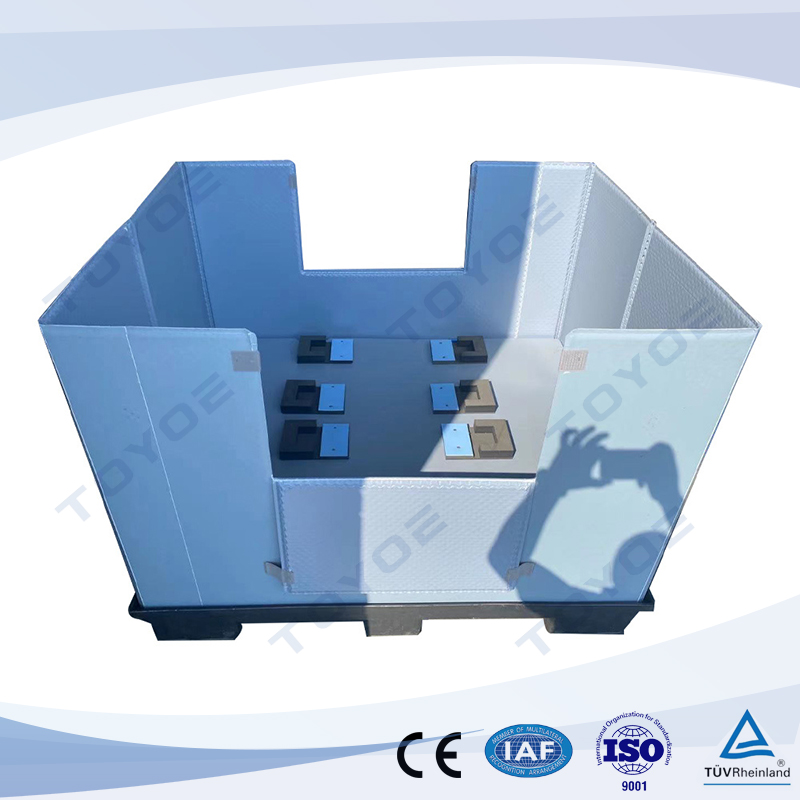
Two primary polymers dominate the industrial container market today. Let us break down their respective strengths, limitations, and best use cases. You will rarely find a one-size-fits-all solution.
HDPE offers outstanding impact resistance across a wide variety of industrial settings. It performs exceptionally well in sub-zero temperatures. You will almost always see HDPE specified in blast freezers, agricultural cold storage, and meat processing facilities. It absorbs forklift impacts by flexing slightly rather than shattering.
However, HDPE has minor physical limitations. It is slightly more prone to bowing or deflecting under extreme, heavy static loads compared to its more rigid counterparts. If you stack fully loaded HDPE containers five-high, you must monitor the bottom container for acceptable deflection limits.
Polypropylene delivers superior rigidity and structural stiffness. It features a considerably higher melting point than HDPE. This makes it ideal for automated washing systems and high-temperature sterilization environments. PP also boasts excellent chemical resistance against certain industrial solvents.
The main limitation of PP lies in its response to cold. Polypropylene becomes increasingly brittle in freezing temperatures. A routine forklift impact that an HDPE container would easily absorb can completely shatter a PP container in a cold environment.
Table 1: HDPE vs. PP Resin Characteristics
| Performance Metric | High-Density Polyethylene (HDPE) | Polypropylene (PP) |
|---|---|---|
| Impact Resistance | Excellent, absorbs shocks well | Good at room temp, poor in cold |
| Cold Storage Suitability | Superior (resists shattering) | Not recommended (becomes brittle) |
| Rigidity / Stiffness | Moderate (can flex under high weight) | High (holds rigid shape easily) |
| Heat Tolerance | Moderate | Excellent (ideal for hot washing) |
We must establish transparent assumptions regarding material purity. Virgin plastic offers highly predictable structural behavior. Regulatory bodies strictly require virgin materials for direct food-contact compliance. You cannot compromise on this requirement if you handle unpackaged produce, meat, or pharmaceuticals.
Recycled plastic, often called regrind, presents a 15–20% variance in overall impact resistance. Every batch of recycled resin differs slightly depending on its source material. Yet, recycled blends offer highly aggressive upfront savings. They remain an excellent choice for one-way shipping, closed-loop automotive parts logistics, or dry industrial storage where strict hygiene is not critical.
The method manufacturers use to form a container dictates its ultimate strength and structural behavior. Understanding these processes helps you validate whether a specific box will survive your facility.
Injection molding represents the vast majority of the industrial market. Factories inject molten plastic into highly pressurized steel molds. This process works best for high-volume, lightweight-to-medium duty applications. Injection molding provides the highly precise, uniform dimensions necessary for automated racking and robotic retrieval systems.
The trade-offs involve structural design constraints. Injection-molded units rely heavily on complex grid ribbing for their strength. These intricate ribbed sections create hundreds of small pockets on the underside of the container. In agricultural or dirty industrial environments, these ribs easily trap dust, mud, and moisture.
For extreme environments, a heavy duty rotomolded plastic pallet box provides unparalleled impact resistance. The rotational molding process involves slowly tumbling heated resin inside a hollow mold. This creates a completely seamless construction with significantly thicker walls. The smooth, rib-free surfaces make them highly sanitary and incredibly easy to wash.
Trade-offs exist for this level of durability. Rotomolded units feature a higher per-unit weight. They also require longer manufacturing times. You generally reserve them for extreme industrial abuse, harsh agricultural harvesting, or demanding chemical handling applications where standard injection-molded units quickly fail.
Understanding load ratings prevents catastrophic warehouse failures. You must interpret these metrics correctly and apply them to your specific daily workflows.
Manufacturers list three distinct load capacities. Confusing them can lead to dangerous rack collapses or shattered containers.
You must actively align plastic pallet box specifications with actual warehouse realities. Consider intense ultraviolet (UV) exposure if you store containers in outdoor yards. Standard plastic degrades and becomes brittle under constant sunlight unless the manufacturer adds specific UV-stabilizer additives.
Evaluate your risk of exposure to harsh chemicals. If you transport automotive batteries, you need a resin certified against corrosive battery acids. If your facility utilizes repeated high-pressure hot washing with caustic detergents, you must select a material that resists surface degradation over hundreds of wash cycles.
Manufacturers offer various physical designs to solve specific logistical challenges.
Chart 1: Application Matching Guide
| Operational Environment | Recommended Material | Recommended Manufacturing Process |
|---|---|---|
| Meat Processing / Blast Freezers | Virgin HDPE | Injection Molded (Solid Wall) |
| Automotive Parts Logistics | Recycled PP or HDPE | Injection Molded (Collapsible) |
| Heavy Chemical Handling | Virgin LLDPE/HDPE | Rotomolded (Heavy Duty) |
| Field Agriculture Harvesting | UV-Stabilized HDPE | Injection Molded (Vented Wall) |
Finding the right manufacturing partner matters just as much as finding the right polymer. A supplier’s transparency indicates the long-term reliability of their products.
A trustworthy plastic pallet box supplier proactively shares comprehensive technical data. They should provide detailed material data sheets (MDS) outlining exact resin properties. Ask for certified load-testing results performed by independent laboratories. They must also easily supply proper compliance documentation, including FDA, USDA, or ISO certifications upon request. If a vendor hesitates to share their environmental stress crack resistance (ESCR) data, view that as a major red flag.
Always insist on a small-batch operational trial before committing to a massive fleet-wide rollout. You need to test real-world forklift compatibility. Forklift tines vary in length and width, and you must ensure they interface smoothly with the container's base. You also must verify actual impact resistance on your own warehouse floor. A controlled trial reveals subtle ergonomic issues before they become expensive organizational problems.
Evaluate exactly how much confidence the supplier has in their own product. Look closely at their replacement policies and warranty limitations. Strong manufacturing partners often feature end-of-life material buy-back initiatives. This proves they value their own scrap material and actively support sustainable recycling practices. A robust buy-back program also simplifies your eventual disposal process.
Navigating the complexities of bulk container procurement requires careful analysis of physical properties and environmental factors. As we have demonstrated, there is no universally "best" material. You simply find the best material for your specific operational environment, load profile, and compliance requirements. HDPE dominates cold storage, while PP rules high-temperature environments. Rotomolding survives extreme impacts, whereas injection molding provides precise automated racking compatibility.
Before you request quotes, audit your facilities thoroughly. Record your exact warehouse temperatures, measure your racking beam widths, and outline your sanitation requirements. Identify whether you truly need virgin resin or if a recycled blend suffices.
We highly recommend consulting directly with experienced engineering and sales teams. Provide them with your specific load data, operational temperatures, and handling methods. Let them recommend the exact material grade and structural design to keep your supply chain running safely and efficiently.
A: Virgin plastic commands a premium due to raw material processing costs and guaranteed structural consistency. Recycled options typically cost 20% to 40% less. However, pricing fluctuates based on global resin markets. Always prioritize operational requirements over upfront savings, as recycled plastic may fail in extreme cold or under heavy racking loads.
A: Yes. Rotomolded containers feature thick, solid walls that respond exceptionally well to plastic welding. Maintenance teams can easily fuse cracks or gouges using compatible polyethylene welding rods and a heat gun. This repairability significantly extends the usable life of the container and minimizes operational downtime.
A: Cold environments require an immediate shift from Polypropylene (PP) to High-Density Polyethylene (HDPE). PP becomes extremely brittle below freezing and shatters upon forklift impact. HDPE specifications highlight excellent cold-weather resistance, maintaining critical flexibility and structural impact strength even inside industrial blast freezers.
A: You must request FDA (Food and Drug Administration) compliance declarations for direct food contact materials. Additionally, look for NSF (National Sanitation Foundation) certifications regarding structural cleanability. Facilities operating under HACCP frameworks require seamless, non-porous containers made exclusively from 100% virgin resins.

