


| Quantity: | |
|---|---|
A blister tray looks like a simple product, which is why so many of them disappoint. The forming process is indeed straightforward: a heated sheet is drawn over a mould and set by vacuum. What decides whether the tray protects a part, however, is not the process but the way material distributes across the cavity, and that is engineered on the tool, not by luck.
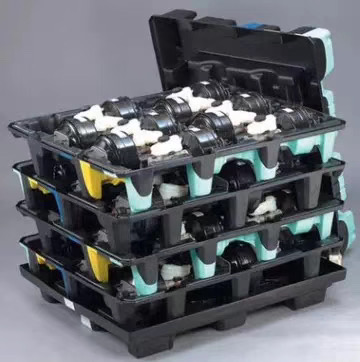
Deep cavities are where trays fail. As the sheet stretches into a recess, the material thins toward the bottom of the draw, and a corner that started at half a millimetre can end at a quarter. The fix is in the tooling: controlled plug assist pushes material where it is needed, draft angles let the sheet flow instead of tearing, and cavity depths respect a draw ratio the sheet can achieve. We quote a realistic depth before tooling rather than promising a shape the process will thin to nothing.
Material is chosen for the duty, not for a brochure. Transparent PET gives clarity for visual inspection and enough stiffness for tall cavities. Polypropylene brings impact toughness and resistance to oils and coolants, which matters where trays ride open on line side trolleys. For electronic modules, antistatic grades keep surface resistance in the dissipative range, and for painted or polished faces a flocked surface prevents micro scratching during insertion and removal.
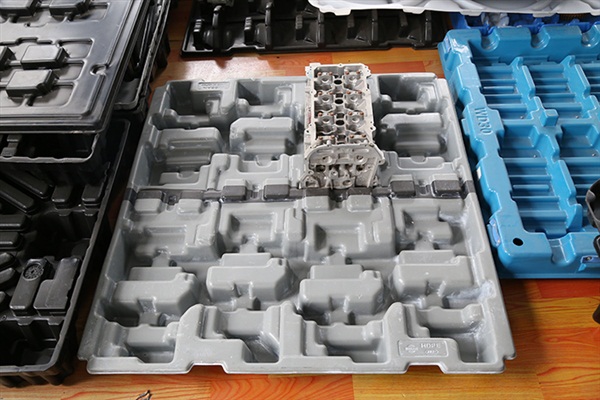
Part contact is designed around datums. A tray that grips a machined face will mark it, so cavities are relieved at finished surfaces and contact is placed on casting stock or unavoidable datum pads. Retention bumps hold the part against lateral movement without clamping it, and clearance is added at bosses, connectors and threads so nothing presses where it should not.
Stacking is the quiet test of tray design. Flanges are sized so trays stack with the cavity above clear of the part below, allowing dense counts per carton without part to tray contact. A well drawn nesting rim lets empty trays ship in a fraction of their assembled height, keeping inbound freight honest for a product that looks bulky in a catalogue.
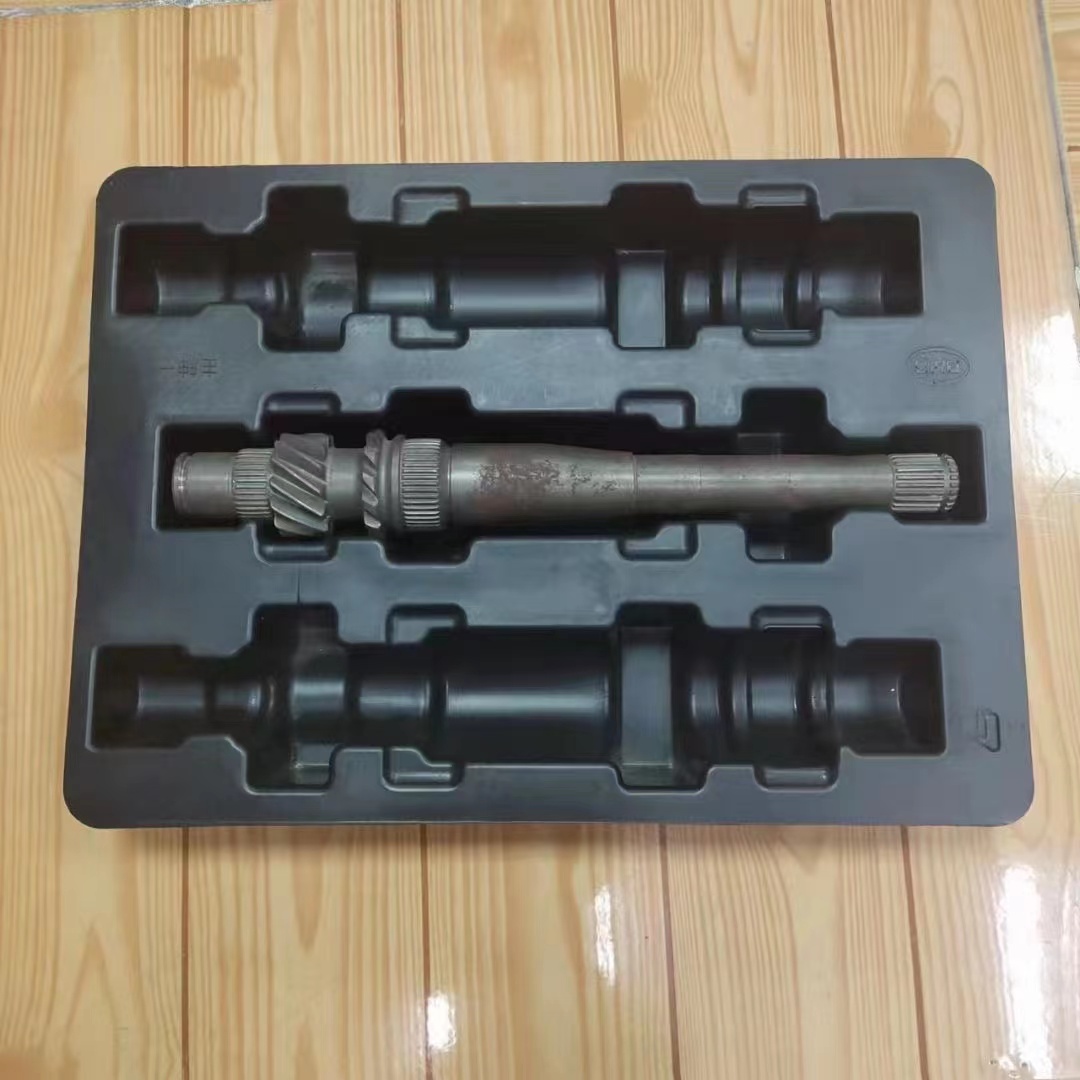
Validation follows the same discipline. First article trays are checked for wall thickness at the points that matter, then fitted with production parts and tried on the actual packing or kitting station before the tool is signed off. Free samples are offered here because a fit problem found in the plant costs nothing, while the same problem after a production run costs a retool.
Send the part drawing or a sample, the container it must fit and the quantities you need, and we will return a tray proposal with material grade, cavity layout and a wall thickness distribution check before tooling is cut.


