


| Quantity: | |
|---|---|
Regular parts forgive a careless tray. A bracket with two holes can be held by anything roughly square. Irregular parts do not forgive: a wiring harness, a pre-assembled hose line or a mirror housing has overhangs, curves and soft points, and a generic cavity will either crush a protrusion or let the whole assembly wander. Trays for such parts have to start from the part itself.
The practical route is scanning. A sample part is scanned, the point cloud becomes the cavity surface, and the tray geometry is developed from measured reality rather than from a drawing that may already be out of date. Working from the scan, clearances are added deliberately: room where the harness must flex, support under the heaviest curve, relief at clip legs and connectors that should never carry load.
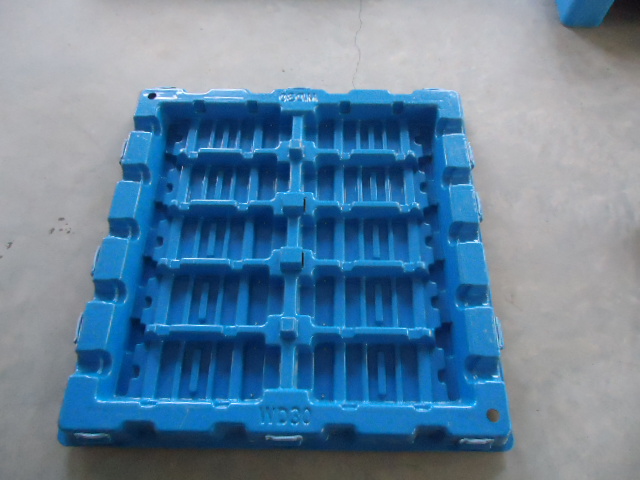
Orientation is the next decision. Awkward parts pack best in the attitude they naturally rest in, and forcing them flat creates stress at the worst places. The cavity is therefore shaped to cradle the part as it wants to lie, with retention placed against the features that actually stop movement, so an inverted container or a hard brake does not turn the tray into a sorting problem.
Where geometry is too deep or too undercut for a single draw, the tray is split. A two piece design with a base cavity and a formed lid section captures an overhanging feature without distorting the sheet, and the halves register to each other with locating ribs. This costs a little more in tooling and saves far more in scrapped parts, which is the trade worth making for assemblies that used to travel wrapped in loose foam.
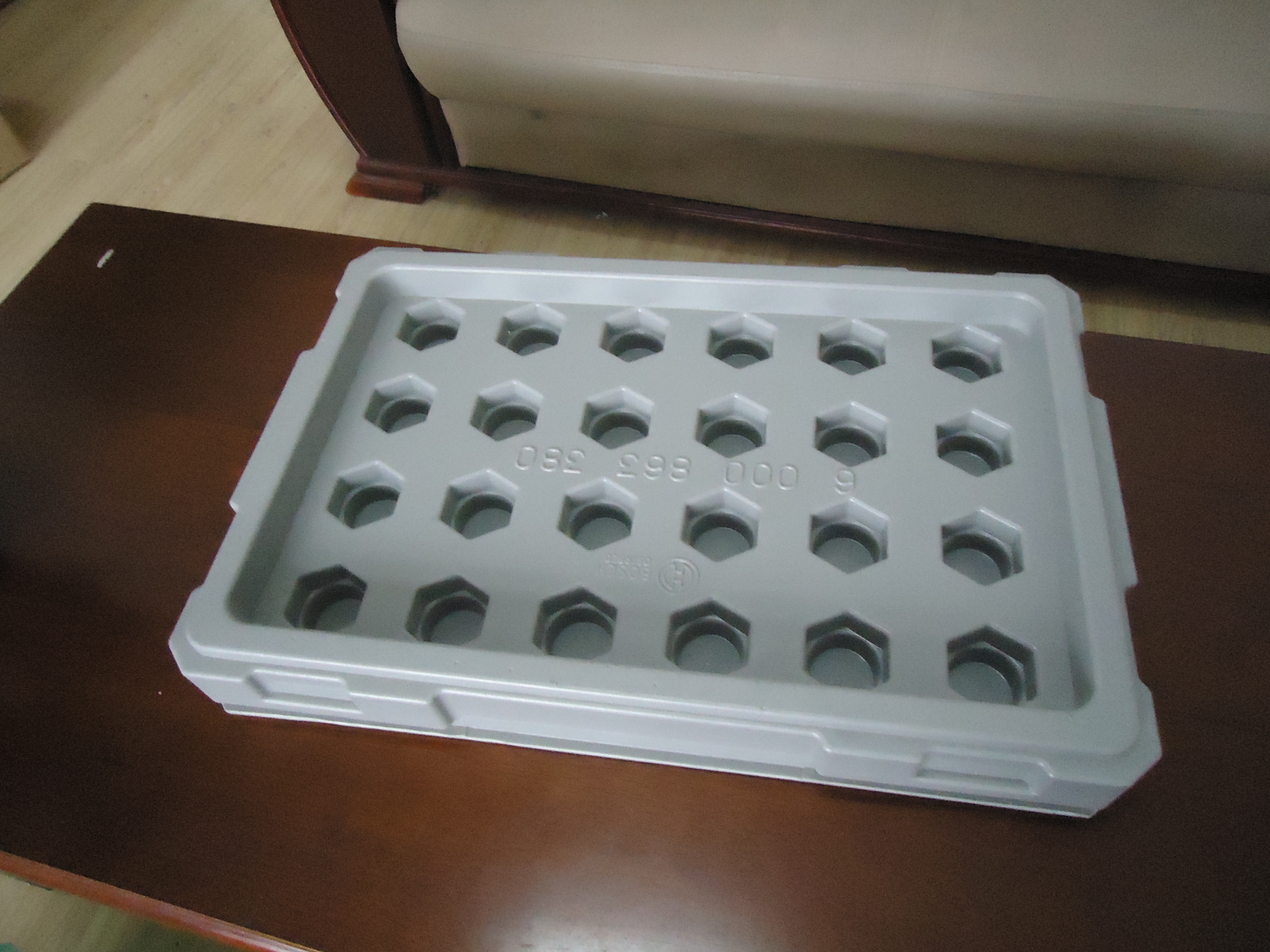
Surface choice follows the part. Antistatic grades suit electronic modules and sensors that sit in irregular cavities; flocked surfaces protect high gloss faces on trim parts that slide slightly during handling. Because the cavity follows the scanned surface, contact pressure spreads across a broad area instead of concentrating on one ridge, which is what keeps delicate finishes unmarked.
Irregular trays still have to live in a system. Flanges are kept flat so the trays stack with each other and with standard trays in the same carton, label panels stay in the normal position for scanning, and cavity depth is checked so a stacked tray cannot press into the parts below. None of that is glamorous, and all of it decides whether the trays get used after the first shipment.
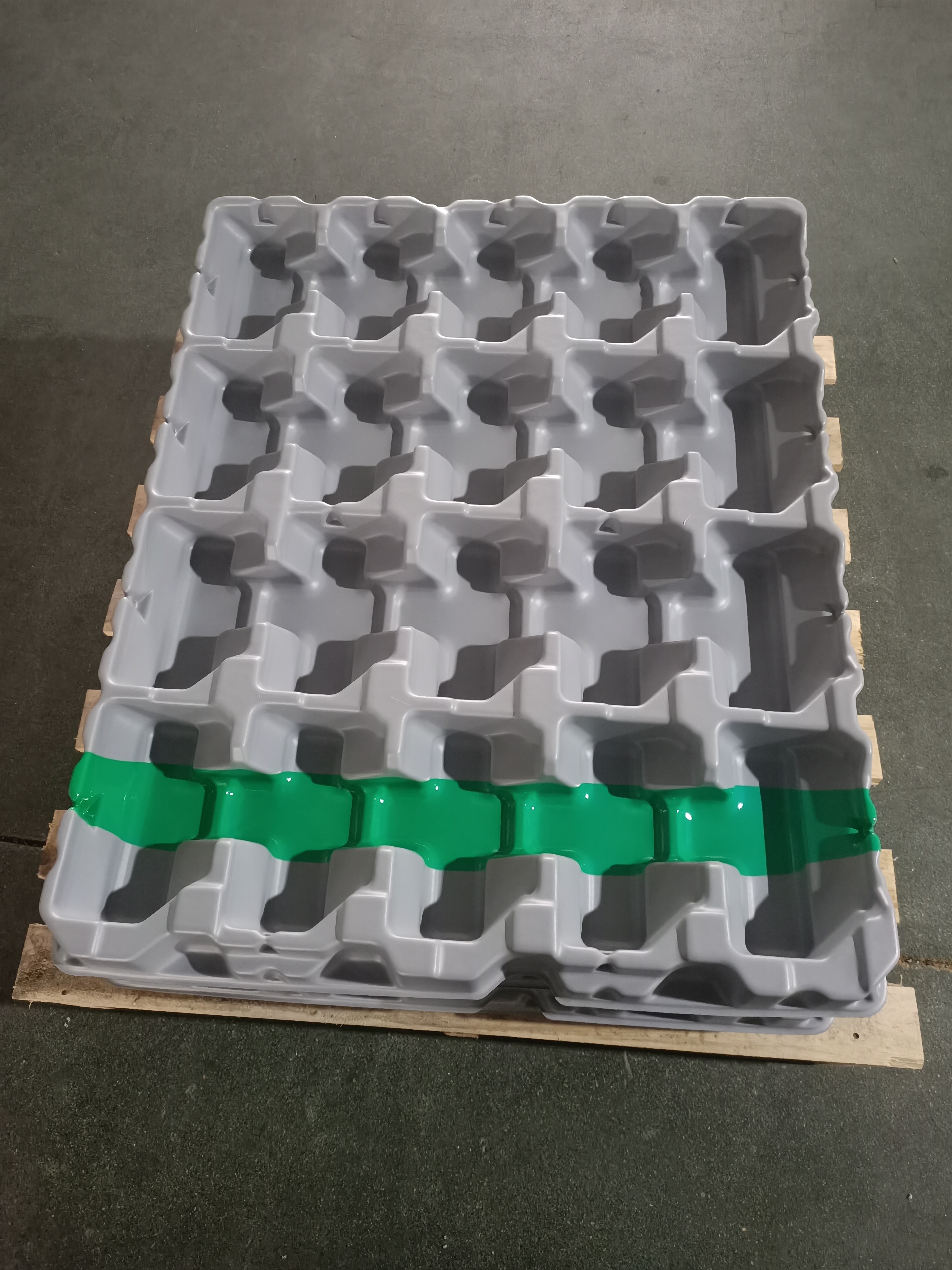
If you have a part that currently travels wrapped and hope it survives, send the part or a scan file, plus the container it must fit. We will return a vacuum formed tray design with cavity layout, material grade and a sample for a line trial.


