
Views: 75 Author: Site Editor Publish Time: 2026-02-28 Origin: Site
Cardboard boxes have one layer. This makes them light and easy to fold. They work best for light things like books or crafts.
Corrugated boxes have three layers. The middle layer is wavy and strong. These boxes are good for heavy or breakable things.
Think about your item’s weight and if it can break. Use cardboard for light storage. Use corrugated for shipping and safety.
Both box types can be recycled. Corrugated boxes get recycled more often. They are better for the earth.
Buy many boxes at once to save money. Corrugated boxes cost more at first. But they help stop damage, so you save later.
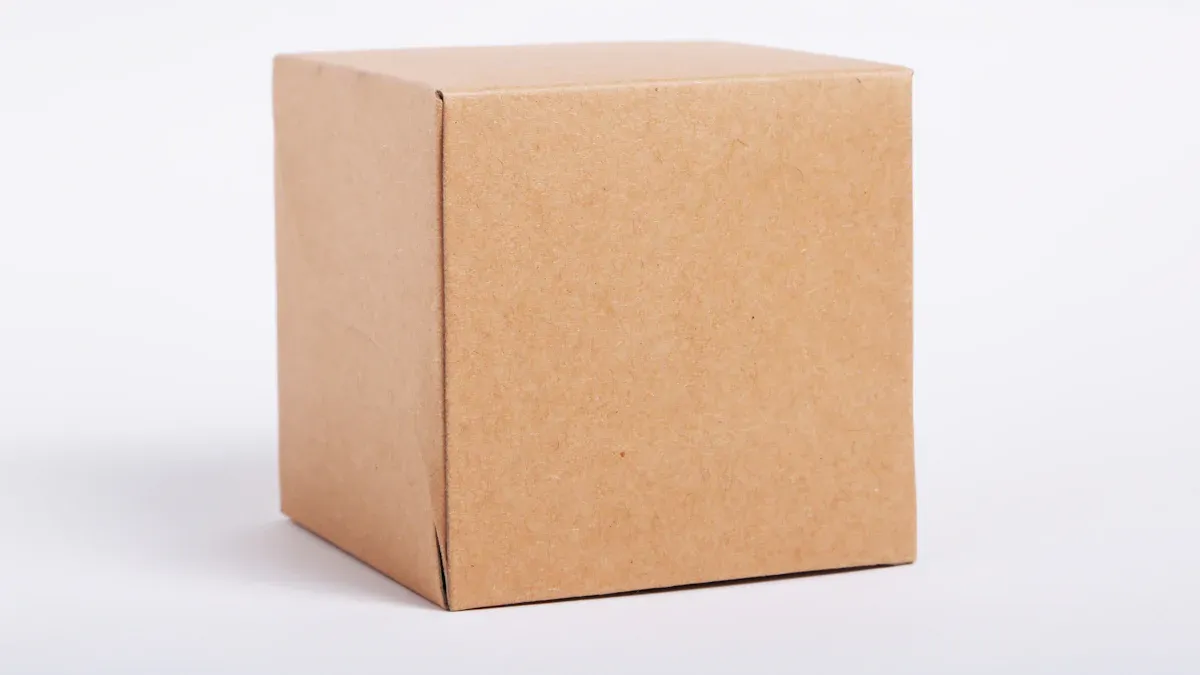
You see cardboard every day. It looks like a thick, stiff paper. People use it to make boxes, folders, and even crafts. Cardboard comes from paper pulp. Factories press the pulp into flat sheets. These sheets feel smooth and bend easily. Most cardboard boxes use a single layer, so they stay light and easy to fold.
The process of making cardboard boxes involves several steps. Here is a simple breakdown:
Material Selection: Factories choose the right paper pulp for strength and thickness.
Preparing the Cardboard Sheets: Large rolls become sheets, sometimes treated for extra strength.
Printing and Designing: Companies print logos or designs on the sheets.
Die-Cutting: Machines cut the sheets into box shapes.
Creasing and Slotting: Makers add lines and slots for easy folding.
Gluing and Laminating: Glue holds the box together, and sometimes a thin layer protects against moisture.
Cutting and Trimming: Workers trim off extra pieces for a neat finish.
Quality Control: Inspectors check each box for size and strength.
Additional Finishing Touches: Some boxes get special coatings or windows.
Packaging and Distribution: Finished boxes are stacked and shipped to stores.
Tip: You can spot cardboard by its smooth surface and single-layer structure. It bends easily but does not hold heavy items well.
You find cardboard in many places. People use it for packaging, crafts, and displays. Cardboard packaging works well for lightweight products. It keeps items safe from dust and scratches.
Industries that use cardboard boxes include:
Medical
Aerospace
Defense
Robotics/Electronics
You might see cardboard boxes in offices, schools, and homes. They store papers, books, and small tools. Stores use them for product displays. You can also use cardboard for art projects or science experiments.
Cardboard stays popular because it is easy to shape, print, and recycle. When you need a simple, light box, cardboard often does the job.
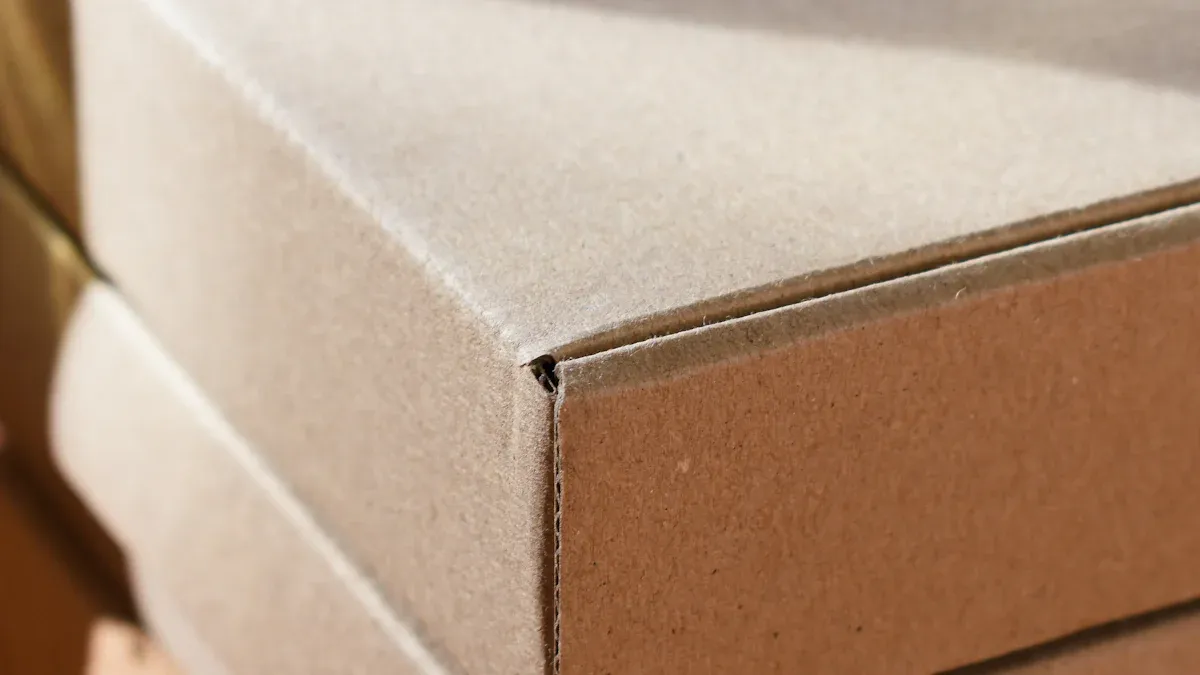
You see corrugated packaging in many places. It is common when you order things online. Corrugated packaging has a special design to keep things safe. It has three layers. There is an inside liner and an outside liner. In the middle, there is a wavy layer called the fluted medium. The wavy part makes the box strong. When you touch a corrugated box, you can feel the bumps from the fluted layer. This is why corrugated packaging is much stronger than regular cardboard.
Corrugated packaging is good for heavy or breakable items. The layers help absorb shocks and bumps. You can stack these boxes without crushing what is inside. That is why many companies use corrugated packaging for shipping.
Here is a simple table that shows how corrugated packaging and cardboard are different:
Type of Box | Composition | Strength and Durability | Cost Considerations |
|---|---|---|---|
Cardboard Boxes | Made from a single layer or laminated paperboard. | Not as protective; suitable for lightweight applications. | Generally less expensive to manufacture. |
Corrugated Boxes | Constructed from multiple layers including a fluted medium. | Offers significant structural strength and cushioning, ideal for heavy or fragile items. | More expensive but provides added value through durability and reduced damage risk. |
Tip: To check if a box is corrugated packaging, look for the wavy layer between two flat sheets.
Corrugated packaging is used in many industries. Companies use it to ship and store products safely. Corrugated packaging protects things like electronics, glassware, and car parts. You can find it in stores, warehouses, and delivery trucks.
Here are some industries that use corrugated packaging:
Industry |
|---|
Manufacturing |
Automotive |
Electronics |
Machinery |
Metal Parts |
Ceramics |
Glassware |
Wholesale Distributors |
Corrugated packaging is good for moving, storing, and protecting almost anything. You can use it for gifts, food, and art projects. Corrugated packaging is easy to recycle. This helps the environment. Next time you need a strong box, remember that corrugated packaging gives you the best protection.
You can spot the difference between boxes by looking at how they are made. Cardboard uses a single layer of thick paper. This layer feels smooth and bends easily. Corrugated boxes have a more complex structure. They use three or more layers. The outside and inside layers are flat, but the middle layer is wavy. This wavy part is called the fluted medium. It gives the box extra support.
Here is a table that shows the main difference between boxes in terms of material and structure:
Feature | Cardboard | Corrugated Boxes |
|---|---|---|
Structure | Single layer of thick paper | Multiple layers: outer liner, inner liner, and fluted medium |
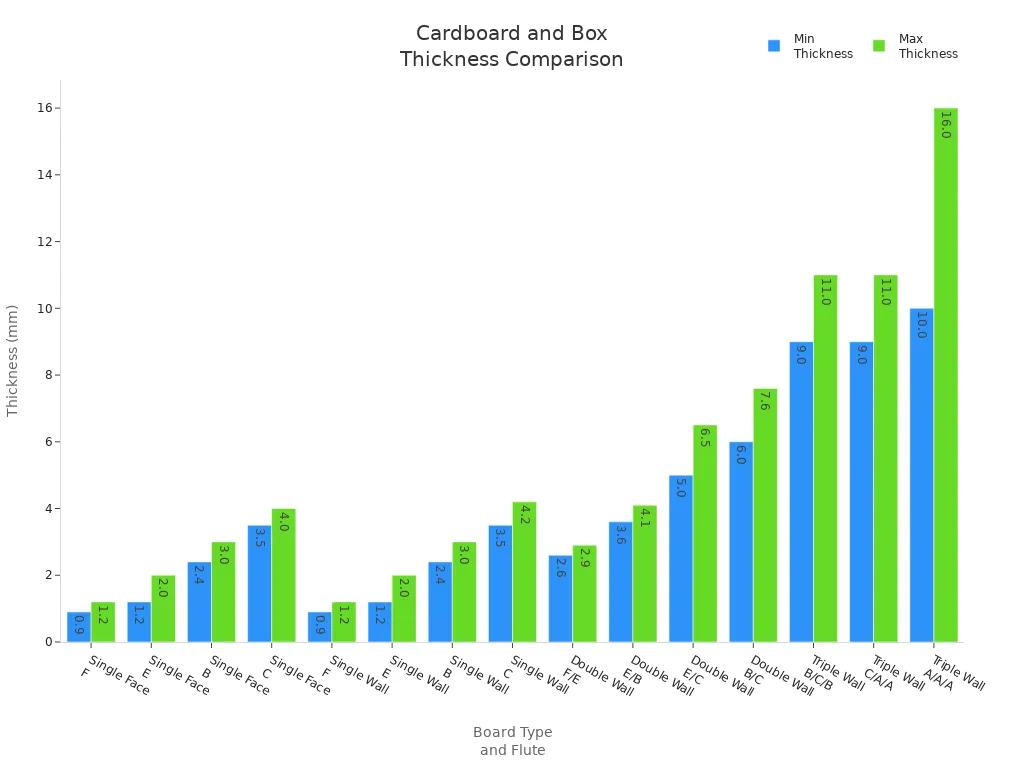
Thickness | Usually less than 1 mm | Ranges from 1 mm up to 16 mm, depending on type |
Ply | 1-ply | 3-ply, 5-ply, or even 7-ply for heavy-duty use |
Corrugated boxes can have different thicknesses. Some are thin for light items. Others are thick for heavy products. The fluted layer makes a big difference between boxes. It helps the box resist bending and crushing.
Note: Many people call all packaging "cardboard boxes," but this is not correct. In packaging, "cardboard" means a single-layer board for light items. "Corrugated" means a box with layers and a wavy middle for strength.
The strength and durability show another key difference between boxes. Cardboard works well for light items, but it does not hold up under pressure. It can bend, tear, or crush easily. Corrugated boxes are much stronger. The fluted layer acts like a cushion. It absorbs shocks and protects what is inside.
Corrugated boxes go through special tests to measure their strength. One test is the Edge Crush Test (ECT). This test shows how much weight a box can handle when stacked. For example, a 32 ECT corrugated box can hold about 65 pounds. Cardboard boxes do not have these ratings. They are not made for heavy loads or shipping.
Here is a table with common ECT ratings for corrugated boxes:
ECT Rating | Approximate Weight Capacity (lbs) |
|---|---|
23 ECT | 20 lbs |
26 ECT | 35 lbs |
29 ECT | 50 lbs |
32 ECT | 65 lbs |
44 ECT | 95 lbs |
55 ECT | 120 lbs |
Corrugated boxes also resist moisture better than cardboard. You can add coatings to make them even more water-resistant. This helps when you ship food or electronics.
When you stack boxes, corrugated ones do not crush as easily. They pass drop tests, compression tests, and vibration tests. Cardboard boxes fail these tests more often. If you need to ship or store heavy or fragile items, corrugated is the better choice.
You can tell the difference between boxes with a few simple checks:
Look at the edge of the box. If you see a single, flat layer, it is cardboard. If you see a wavy layer between two flat sheets, it is corrugated.
Feel the surface. Cardboard feels smooth and bends easily. Corrugated feels bumpy and stiff.
Try to press or bend the box. Cardboard will bend or crush with little force. Corrugated will resist more.
Check the use. Boxes for cereal, shoes, or small gifts are usually cardboard. Boxes for shipping, moving, or storing heavy items are usually corrugated.
Tip: If you want a box for mailing or moving, choose corrugated. If you need a box for display or light storage, cardboard will work.
You now know the main difference between boxes. Cardboard is simple and light. Corrugated is strong and protective. Use the right box for your needs, and your items will stay safe.
When you need to pack lightweight items, you want a box that matches your needs. Cardboard works well for light objects like books, clothes, or small gifts. It is easy to fold and store. Corrugated boxes also handle lightweight items, but they add extra protection if you need it.
Here is a table to help you choose the right box for lightweight items:
Factor | Importance |
|---|---|
Box Strength (ECT/Burst) | Makes sure the box can hold the weight and protect fragile items. |
Material Type | Decides how durable and suitable the box is for your products. |
Closure Type | Affects how fast and secure you can pack your items. |
You can use single-wall corrugated boxes for most lightweight needs. These boxes offer more strength than regular cardboard. If you want to save money and do not need much protection, cardboard is a good choice.
Shipping and handling require strong boxes. Corrugated boxes stand out because they protect your items during transport. They have layers that absorb shocks and bumps. You can pick single-wall, double-wall, or even triple-wall corrugated boxes based on what you ship.
Here is a quick look at weight capacity:
Box Type | Weight Capacity (pounds) | Description |
|---|---|---|
Single-wall | 20-120 | Good for light to medium items, cost-effective. |
Double-wall | 60-180 | More strength, better for heavy or long-distance shipping. |
Triple-wall | 300-800 | Best for the heaviest and most fragile items. |
To ship fragile items, follow these best practices:
Measure your items to pick the right box size.
Use corrugated boxes for strength and lightness.
Choose double-wall boxes for extra safety.
Add bubble wrap, foam peanuts, or packing paper for cushioning.
Secure items with dividers or custom inserts to stop movement.
Tip: Corrugated boxes give you built-in protection, so you need less extra packing material.
Cost matters when you pick boxes, especially for small businesses. Corrugated boxes often cost more per piece than cardboard, but they offer better protection and can save you money by reducing damage. Buying in bulk lowers the price for both types.
Here is a table showing average costs for different box sizes:
Size (L × W × H) | Single-Wall (Each) | Double-Wall (Each) |
|---|---|---|
Extra-Small (6" × 6" × 6") | $0.60–$0.70 | $0.80–$1.00 |
Small (12" × 9" × 4") | $0.70–$0.80 | $0.90–$1.20 |
Medium (18" × 14" × 12") | $1.75–$2.00 | $2.25–$2.75 |
Large (30" × 17" × 17") | $6.50–$7.00 | $8.45–$9.45 |
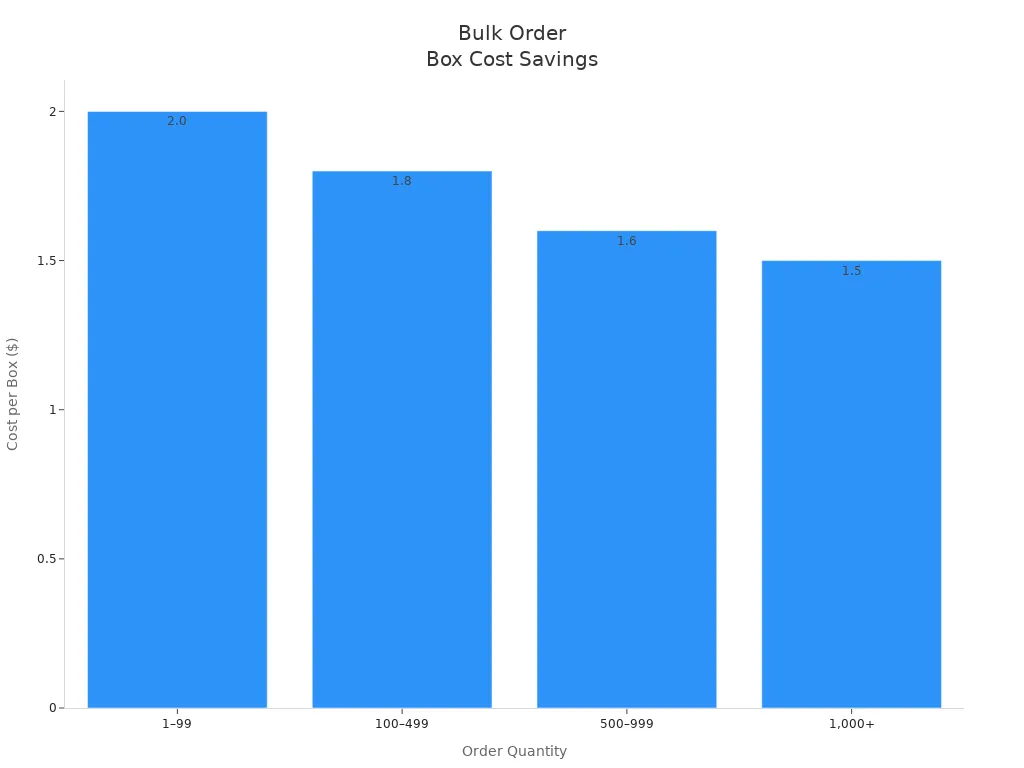
You can save up to 25% when you order 1,000 or more boxes at once. Corrugated boxes become more affordable when you buy in bulk. Cardboard boxes cost less for small orders, but may not protect your items as well.
Note: Think about both the price and the level of protection you need. Sometimes, spending a little more on corrugated boxes saves you money in the long run.
It is easy to see how cardboard and corrugated boxes are different. You can look at their features side by side in this table:
Feature | Cardboard | Corrugated |
|---|---|---|
Strength | Lightweight | Heavy-duty |
Typical Uses | Books, clothing, snacks | Electronics, appliances, fragile items |
Manufacturing | Pressed moist fibers | Fluting + liner boards |
Recycling Rate | Lower | Higher (69-74%) |
Sustainability | Biodegradable, recyclable | Designed for sustainability, uses recycled materials |
Decomposition | Few months | Few months, enriches soil |
Energy Efficiency | Moderate | High, uses less energy |
Tip: Corrugated boxes can be recycled more often than cardboard. The recycling rate for corrugated packaging is between 69% and 74%. This means you help the planet every time you pick corrugated.
Corrugated boxes come from renewable resources. Many factories use recycled materials to make them. This saves energy and helps protect trees. Corrugated boxes break down fast and make the soil better. They do not give off harmful chemicals. Cardboard also breaks down in a few months. But how well it recycles depends on how it is made and the energy used.
Corrugated packaging is made to be good for the earth. You will see safe inks and new starches that do not hurt the ozone layer.
Water waste is lower now because of strict rules. Factories must follow these rules to keep people and forests safe.
More than 93% of used corrugated materials were recycled in 2022. This cuts down on landfill waste and keeps the earth clean.
When you use corrugated boxes, you help stop ocean acidification and eutrophication. They also cut down on plastic waste in nature. Cardboard is biodegradable and can be recycled. But corrugated packaging is even better for the environment.
Note: Corrugated boxes break down in about two months. Plastic packaging can take up to 500 years to break down.
Now you can see the difference. Cardboard is good for light things and simple jobs. Corrugated boxes are stronger, last longer, and are better for the earth. Pick the box that works for you and helps the planet.
You now know the key differences between cardboard and corrugated boxes. Cardboard works best for light items and offers an eco-friendly choice. Corrugated boxes protect heavy or fragile products and keep them safe during shipping.
Cardboard saves on shipping costs and is easy to recycle.
Corrugated boxes give extra strength for tough jobs.
To make the best choice, try these steps:
Pick materials that match your needs and care for the environment.
Test your packaging to keep products safe.
Choose designs that stand out and fit your brand.
Use this guide to pick the right box every time!
Cardboard has just one flat layer. Corrugated boxes have three layers. The middle layer is wavy. This makes corrugated boxes stronger. They protect your things better.
You can recycle corrugated boxes very easily. Most recycling centers take them. Take off any tape or labels first. Corrugated boxes break down fast. They help keep the earth clean.
Corrugated boxes are best for shipping. They keep your items safe. The wavy layer inside soaks up bumps. This stops things from breaking. Corrugated boxes also stack well and do not crush easily.
Check the edge of the box. If you see a wavy part between two flat sheets, it is corrugated. You can also feel bumps on the outside. Cardboard boxes do not have this wavy part.
Corrugated boxes cost more than cardboard boxes. You pay more because they are stronger. If you ship heavy or breakable things, the extra cost is worth it.

