
Views: 0 Author: Site Editor Publish Time: 2026-02-28 Origin: Site
Market Type | Projected Value in 2026 |
|---|---|
Folding Cartons | USD 198.55 billion |
Corrugated Boxes | USD 294.1 billion |
Currently, packaging trends are focusing on eco-friendly materials, the rise of online shopping, and the integration of smart technology.
Folding cartons are light and good for store packaging. Corrugated boxes are stronger and better for shipping heavy things or breakable items. Choose folding cartons if your product needs a nice look and brand design. They let you print high-quality pictures and make custom designs. Think about how your packaging affects the environment. Both folding cartons and corrugated boxes can be good for the earth if made from recycled stuff. Check your product’s weight and if it breaks easily before picking packaging. Use folding cartons for light things. Use corrugated boxes for heavier products. Know the cost differences. Folding cartons usually cost less for small orders. Corrugated boxes can save money when shipping many items at once.
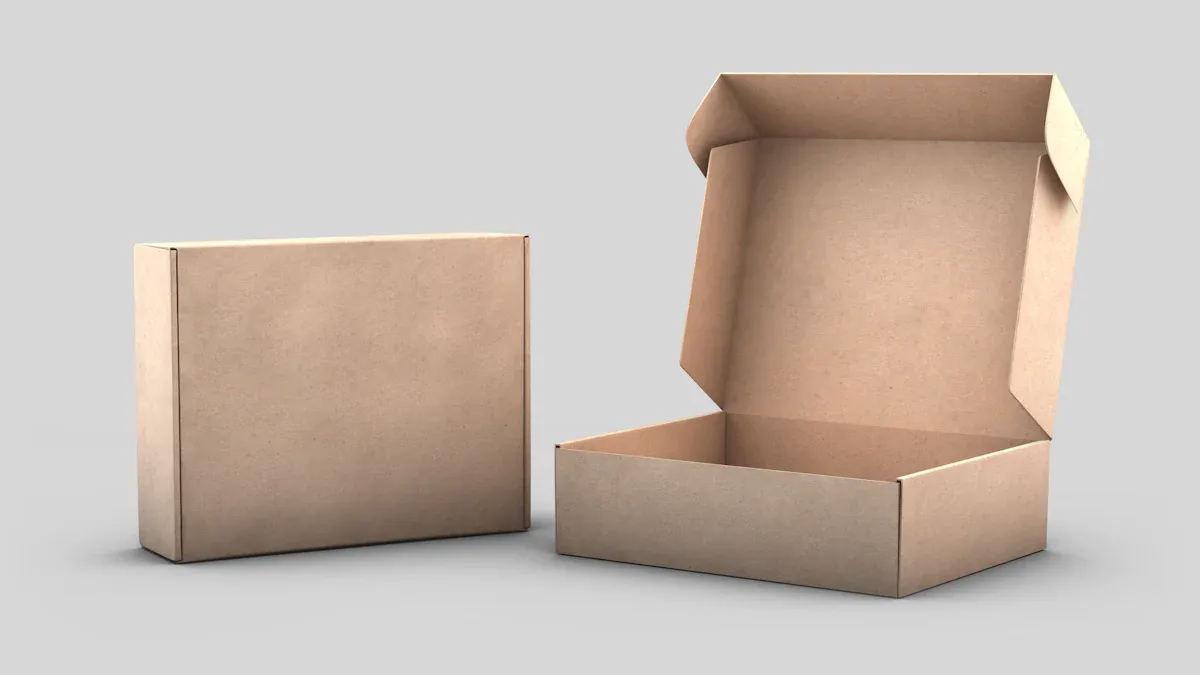
Folding carton packaging is used for many things you see every day. This packaging is made from light paperboard that can be folded. People use folding carton packaging for cereal, makeup, and medicine. The material is thin and smooth, so it is easy to print bright designs and logos. There are different kinds of paperboard, and each one has its own good points. Solid bleached sulfate looks fancy, while coated recycled board is better for eco-friendly brands. Folding carton packaging is best for light products that do not need a lot of protection when shipped.
Tip: If you want your packaging to look great in stores, folding carton packaging lets you use bright colors and cool designs.
Corrugated box packaging is the best choice for shipping and storing things. A corrugated box has a special design with layers. It has a wavy sheet, called a flute, between two flat sheets. This makes the box strong and helps protect heavy or breakable items. Corrugated box packaging is used for electronics, appliances, and big food shipments. The materials include kraft paper for strength and test paper to save money. Different flute sizes give more or less padding, depending on what you need to ship. Corrugated box packaging is thicker and heavier than folding carton packaging, so it is good for long trips.
When you look at folding carton packaging and corrugated box packaging, you see some big differences. The main difference is in the materials and how they are built. Folding carton packaging uses one layer of paperboard. Corrugated box packaging uses layers with a fluted middle. This makes corrugated box packaging much stronger and thicker.
Here is a table to help you see the difference between folding cartons and corrugated boxes:
Feature | Folding Cartons | Corrugated Boxes |
|---|---|---|
Material Composition | Made from lightweight paperboard | Made from a layered structure with fluted inner sheet and outer sheets |
Structural Design | Flat construction that folds into shape | Layered structure providing strength and durability |
Use Case | Retail packaging, cosmetics, food | Shipping and storage due to durability |
Sturdiness | Low | High |
Weight | Light | Heavier |
Thickness | Thinner | Thicker |
The difference between folding cartons and corrugated boxes changes how you use them. Folding carton packaging is best for things that need to look nice and are not heavy. Corrugated box packaging is better for things that need to be safe during shipping. If you want packaging for store shelves, folding carton packaging gives you more ways to design it. If you need to ship things safely, corrugated box packaging is the stronger choice.
Note: The difference between folding cartons and corrugated boxes can change your costs, shipping needs, and brand look. Always pick packaging that fits your product.
Folding carton packaging uses paperboard as its main material. Paperboard comes in different thicknesses. Thickness is measured in points. One point is one thousandth of an inch. Thicker boards protect products better. Thinner boards are lighter and cost less.
A 16 pt board is 0.016 inches thick.
A 28 pt board is 0.028 inches thick.
Thick boards are good for heavy or stacked packaging.
Thin boards are used for food, beauty, and electronics.
Here is a table showing thickness and uses:
Thickness (pt) | Approximate Inches | Applications |
|---|---|---|
12–28 | 0.012–0.028 | Branded cartons in food, beauty, electronics |
16–18 | 0.016–0.018 | Premium retail cartons |
Up to 28 | Near 0.028 | Heavy-duty or stacked packaging |
16–28 | 0.016–0.028 | Commercial standard for cosmetics, food, retail packaging |
Folding carton packaging is best for light products. It does not protect well against crushing or impacts. Use it for items that do not need strong protection.
A corrugated box has a layered structure. There is a wavy sheet called a flute. The flute sits between flat linerboards. This makes the box strong. It helps protect heavy or fragile items.
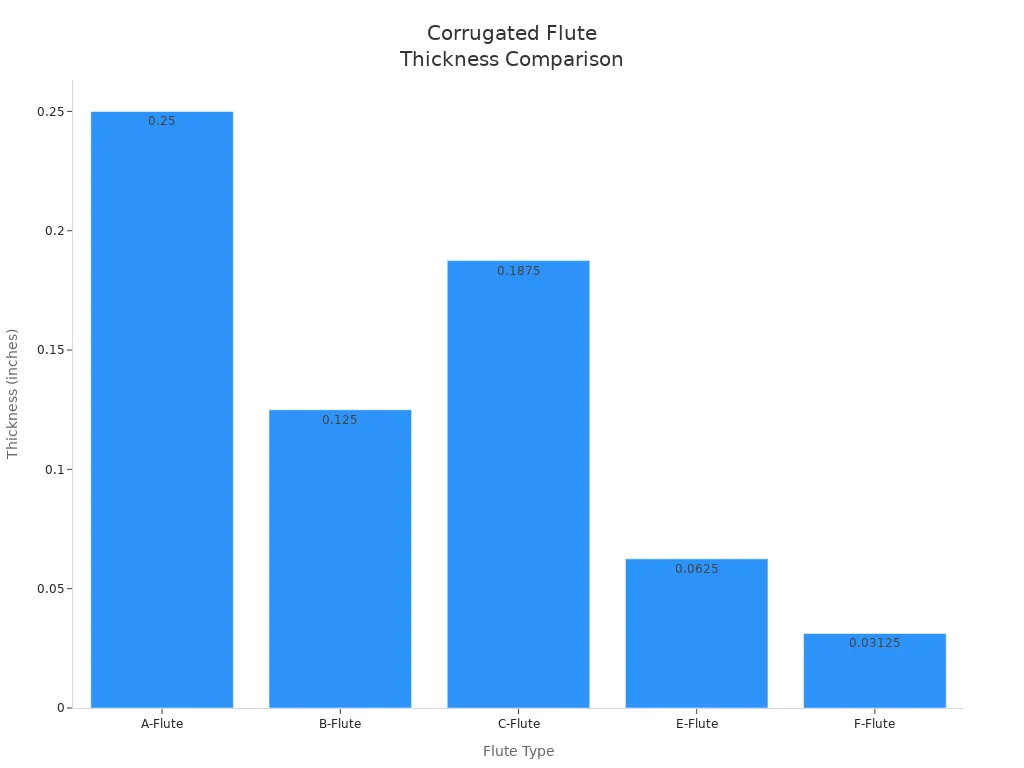
There are different flute types. Each type has its own thickness and use:
Flute Type | Thickness | Characteristics | Common Uses |
|---|---|---|---|
A-Flute | 1/4" | Highest protection and cushioning, excellent for fragile items | Packaging fragile items |
B-Flute | 1/8" | Strong with excellent puncture and crush resistance, good for padding | Various packaging, padding |
C-Flute | 3/16" | Versatile with average crush resistance, used for shipping boxes | Shipping boxes, packing glass |
E-Flute | 1/16" | Thinner, good for high-quality printing, used for delicate products | Cosmetics, fragile items |
F-Flute | 1/32" | Smooth surface for high-quality printing, used in fast food packaging | Clamshell packaging, retail packaging |
You can pick different board types. Single wall is most common for shipping. Double wall is used for heavier loads. Triple wall is best for very heavy items. More layers mean more strength.
Single wall: Most common for shipping.
Double wall: Used for heavier loads.
Triple wall: Best for extremely heavy items.
Corrugated box packaging is very strong. It is great for products that need extra protection during shipping or storage.
You want your packaging to keep things safe. Corrugated box packaging is very strong. Its thick layers help stop damage during shipping. Folding cartons are lighter and thinner. They are good for light items. They do not protect heavy or fragile products as well.
Manufacturers use tests to check protection. The box compression test shows how much weight a box can take before breaking. The drop test checks if the packaging keeps items safe when dropped.
Test Type | Purpose |
|---|---|
Box Compression Test | Shows how much weight the box can hold before breaking. |
Drop Test | Checks if the carton protects its contents when dropped. |
Pick corrugated boxes for heavy or breakable items. Use folding cartons for shelf display and light products.
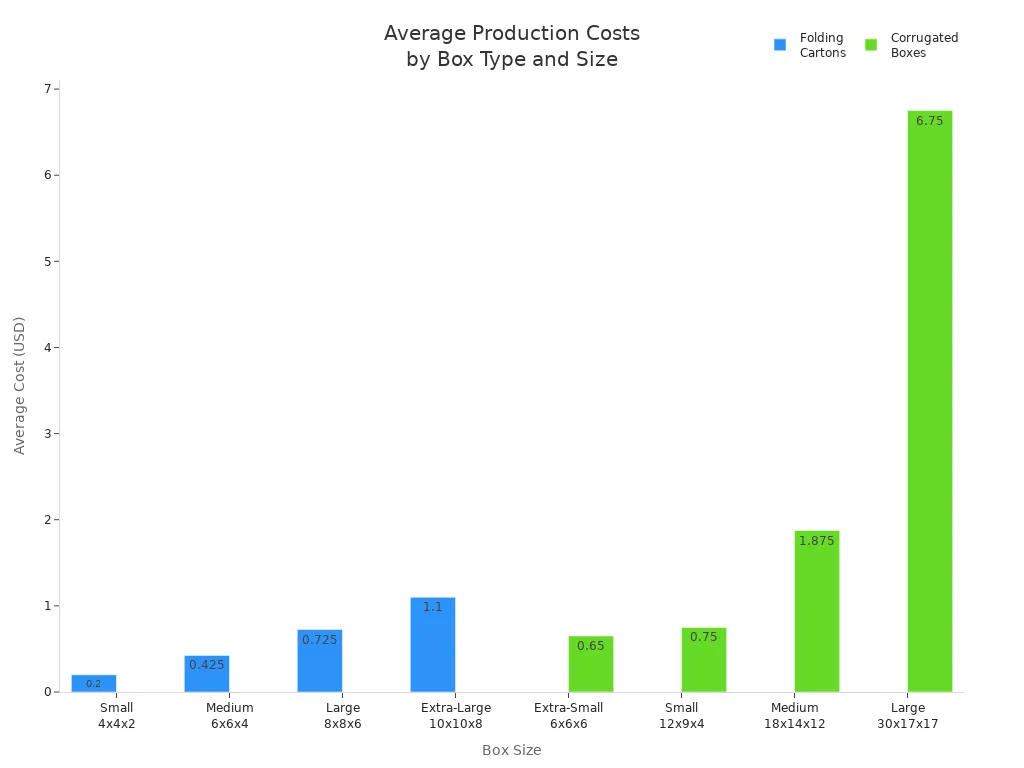
Folding cartons cost less to make than corrugated boxes. You save money with folding cartons for small or medium products. Corrugated boxes cost more because they use more material and take longer to make.
Type | Size | Cost Range |
|---|---|---|
Folding Cartons | Small (4" × 4" × 2") | $0.15–$0.25 |
Folding Cartons | Medium (6" × 6" × 4") | $0.35–$0.50 |
Folding Cartons | Large (8" × 8" × 6") | $0.60–$0.85 |
Folding Cartons | Extra-Large (10" × 10" × 8") | $0.95–$1.25 |
Corrugated Boxes | Extra-Small (6" × 6" × 6") | $0.60–$0.70 |
Corrugated Boxes | Small (12" × 9" × 4") | $0.70–$0.80 |
Corrugated Boxes | Medium (18" × 14" × 12") | $1.75–$2.00 |
Corrugated Boxes | Large (30" × 17" × 17") | $6.50–$7.00 |
Folding cartons are made faster. You can get them in two to three weeks. Corrugated boxes take longer because they are more complex.
Folding cartons help show your brand. Their smooth surface lets you print bright colors and detailed designs. You can add special finishes like embossing, foil, or spot UV. Corrugated boxes do not have the same print quality or design choices.
Feature | Folding Cartons | Corrugated Boxes |
|---|---|---|
Printing Techniques | Offset, Digital, Flexography | Limited |
Finishes and Effects | Embossing, Foil, Spot UV, Varnishes, Laminates | Limited |
Customization Options | Many paperboard types (Kraft, recycled, coated) | Fewer options |
Folding cartons allow high-quality printing and many custom effects.
Corrugated boxes have less vivid branding and fewer design choices.
Folding cartons give you more ways to make your packaging stand out in stores.
Both packaging types can be eco-friendly. Corrugated boxes use renewable materials and are easy to recycle. In 2022, over 93% of used corrugated materials were recycled. Folding cartons also use recycled paperboard and avoid harmful chemicals.
Aspect | Details |
|---|---|
Carbon Emissions | Using too much packaging and throwing it away adds to carbon emissions. |
Water Usage | Making pulp and paper uses a lot of fresh water. |
Recycling Potential | Corrugated boxes are renewable, biodegradable, and easy to recycle. |
Life Cycle Stages | Includes making, using, and disposing of the box. |
Disposal Methods | Recycling, burning, or landfill affect how green the packaging is. |
You help the environment by picking packaging made from recycled materials. Both folding cartons and corrugated boxes support sustainability if you recycle them.
Think about the good and bad points of folding cartons and corrugated boxes before you choose. Each type has strengths for different needs.
When you pick packaging, you want clear facts. A comparison table makes it easy to see differences. You can check things like strength, cost, and design choices. This table shows how folding cartons and corrugated boxes compare in important ways.
Metric | Folding Cartons | Corrugated Boxes |
|---|---|---|
Product Weight & Fragility | Best for lightweight, non-fragile goods | Great for items over 5 lbs or delicate |
Material Type & Strength | Lighter materials, less crush resistance | Sturdy with many fluting types |
Environmental Compliance | FSC-certified or over 30% recycled content | Varies, check for certifications |
Total Cost of Ownership (TCO) | Lower per-unit cost, may have higher freight | Higher initial cost, may save on shipping |
Minimum Order Quantity (MOQ) | Flexible, good for startups | Often higher MOQs |
Supplier Reliability | Look for repeat order rates over 25% | Consistency in operations is key |
Customization Capabilities | Advanced printing and design | Limited customization options |
Assembly & Ergonomics | Quick setup, under 10 seconds | May take more time to assemble |
End-User Experience | Enhances value with premium finishes | Focuses on protection and function |
Tip: Use this table to find the best packaging for your product. If your items are light and you want cool designs, folding cartons are a good choice. If your products are heavy or break easily, corrugated boxes protect them better.
Think about your business size too. Startups like folding cartons because they can order small amounts. Big companies often use corrugated boxes for shipping lots of products. Always check if your supplier follows environmental rules. Look for certifications like FSC or high recycled content.
Picking the right packaging helps your brand and keeps products safe. Check each metric in the table before you choose. This way, you find the best option for your business and your customers.
You see folding carton packaging almost everywhere. Companies pick it because it is light and easy to design. Here are the main ways people use folding cartons:
Food and Beverage: Folding cartons hold cereal, snacks, and frozen foods. They protect food and show off branding.
Health and Beauty: Cosmetics and skincare often come in folding cartons. The smooth surface lets brands use fancy designs.
Pharmaceuticals: Medicine boxes use folding cartons. They display important details and keep medicine safe.
Electronics and Consumer Goods: Small gadgets and accessories are packed in folding cartons. These packages protect items and look nice in stores.
Retail and Specialty Products: Luxury and seasonal items use folding cartons. Unique designs help them stand out.
Folding carton packaging makes a great first impression. It makes opening the package feel special and helps customers remember your brand.
Corrugated box packaging is best for strength and protection. You use these boxes for shipping, storage, and heavy products. Here are some common uses:
Shipping fragile things like glassware or electronics
Moving bulk goods in warehouses
Protecting items during long trips
Customizing box sizes for safe shipping
Adding branding graphics without losing strength
Cutting shipping costs with lighter materials
Saving space by stacking boxes
Helping the planet with recyclable materials
Corrugated boxes keep products safe from bumps and drops. The fluted layer absorbs shocks so your items arrive safely.
Many industries need the right packaging to keep products safe and customers happy. Here is how different sectors use folding cartons and corrugated boxes:
Industry | Folding Carton Packaging Uses | Corrugated Box Packaging Uses |
|---|---|---|
Food & Beverage | Cereal boxes, snack packs, frozen meals | Bulk shipping, produce crates |
Health & Beauty | Cosmetic boxes, skincare kits | Shipping displays, subscription boxes |
Pharmaceuticals | Medicine boxes, blister packs | Bulk drug shipments, hospital supplies |
Electronics | Accessory packaging, small gadgets | TV boxes, computer shipping |
Retail | Gift boxes, luxury items, seasonal goods | E-commerce shipping, large product delivery |
The right packaging helps your supply chain work better. Standard box sizes save space and make packing faster. Corrugated boxes let you track inventory with barcodes or RFID tags. Both types are good for the environment because most materials can be recycled. When you pick the right packaging, you lower shipping costs, reduce returns, and make customers happier.
Picking packaging for your business means thinking about many things. Every product has its own needs. Your choice can change how much you spend, how safe your items are, and how people see your brand.
Product characteristics: Look at the weight, size, and fragility of your items. Heavy products need strong packaging to stop damage. Light items can use simple packaging.
Shipping requirements: If your products go far or get handled roughly, you need packaging that protects them well.
Branding objectives: Packaging is the first thing customers notice. Bright colors and special finishes make your product stand out.
Environmental considerations: Many people want eco-friendly packaging. Using recyclable materials and green practices helps your brand look good.
Ask yourself these questions: What do you want your packaging to do? How do you want it to look on the shelf? This is very important because it decides which packaging you should pick.
Think about cost too. Folding cartons cost less for light items, especially if you need a lot. Corrugated boxes cost more at first but can save money by stopping shipping damage. Both types can be stored flat, but folding cartons use less space.
You can pick from different packaging types. Folding cartons help you save money and space. Corrugated boxes protect heavy things very well. Look at the table below for a quick summary:
Feature | Folding Cartons | Corrugated Boxes |
|---|---|---|
Cost Efficiency | 30-40% savings for small runs | Best for bulk shipping |
Branding | High-quality graphics | Basic printing |
Durability | Less durable | Superior shock resistance |
Think about how much your product weighs. Also, think about how far it needs to go. Decide how you want your packaging to look. Pick the packaging that works best for your needs. Make sure it shows your brand’s story.
Folding cartons are made from one layer of paperboard. Corrugated boxes have a wavy layer between two sheets. Corrugated boxes are stronger and protect things better.
You can print pictures on corrugated boxes. Folding cartons let you use brighter colors and more details. Their smooth surface makes designs look nicer.
Both folding cartons and corrugated boxes can be recycled. Most companies use recycled materials to make them. Look for FSC certification or lots of recycled content for eco-friendly choices.
Corrugated boxes are best for heavy or breakable things. Their layers keep your items safe when shipped or stored.

